
Emergency Lighting Servicing: The 2026 UK Compliance FAQ Guide
Could a simple monthly check be enough to keep your emergency lighting compliant? It’s a sensible question. The testing schedule, BS 5266-1 requirements and rules about who can carry out each test can be difficult to piece together. Emergency lighting servicing is more than a tick-box task: it’s a shared responsibility that helps protect people and supports safe evacuation during a power failure.
This guide explains the BS 5266-1:2025 framework and the legal responsibilities of the building’s Responsible Person. You’ll learn what monthly functional checks and annual full-duration tests involve, when a qualified engineer is needed, and what to record in your compliance logbook. We’ll also explain how clear maintenance records can help demonstrate that faults have been addressed, so you can approach an inspection with greater confidence.
Table of Contents
Why is Professional Emergency Lighting Servicing Mandatory?
During a power failure, emergency lighting helps people find escape routes and safety equipment. What is emergency lighting depends on the system: fittings may have their own batteries or draw power from a central supply. Emergency lighting servicing involves systematic testing and maintenance to check that this backup illumination can work when needed.
Under the Regulatory Reform (Fire Safety) Order 2005, the Responsible Person must take steps to protect people in the event of fire, including keeping escape routes and exits safe. If lighting fails, gaps in maintenance records may make it harder to show that reasonable precautions were taken. Non-compliance can lead to enforcement action and, in serious cases, prosecution. Insurance cover isn’t automatically invalidated by a missed test, but policy terms may require appropriate maintenance. Check your policy and keep evidence of checks and remedial work.
Emergency lighting installation is the first step; ongoing checks help confirm that the system remains dependable. Routine visual checks can be handled by a suitably trained person, whilst an annual full-duration test should be completed by a qualified engineer.
Understanding the BS 5266-1 British Standard
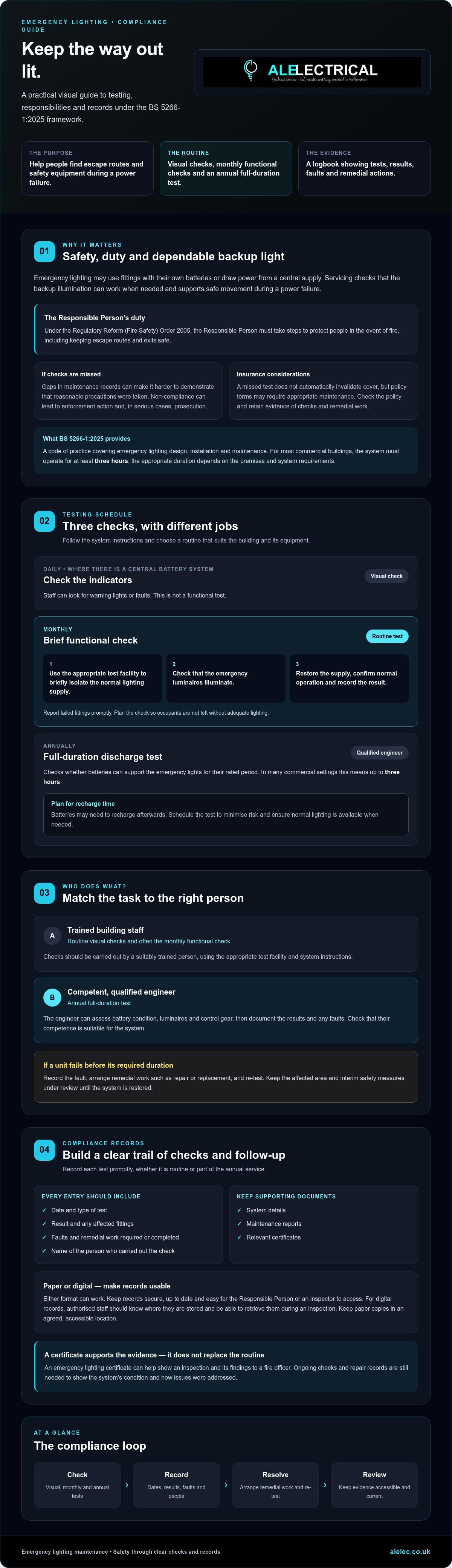
BS 5266-1:2025 is the code of practice for emergency lighting, covering its design, installation and maintenance. It provides a framework for checking that lighting supports safe movement during a power failure. For most commercial buildings, the system must operate for at least three hours, though the appropriate duration depends on the premises and system requirements.
Keep a logbook of test dates, results, faults and remedial actions. These records provide practical evidence of the system’s condition and follow-up work. They also help the Responsible Person identify unresolved issues before they undermine safety or compliance.
What Does the Emergency Lighting Servicing Schedule Look Like?
A reliable routine separates simple visual checks from tests that verify the system under power failure. If your building has a central battery system, a daily visual check of its indicators can help staff spot warning lights or faults. This is not the same as a functional test, and the exact routine should suit the system and its instructions.
Each month, briefly isolate the normal lighting supply using the appropriate test facility and check that emergency luminaires illuminate. Restore the supply afterwards and confirm that the system returns to normal. Record the result and report any failed fitting promptly. Plan the check so it doesn’t leave occupants without adequate lighting.
An annual full-duration discharge test checks whether the batteries can support the emergency lights for their rated period. In many commercial settings, that means up to three hours. As batteries may need to recharge afterwards, plan the test to minimise risk and ensure normal lighting is available when needed.
Monthly vs Annual Testing: Your Responsibilities
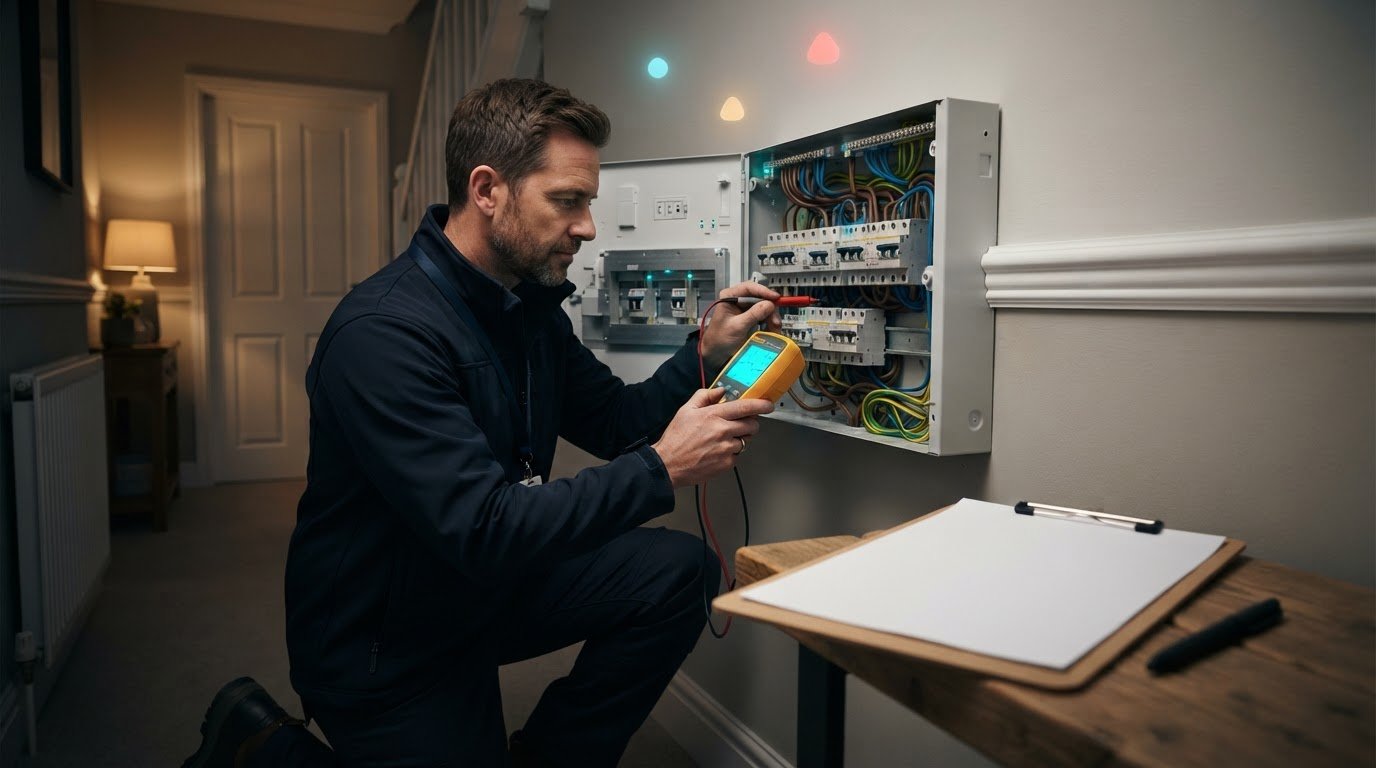
Trained building staff can often complete routine monthly checks. The annual test should be carried out by a competent, qualified engineer. During the inspection, the engineer can assess battery condition, luminaires and control gear, then document the results and any faults. Check that the person you appoint has suitable competence for your system.
If a unit fails before completing its required duration, record the fault and arrange remedial work, such as repair or replacement, followed by a re-test. Keep the affected area and any interim safety measures under review until the system is restored. The Regulatory Reform (Fire Safety) Order 2005 sets out the Responsible Person’s fire safety duties, making clear records a practical part of managing the premises safely.
ALElectrical provides electrical maintenance and safety inspections to support the wider upkeep of your electrical systems. Find out more about electrical maintenance.
How Do I Manage My Emergency Lighting Compliance Records?
A dedicated logbook gives you a clear history of checks, faults and follow-up work. Record each test promptly, whether it’s a routine check or part of annual emergency lighting servicing. For every entry, include the date, type of test, result, any affected fittings and remedial work required or completed. Note who carried out the check, too, so responsibilities are clear.
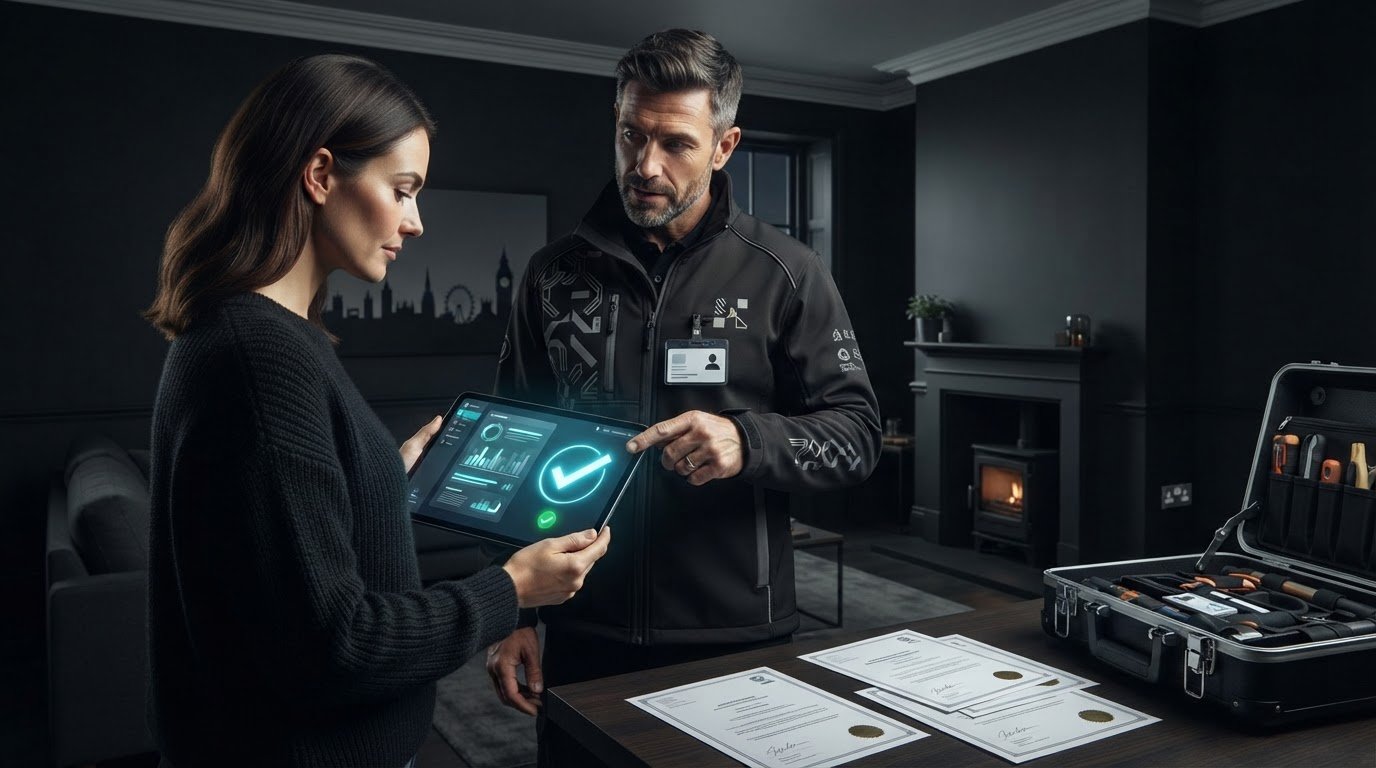
Keep the logbook alongside system details, maintenance reports and relevant certificates. An emergency lighting certificate can provide useful evidence of an inspection and its findings for a fire officer, but it doesn’t replace ongoing checks or records of repairs. Together, the documents should show both the system’s condition and how issues were addressed.
Paper and digital records can both work. Choose a format that’s secure, kept up to date and easy for the Responsible Person or an inspector to access. If records are digital, make sure authorised staff know where they’re stored and can retrieve them during an inspection. For paper copies, keep them in an agreed, accessible location and protect them from loss or damage.
What Happens After a Servicing Visit?
After an annual test, ask for a written report stating what was checked, the results and any faults or recommendations. If a fitting fails, arrange suitable remedial work, record the action taken and retain evidence of any re-test. Keep unresolved faults visible in your records and assign responsibility for follow-up. You can read more in this guide to the emergency lighting certificate.
For wider electrical maintenance, speak with ALElectrical about your premises’ electrical safety needs.
Keep safety checks moving forward
Reliable emergency lighting depends on more than fitting the right system. A consistent schedule helps reveal faults, whilst a competent engineer’s annual full-duration test checks that the lighting can operate for its required period. Record each test, fault and repair in an accessible logbook so you can track outstanding work and show how issues have been addressed.
Clear records and prompt follow-up make emergency lighting servicing easier to manage and support a safer, more organised approach to your responsibilities. If you need help with electrical maintenance or safety inspections, contact ALElectrical to discuss your requirements. ALElectrical offers free, no-obligation quotes for its services.
Frequently Asked Questions
Can I carry out emergency lighting servicing myself?
Trained staff can often complete routine checks, but this doesn’t replace professional testing. A suitably trained in-house person may carry out the monthly functional test if they understand the system and test procedure. The annual full-duration discharge test should be completed by a qualified engineer. Record checks and results, and arrange professional attention if a fitting or system component shows a fault.
How long does an emergency lighting full discharge test take?
The discharge test runs for the system’s full rated duration, typically three hours in commercial buildings. The engineer’s visit may take longer, as it can include preparation, equipment checks and recording the results. Plan the test so occupants aren’t put at risk if normal lighting is unavailable. After testing, batteries may need time to recharge before the system is ready for another power failure.
What is the penalty for not servicing emergency lighting in the UK?
There isn’t one automatic penalty; consequences depend on the circumstances and severity of the fire safety breach. The Responsible Person may face enforcement action, and serious cases can lead to prosecution, fines or imprisonment. Missing test records can also make it harder to show that safety duties have been addressed. Keep a log of checks, faults and repairs, and follow up failures promptly.
How often should emergency lighting batteries be replaced?
There’s no single replacement interval that applies to every battery or system. Follow the manufacturer’s guidance and use test results and battery condition to decide when replacement is needed. An annual full-duration test can reveal whether a battery still supports the required operating period. If it fails, record the fault, arrange remedial work and retest the system after repair.
Comments