
Consumer unit replacement cost and the factors that affect it
The cost to replace a fuse box with a consumer unit in the UK in 2026 depends on the number of circuits, the type of board and the condition of the existing wiring. Moving the unit or carrying out extra electrical work can also affect the overall cost, so the board itself is only part of the picture.
It’s understandable to want a clear figure before arranging an upgrade. This guide explains the factors that shape the cost, what installation work may involve and how dual RCD and RCBO boards differ, so you can better understand the options for your home.
Table of Contents
How Much Does a New Consumer Unit Cost?
The cost to replace a fuse box with a consumer unit in the UK in 2026 depends on circuit numbers, board choice, location and existing wiring. These factors help explain why estimates differ between homes.
Typical UK Replacement Prices
These figures help you compare an estimate with the scale of the installation, rather than treating an average as a guaranteed price.
Regional Price Differences
Labour rates vary across the UK, affecting the overall estimate for similar work. Urban areas and certain metropolitan locations typically have electrician labour rates 20 to 30 per cent above the national average. For the cost to replace a fuse box with a consumer unit in the UK in 2026, compare the scope of work as well as the total, including testing and certification.
Prices by Board Type
Board selection also affects equipment costs. An RCBO protects each circuit individually, while a dual RCD board groups circuits under two RCDs. The number of circuits and the condition of the wiring also affect the estimate.
Regulations and Certification
Consumer unit upgrades must comply with BS 7671, the UK Wiring Regulations, according to the British Standards Institution (BSI). In England and Wales, replacement is notifiable under Part P of the Building Regulations; the work requires testing and an Electrical Installation Certificate. Since April 2021, private landlords in England have had to obtain an EICR at least once every five years under the Electrical Safety Standards in the Private Rented Sector Regulations, according to UK Legislation. In England, landlords must complete remedial work identified by an EICR within 28 days of receiving the report, according to UK Legislation.
Dual RCD versus RCBO boards
A dual RCD board and a full RCBO board arrange circuit protection differently. In a dual RCD setup, two RCDs usually protect separate groups of circuits, often covering roughly half the home each. An RCD detects an electrical fault and can disconnect a circuit in as little as 30 milliseconds. If one trips, several circuits on its side may lose power together.
With an RCBO board, each circuit has its own device. An RCBO combines a miniature circuit breaker and an RCD, protecting against overloads, short circuits and earth leakage. If a fault affects one circuit, its RCBO can trip without necessarily cutting power to the other circuits. That separation can make it easier to identify which circuit needs inspection, though the board choice and installation must suit the property and comply with BS 7671.
Repairing an old fuse box may address a particular fault, but it doesn’t provide the same arrangement as a modern consumer unit. Older fuse boxes aren’t illegal to have, but older fuses need replacing after they operate, whereas modern circuit breakers can be reset after tripping. A registered electrician can assess the device, circuit breakers and existing wiring to establish whether repair or replacement is appropriate.
A consumer unit replacement changes the distribution board, not the cables throughout the home. A full rewire replaces the wiring itself, so it may be needed if an inspection finds widespread deterioration or faults that a new board cannot resolve. If the wiring needs broader attention, house rewire work may be the relevant next step.
Consumer unit replacement cost factors
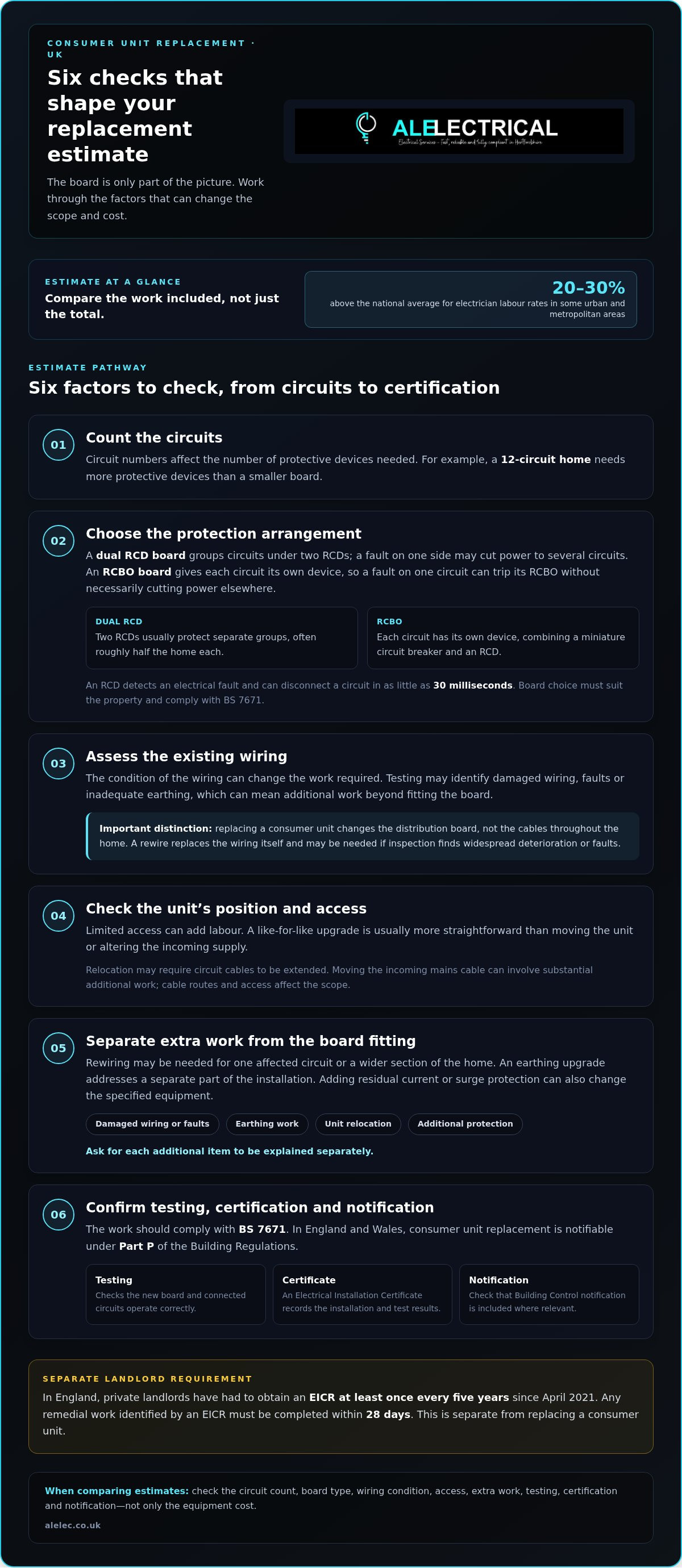
The biggest cost drivers are circuit count, board position and the condition of the electrical installation. A 12-circuit home needs more protective devices than a smaller board, whilst limited access can add labour. A like-for-like upgrade is usually more straightforward than moving the unit or altering the incoming supply.
Additional work may be needed if testing finds damaged wiring, an electrical fault or inadequate earthing. Rewiring may involve one affected circuit or a wider section of the home, while an earthing upgrade addresses a separate part of the installation. These costs are separate from fitting the consumer unit, so ask for each item to be explained.
Relocating the consumer unit is another potential cost factor. Moving it may require circuit cables to be extended, while moving the incoming mains cable can involve substantial additional work. The number of circuits, cable routes and access all affect the scope. Adding residual current or surge protection can also change the specified equipment.
Post-installation testing checks that the new board and connected circuits operate correctly. The work should include an electrical installation certificate recording the installation and test results. Building control notification is also relevant to consumer unit replacement under Part P. Check that the estimate covers testing, certification and notification, not just the equipment.
For a clearer estimate, list any known tripping, planned circuit changes and access issues before discussing the upgrade. If the inspection identifies wider wiring work, discuss a fuse box upgrade and the additional work needed for your home.
ALElectrical: House Rewires
ALElectrical carries out House Rewires when the work needs to extend beyond replacing a consumer unit. If an inspection identifies widespread wiring issues, fitting a new board alone may not resolve them. A rewire addresses the home’s wiring as a wider project.
For a board replacement, ALElectrical also carries out Fuse Box Upgrades. An EICR can assess the condition of an electrical installation, while Solar & Battery services are available for homeowners planning those systems alongside wider electrical work. The right service depends on whether you need a consumer unit upgrade, a wiring project or an inspection.
Plan the right next step for your home
Choosing what to do next is about more than the consumer unit alone. Consider whether the electrical work is limited to the board or forms part of wider plans for your property. For homeowners assessing the cost to replace a fuse box with a consumer unit in the UK in 2026, a clear description of the work needed helps make the next conversation more useful.
ALElectrical carries out Fuse Box Upgrades and House Rewires, as well as Solar & Battery work for wider electrical projects. The cost depends on the work involved. Request a free, no-obligation quote and describe what you have noticed, such as repeated tripping, or any planned renovation, to help explain your home’s needs.
Contact ALElectrical about your consumer unit to discuss the next step for your property. A considered plan can help you move forward with confidence.
Frequently Asked Questions
How Much Does a Fuse Box Installer Cost?
Treat this as a market guide, not a fixed fee. The final estimate can also reflect the number of circuits, access, testing and wiring condition. Ask for an itemised quote showing what the labour covers and which materials are included.
How Long Does a Fuse Box Replacement Take?
A standard replacement generally takes 4 to 8 hours. The electrician needs to remove the old unit, connect the new one and test the installation. Extra time may be needed if faults emerge during testing, cables need alteration or access to the board is difficult. Keeping the area around the fuse box clear can help the electrician work efficiently.
How Long Does the Work Take?
Plan for the electrician to be at the property for much of the working day, rather than assuming it will be a brief visit. The appointment includes the replacement and checks before the supply is fully restored. If an issue requires additional work, the schedule may change, so avoid planning essential activities around uninterrupted electricity.
How do you find a qualified, trustworthy electrician for the job?
Look for an electrician registered with a competent person scheme, such as NICEIC, NAPIT or ELECSA. Registered electricians can self-certify relevant work and submit Part P certification. Before agreeing to the work, read the written quote and check that it describes the board, testing and certification. A clear scope helps you understand what is included.
How long does the job take, and will you be without power?
The property is typically without power for 2 to 4 hours during replacement, although the full appointment can last longer. Before work begins, plan for interruptions to cooking, heating, lighting and internet access. Charge essential devices beforehand and keep anything you need during the outage accessible. The electrician can explain the expected sequence for your home.


Comments