
Maximize Your Savings: Solar Battery Storage Guide
What if the best solar battery for your home isn’t the biggest one? Solar battery storage can make surplus daytime solar available when panels aren’t generating, but its usefulness depends on when you use electricity, how much you export and what your existing system can support.
Capacity figures alone won’t tell you whether a battery suits your routine. Compatibility, installation space, safety and cost also matter. This guide explains how a home battery works, what to consider before choosing one and why professional electrical integration matters. Use the practical checks below to assess your energy habits and existing equipment before taking the next step.
Table of Contents
Solar battery storage explained: what it does for a home
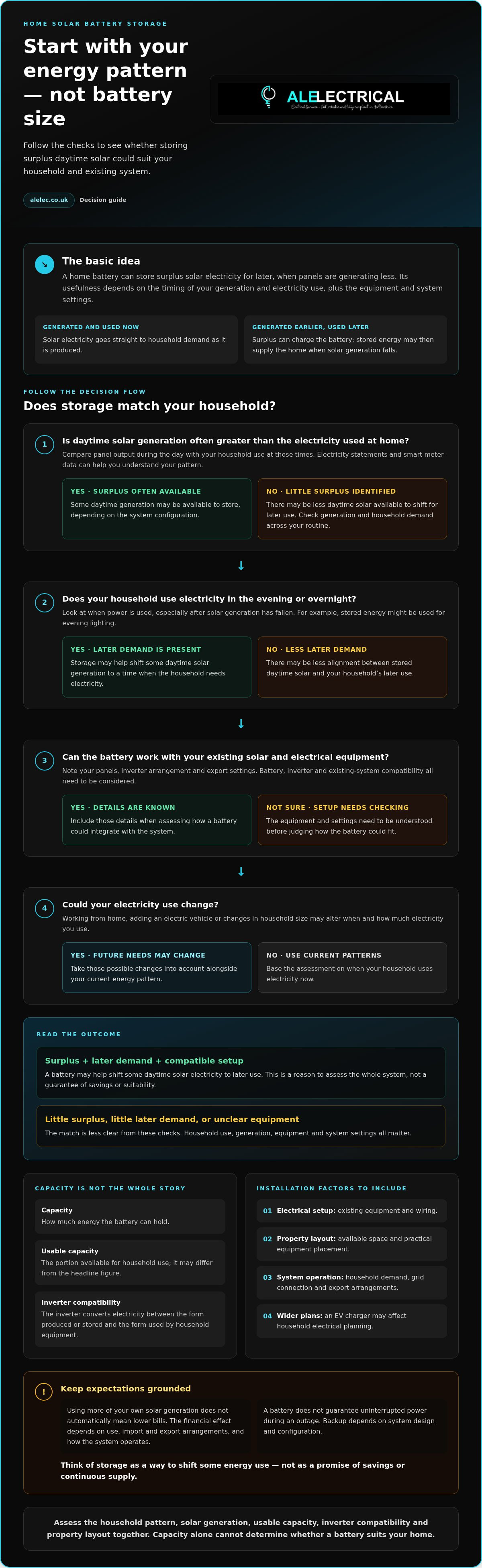
A home battery stores electricity for use when solar panels aren’t generating enough to meet household demand. In a typical grid-connected setup, the home uses solar electricity as it is generated during the day. If generation exceeds immediate demand, the surplus can charge the battery. Once the battery is full, further surplus may be exported to the grid, depending on the system configuration and export arrangements.
When solar generation falls, the battery can supply electricity to the home. If it cannot meet demand, or its stored energy runs out, the home can draw electricity from the grid. The exact flow depends on the equipment and how the system is configured. For broader context on how batteries store and supply electricity, see Battery storage power station.
Solar electricity used straight away is generated and consumed at the same time; stored solar energy is generated earlier and used later. This distinction helps explain what solar battery storage can do for a household.
When does stored solar energy help a household?
A battery can shift some daytime solar generation into the evening, when panels may produce little or no electricity but household demand continues. For instance, if the home uses less electricity while people are out during the day, surplus generation may be stored for later use, such as lighting in the evening. How much energy is useful depends on panel output, the timing of household use and the system configuration.
Using more of your own solar generation is known as greater self-consumption. It does not automatically mean lower bills: the financial effect depends on your electricity use, import and export arrangements, and how the system operates. A battery also does not guarantee uninterrupted power during an outage. Backup depends on system design and configuration, so treat storage as a way to shift some energy use, not as a promise of savings or continuous supply.
How to assess solar battery storage for your home
Start with your household’s energy patterns rather than choosing a standard battery size. These checks can help you identify what a system needs to do:
Review electricity use. Check when your household uses power, especially in the evening and overnight. Your electricity statements and smart meter data can help you understand your pattern.
Understand solar generation. Compare daytime panel output with the electricity used at home during those hours. Surplus generation is the energy that may be available to store.
Identify existing equipment. Make a note of your panels, inverter arrangement and export settings. These details can affect how a battery integrates with the system.
Consider future needs. Working from home, adding an electric vehicle or changes in household size may alter when and how much electricity you use.
Capacity describes how much energy a battery can hold. Usable capacity is the portion available for household use, which may differ from the headline figure. The inverter converts electricity between the form produced by panels or stored in a battery and the form used by household equipment. Battery, inverter and existing-system compatibility therefore needs to be part of the assessment. The U.S. Department of Energy Solar Energy Technologies Office provides broader information on solar technology and storage, while UK system design must reflect the property and its existing setup.
Capacity alone cannot determine whether a battery suits your home or how much you might save. Household use, solar generation, equipment and system settings all matter.
Will a battery suit your energy use and existing solar setup?
Compare how much electricity your panels generate during the day with your evening and overnight demand. If there is often surplus generation while the home is quiet, storage may help shift some of it to later use. Existing panels, inverter arrangements and export settings also affect integration, so assess the whole setup rather than the panels alone.
ALElectrical provides solar-and-battery solutions tailored to your project. You can explore a solar-and-battery solution with ALElectrical.
Solar battery storage installation: what professional integration involves
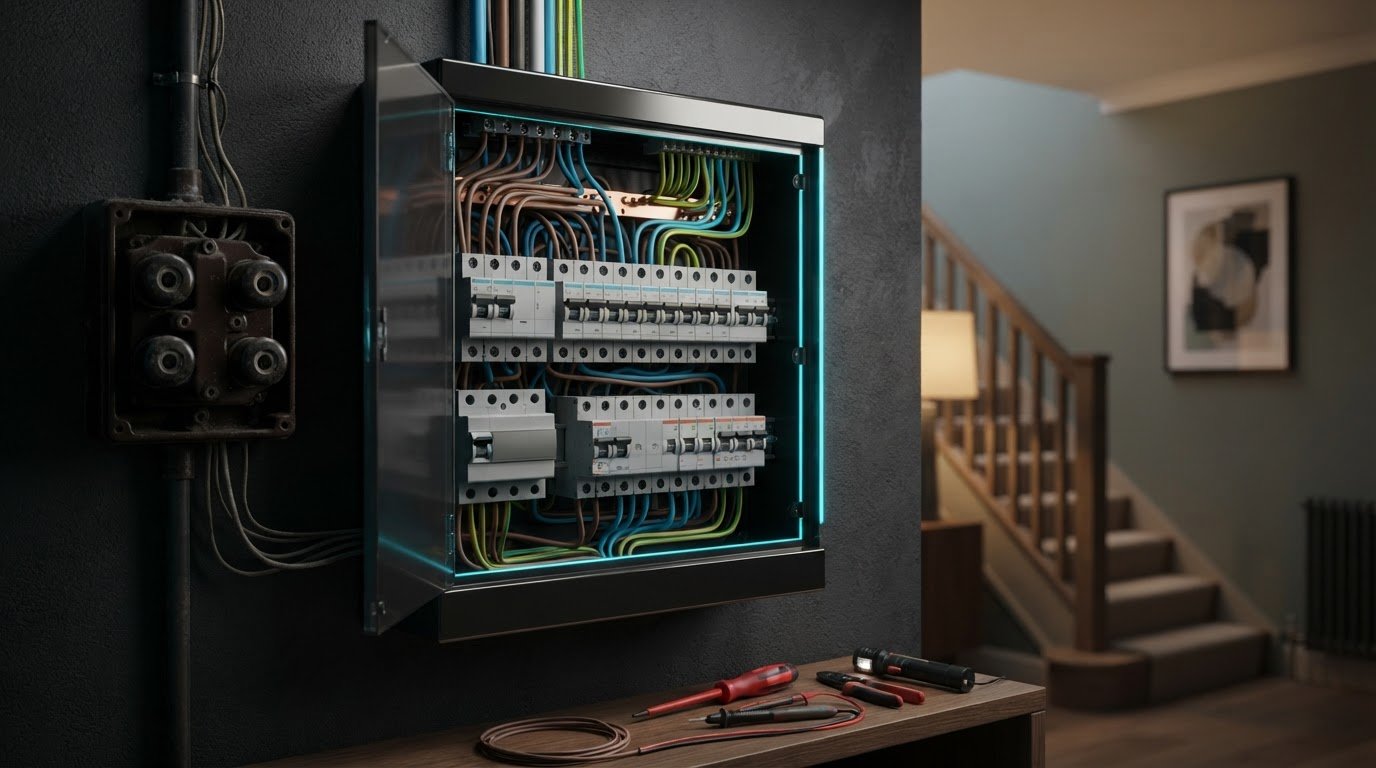
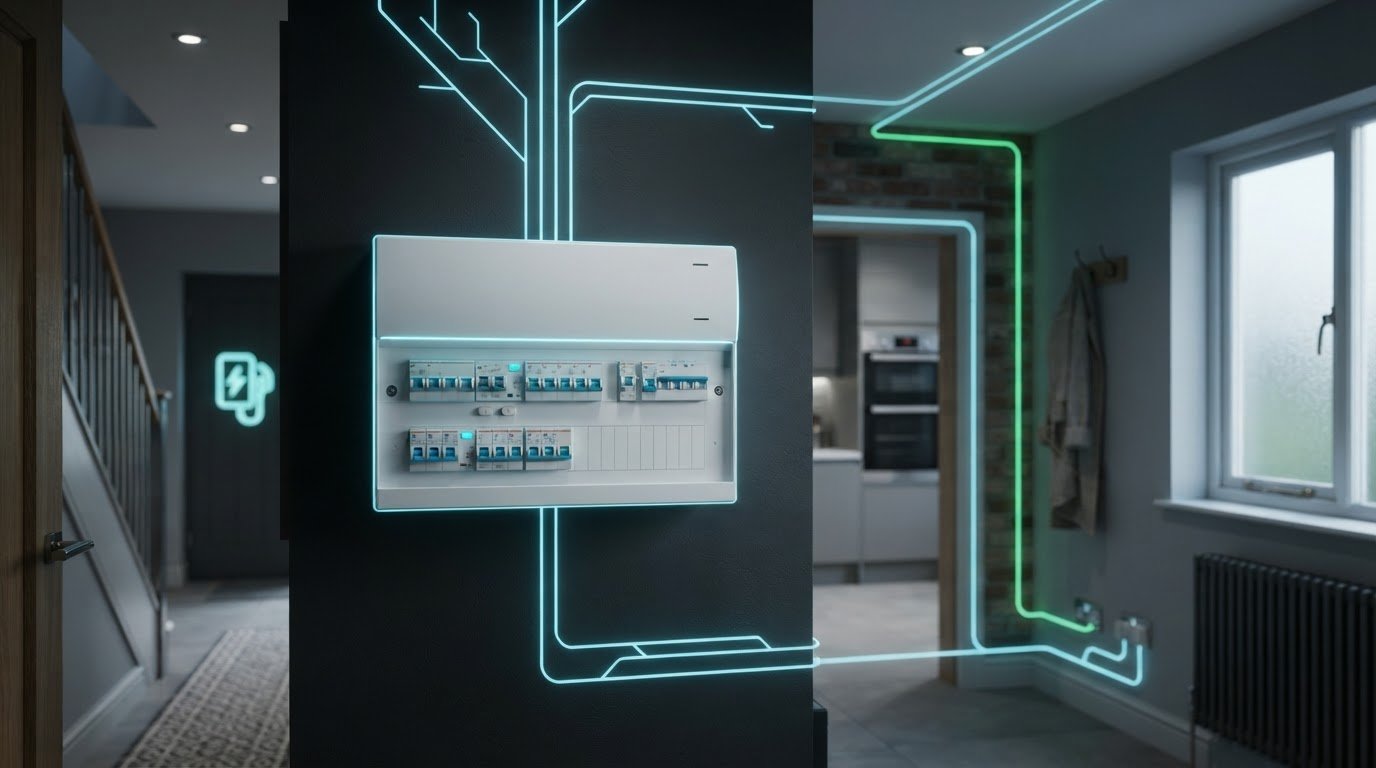
Adding a battery involves more than finding space for another piece of equipment. The existing electrical system, solar and inverter equipment, cable routes and property layout all influence how the battery can be integrated. A professional assessment helps plan the installation around the home instead of assuming every property can use the same arrangement.
What should you expect from a professionally integrated system?
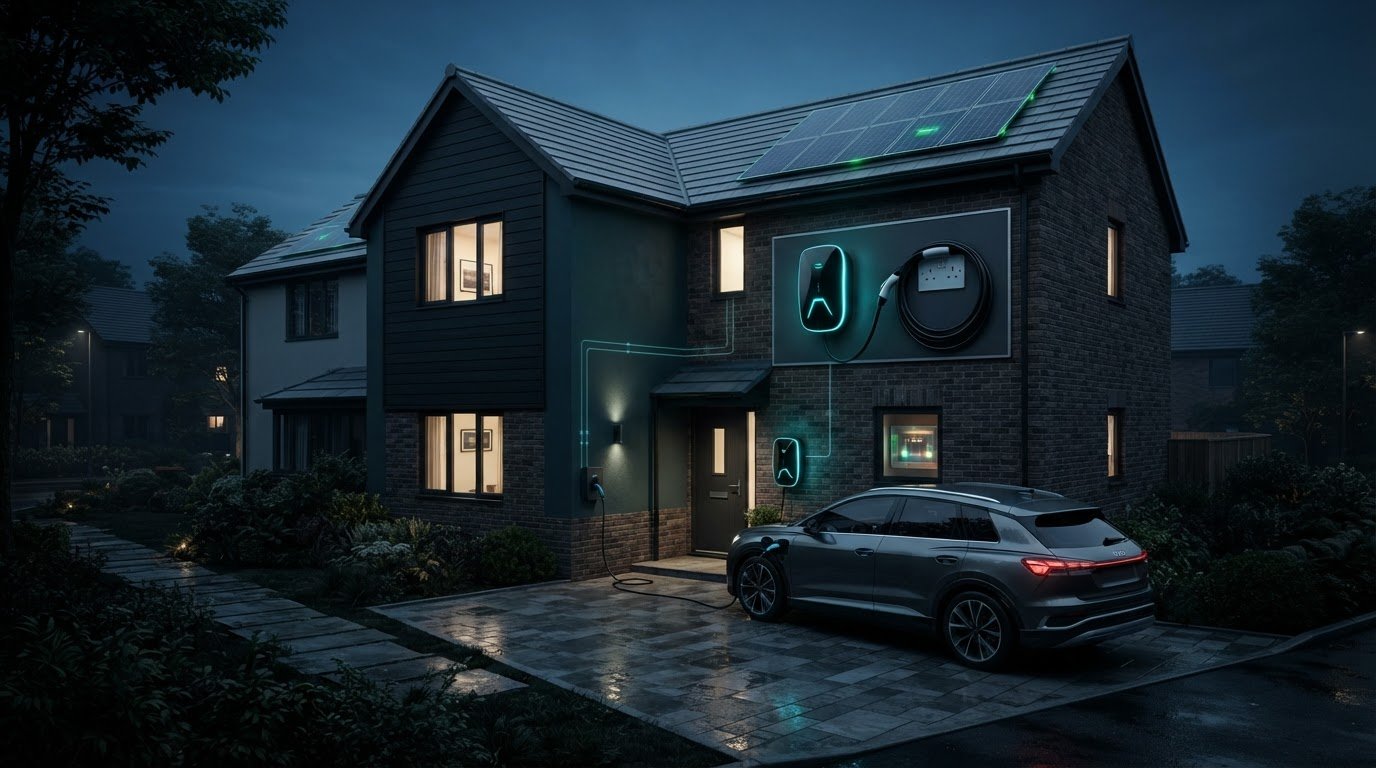
The installer considers how the proposed battery will work with your existing setup and where equipment can be positioned. This includes assessing electrical connections and how the system is intended to operate alongside household demand. Wider plans, such as adding an EV charger, may also affect household electrical planning.
Grid connection and export arrangements are part of the overall picture. Requirements depend on the installation and current UK guidance, so include them in the planning rather than making assumptions. For wider industry context, the Solar Energy Industries Association (SEIA) research covers solar and storage trends, though it is not UK-specific installation guidance.
Electrical setup: Existing equipment and wiring inform how the battery can be integrated.
Property layout: Available space and practical equipment placement form part of the design.
System operation: The intended use, grid connection and export arrangements need to suit the installation.
ALElectrical provides solar-and-battery solutions with professional electrical installation. Planning takes account of your project and existing setup. Once you have considered your household’s needs and equipment, a tailored quote can clarify practical next steps. You can find out more about a solar battery storage solution.
Turn your household priorities into a practical next step
Before settling on a system, decide what you want it to achieve over the coming years. You might want to make better use of your own solar generation, account for changing household routines or plan for other electrical upgrades. Being clear about your priorities gives the design process a practical starting point and keeps choices focused on your property.
A tailored discussion can turn those priorities into a solar battery storage plan that takes account of your home and electrical setup. You do not need to have every technical detail worked out before taking that step.
Request a free, no-obligation quote from ALElectrical to discuss a solar-and-battery solution for your project.
Frequently Asked Questions
Is solar battery storage worth it without solar panels?
It can suit some setups, but it is not automatically worthwhile without panels. A battery needs a charging source, such as grid electricity, and its potential value depends on when it charges, your electricity-use pattern and how the system is configured. Consider your household’s needs, tariffs and likely system operation when assessing whether it is a good fit.
Can I add solar battery storage to existing solar panels?
Yes, a battery may be added to an existing solar system, but owning panels alone does not guarantee compatibility. The inverter type, panel arrangement, electrical system and battery design all affect how the equipment can work together. Have details of your existing system, such as the inverter model and installation records, available for an assessment of how a proposed battery could integrate.
How long does solar battery storage last?
There is no single lifespan that applies to every battery. Battery chemistry, usage, operating conditions and the manufacturer’s terms can all affect expected service life. A warranty is a separate commitment, not a guaranteed prediction of how long the battery will operate. Review the product documentation for the specific system, including its stated lifespan and warranty conditions.
Does solar battery storage work during a power cut?
Not necessarily. A battery will not automatically keep your home powered during an outage; backup depends on the system design, compatible equipment and installation settings. If you want power for particular essentials, such as lighting or refrigeration, make that a project requirement. Discuss which circuits could be supported and how backup is intended to operate before choosing a system.
Comments