_.jpg)
Home Solar Battery Storage in Hertfordshire: The 2026 Buying Guide
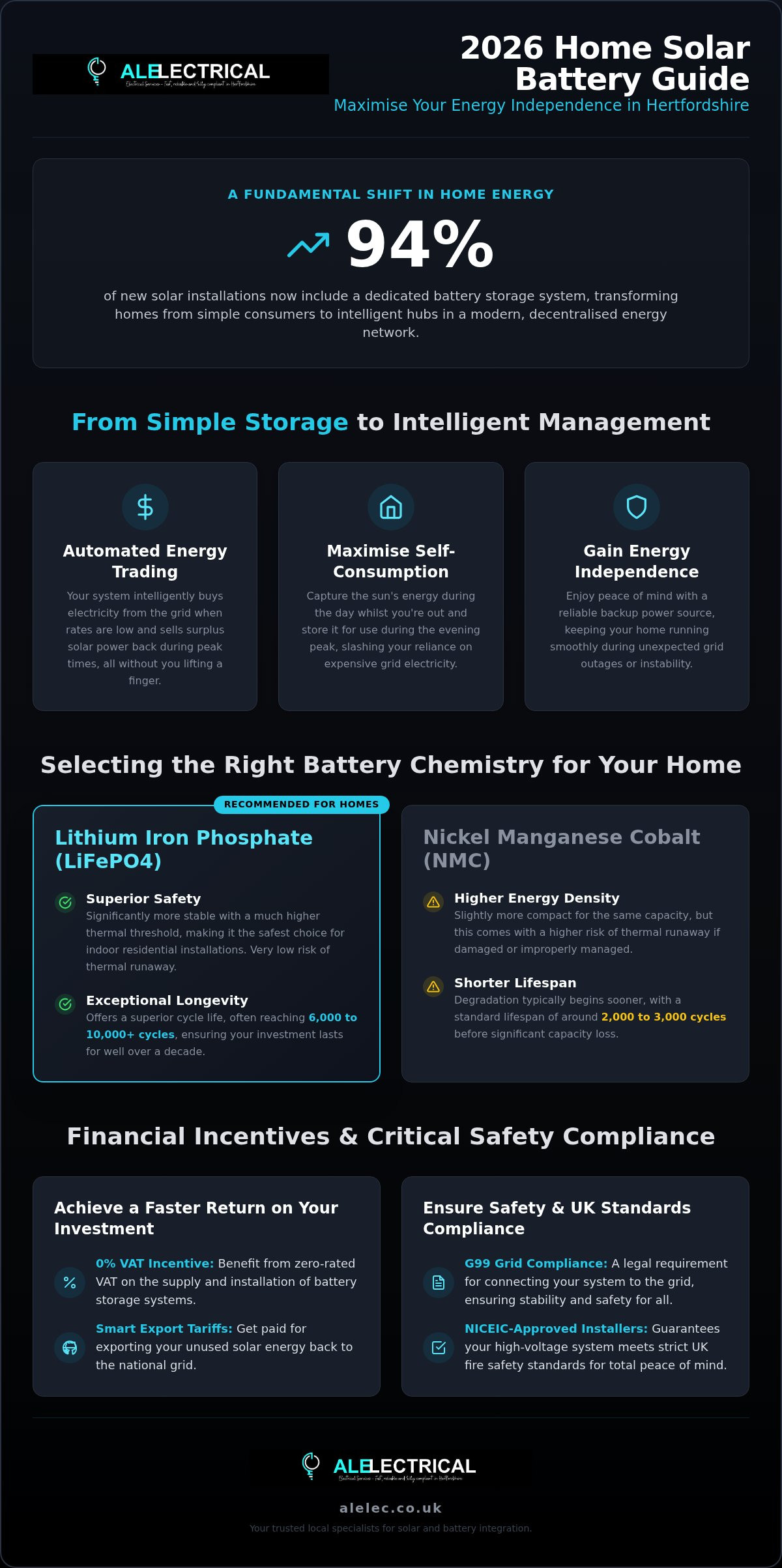
Did you know that 94% of new solar installations now include a dedicated storage system? This trend highlights how many people are looking for the home solar battery storage Hertfordshire requires to truly break free from rising grid costs. You likely find it frustrating to watch your panels soak up the sun all day, only to pay peak rates for electricity as soon as the evening settles in. It is a common concern amongst our neighbours who want their green investment to work harder whilst providing peace of mind during unexpected power cuts.
This 2026 buying guide will show you exactly how to choose a battery system that maximises your energy independence and slashes those monthly bills. We will help you cut through the technical jargon and understand which options integrate best with the latest smart UK tariffs. We also cover the current 0% VAT incentives and G99 grid regulations to ensure your installation is safe and compliant. By following this structured approach, you can secure a reliable energy future that protects your household from unpredictable price hikes for years to come.
Table of Contents
The Evolution of Home Solar Battery Storage in Hertfordshire
The concept of home solar battery storage Hertfordshire has undergone a significant transformation. No longer considered a luxury add-on, these systems have become the heart of a modern, decentralised energy network. By 2026, technology has moved far beyond simple storage; your battery is now an intelligent asset that interacts seamlessly with the grid. This evolution allows for automated trading, where your system can intelligently buy energy when it's cheap and sell surplus power back during peak times without you needing to lift a finger.
This shift from "simple storage" to "intelligent energy management" provides more than just personal savings. By reducing peak demand on the national grid, Hertfordshire households are playing a vital role in creating a more stable and sustainable energy future for everyone. It's a community-focused approach that balances individual financial gain with broader environmental benefits, helping to lower the overall carbon footprint of our local area.
Energy Independence in the Modern UK Home
For most homeowners, the primary goal in 2026 is self-consumption. This means using as much of your own generated solar energy as possible rather than letting it spill back into the grid for a lower return. A typical daily cycle involves capturing the midday sun whilst you're at work and storing it safely for the evening peak. This process provides a powerful psychological buffer. Knowing you have a physical reserve of energy creates a sense of reassurance against grid instability or unexpected power cuts, making your home feel like a secure haven.
Why 2026 is the Year for Solar Integration
The UK market has reached a point of genuine maturity. We now have access to high-efficiency hybrid inverters that manage both your panels and your battery through a single, streamlined interface. Modern home energy storage systems are more compact, safer, and more reliable than the early models seen a decade ago. Current regulations, including the 0% VAT incentive on battery installations, make the financial case stronger than it has ever been for local families.
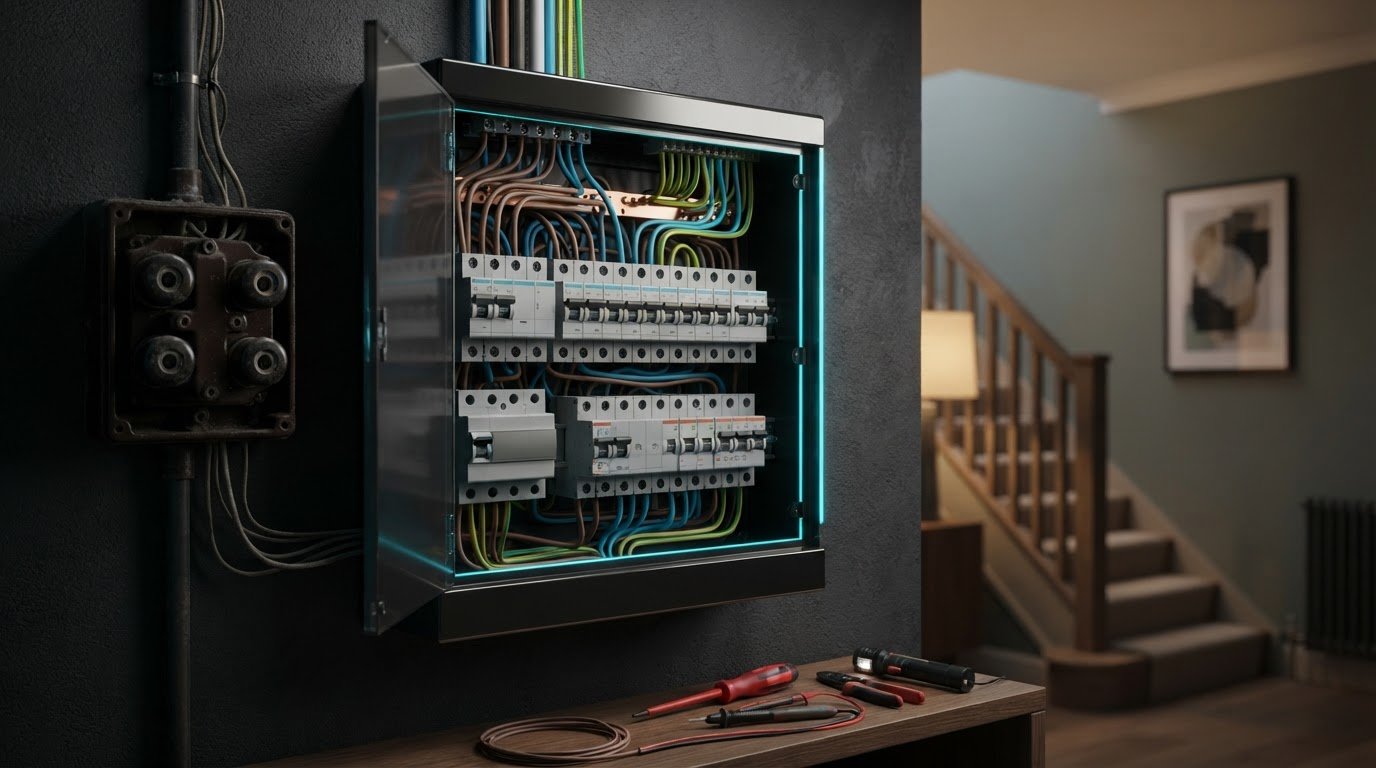
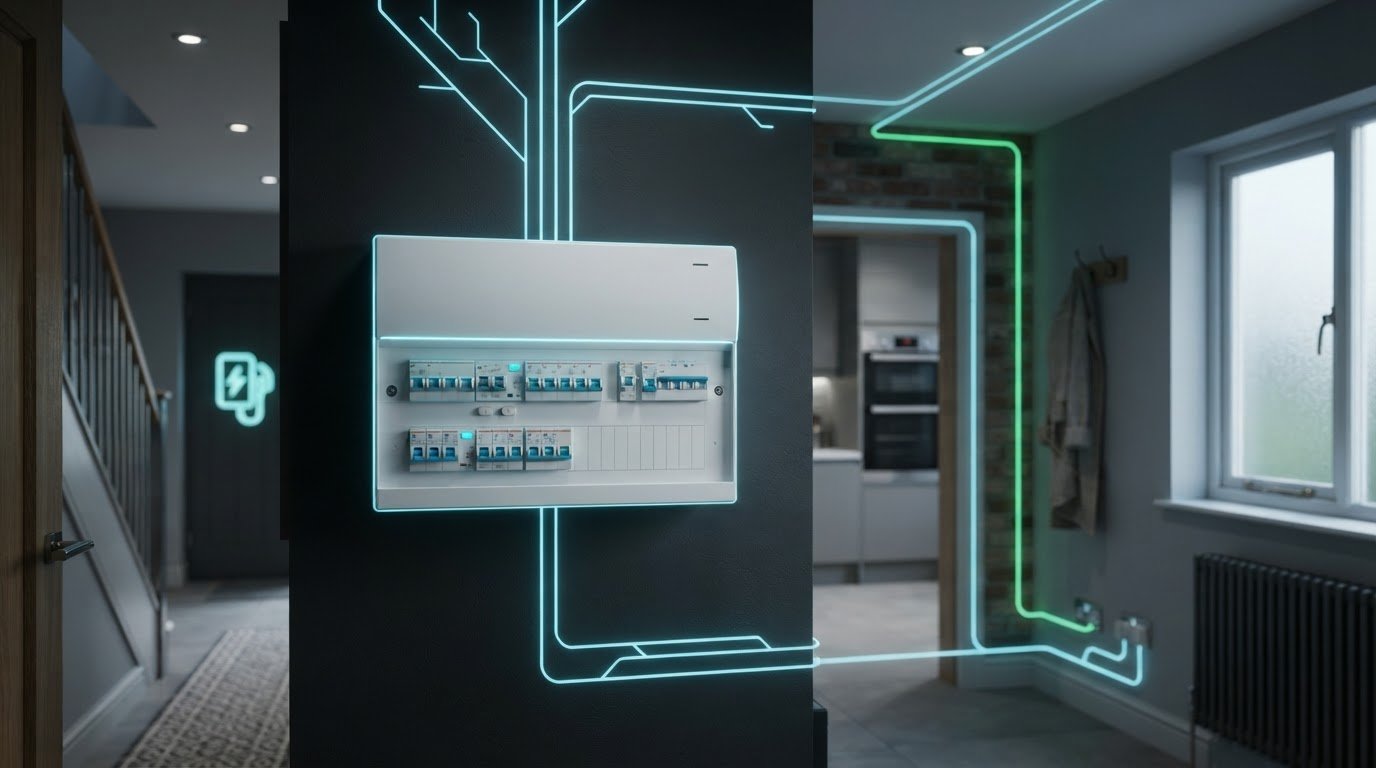
Integrating storage also offers the perfect opportunity to review your wider electrical safety. Many residents find that a battery installation is the ideal time to consider a full house rewiring or a fuse box upgrade. Ensuring your home's underlying infrastructure is robust enough to handle modern green technology is essential for long-term peace of mind. By choosing a professional, NICEIC-approved installer, you ensure that your system is not only efficient but also fully compliant with the latest safety standards, protecting both your investment and your family.
Technical Comparison: Selecting the Right Battery for Your Home
Choosing the right home solar battery storage Hertfordshire homeowners can rely on involves more than just picking a brand name. The underlying technology determines how long your system will last and how much energy you can actually use. In 2026, the market has moved towards high-performance systems that offer better longevity and safety. Understanding these technical nuances ensures you don't overpay for a system that degrades quickly.
One of the most important components is the Battery Management System (BMS). This is the internal computer that acts as the "brain" of your storage. It balances the individual cells, prevents overheating, and ensures the battery operates within safe limits. A high-quality BMS is essential for protecting your investment over its ten to fifteen-year lifespan. If you are unsure which specifications suit your property, our team can provide expert guidance on system sizing to match your specific energy needs.
Lithium Iron Phosphate (LiFePO4) vs. Traditional Lithium-ion
The chemistry inside the box matters immensely for residential safety. Most older lithium-ion batteries use Nickel Manganese Cobalt (NMC), which is energy-dense but can be prone to thermal runaway if damaged. At ALElectrical, we prioritise Lithium Iron Phosphate (LiFePO4) for indoor residential installations. LiFePO4 is significantly more stable and has a much higher thermal threshold, making it a safer choice for family homes.
Beyond safety, LiFePO4 offers superior cycle life. Whilst traditional lithium batteries might start to degrade after 2,000 or 3,000 charges, modern LiFePO4 units often reach 6,000 cycles or more. This means your battery could potentially last twice as long, providing much better value for money over time. To ensure your system meets these high standards, we only install equipment that adheres to the Microgeneration Certification Scheme (MCS) guidelines, which is also a requirement for accessing export tariffs.
Understanding Capacity and Depth of Discharge (DoD)
When looking at manufacturer specs, you will see two figures: total capacity and usable capacity. Total capacity is the raw amount of energy the battery can hold, but you can't always use all of it without causing damage. The percentage you can safely use is called the Depth of Discharge (DoD). In 2026, a 100% DoD is the gold standard, allowing you to use every kilowatt-hour you've paid for.
Sizing: Most three-bedroom semi-detached homes in Hertfordshire find a 10kWh battery provides the best balance between cost and performance.
Modularity: Look for systems that are "stackable". This allows you to start with a smaller capacity and add more modules later if your energy needs grow, such as when buying an electric vehicle.
Efficiency: High-efficiency systems minimise energy loss during the conversion from DC solar power to the AC electricity used in your home.
By focusing on these technical details, you move away from guesswork and towards a data-driven decision. This ensures your home solar battery storage Hertfordshire installation is robust, safe, and ready to handle your household's energy demands for the next decade.
Financial ROI: Smart Tariffs and the Smart Export Guarantee
The financial landscape for home solar battery storage Hertfordshire has shifted from simple savings to active wealth management. In 2026, the 0% VAT incentive remains a cornerstone for homeowners, with the government confirming this relief will stay in place until at least March 31, 2027. This incentive applies to both standalone battery installations and combined solar-plus-storage systems, providing an immediate reduction in the initial investment. When paired with the typical annual savings of £600 to £800 on electricity bills, the path to a positive return on investment is clearer than ever.
Modern systems now utilise sophisticated AI software to maximise these returns. By monitoring local Hertfordshire weather patterns in real-time, your battery can predict periods of low solar generation. If the software identifies a cloudy day ahead, it will automatically schedule a charge from the grid during the cheapest hours. This proactive approach ensures you never have to buy expensive electricity during peak evening periods, protecting your household from the volatility of the energy market.
Leveraging Smart Tariffs for Maximum Savings
The real power of a 2026 storage system lies in its ability to interact with "time-of-use" tariffs. This allows for a strategy known as energy arbitrage. Essentially, your battery "buys" electricity when demand is low and prices are at their floor, typically between midnight and 5 am. You then "use" that cheap, stored energy during the expensive 4 pm to 7 pm peak. For homes with electric vehicles, this creates a compounded saving effect. Your battery can manage the load between your home appliances and your EV charger, ensuring the car is prioritised when rates are lowest whilst keeping the lights on with stored solar power.
The Smart Export Guarantee (SEG) Explained
Whilst saving money is the primary goal, the Smart Export Guarantee (SEG) provides a vital secondary income stream. As of late 2026, competitive fixed rates from suppliers like So Energy and Octopus Energy range between 15p and 20p per kWh for exported surplus. Without a battery, you often export energy during the middle of the day when the grid is already flooded with solar power. A battery allows you to be strategic; you can hold onto your surplus and only export it when the grid is under pressure and rates are most favourable.
Smart Meter Requirement: To participate in any SEG scheme, your home must be fitted with a smart meter capable of sending half-hourly readings to your supplier.
Export Optimisation: Modern inverters can be programmed to prioritise home usage first, then battery charging, and finally grid export to ensure no green energy is wasted.
Grid Compliance: Professional installation ensures your system is correctly registered for SEG, allowing you to start earning from your surplus energy immediately after commissioning.
By combining tax incentives, intelligent software, and active export management, your storage system becomes more than just a backup. It is a hardworking financial asset that provides both security and a steady stream of savings.
Professional Installation: Safety, Compliance, and Regulations
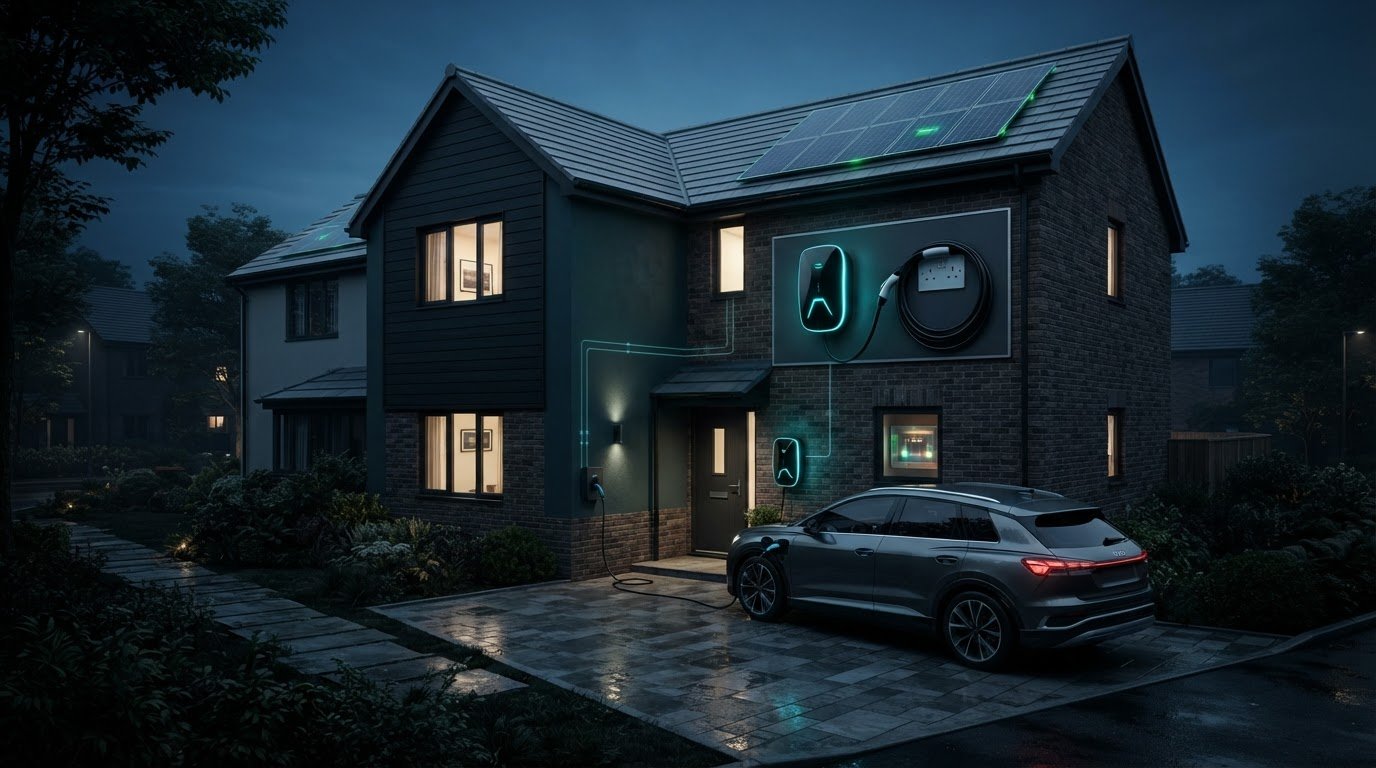
Installing home solar battery storage Hertfordshire families can trust is fundamentally a high-voltage electrical project. It isn't a DIY task or a job for a general handyman. Every system we install must meet rigorous UK safety standards to protect your property and ensure your home insurance remains valid. Working with an NICEIC-approved contractor provides the reassurance that your system is installed to the highest technical standards, with every connection tested and certified.
Beyond the physical wiring, professional oversight ensures your system remains eligible for financial incentives. To claim payments from the Smart Export Guarantee, both the products used and the installer must be accredited by the Microgeneration Certification Scheme (MCS). This oversight acts as a badge of quality, proving that your system is safe, efficient, and built to last. Our team provides the long-term support and maintenance required to keep your software updated and your battery running at peak performance for years to come.
G98 and G99 Grid Connection Requirements
Understanding the paperwork is just as important as the hardware. The UK uses two main standards for grid connection: G98 and G99. G98 applies to smaller systems where the inverter output is 3.68kW or less per phase. In these cases, we simply notify the Distribution Network Operator (DNO) after the work is finished. However, if you opt for a larger system or multiple storage units, a G99 application is required. This involves seeking pre-approval from the DNO, which can take between 2 and 4 months. ALElectrical manages this entire administrative process on your behalf, ensuring all technical drawings and compliance documents are submitted correctly to avoid delays.
Siting and Fire Safety Considerations
Where you put your battery matters for both safety and performance. Batteries thrive in stable temperatures, typically between 10°C and 25°C. If a unit gets too cold, its charging speed drops; if it gets too hot, its lifespan shortens. For loft or garage installations, proper ventilation is essential to prevent heat build-up. Fire safety regulations also dictate specific distances from escape routes and flammable materials to ensure your family's safety. For outdoor units, we provide physical security and weather protection to prevent moisture ingress or tampering. If you're ready to discuss a safe, compliant setup, you can request a free, no-obligation quote from our technical team today.
Home Solar Battery Storage Hertfordshire: Securing Your Energy Future
Choosing to invest in home solar battery storage Hertfordshire is a significant step towards long-term energy independence. Throughout this guide, we've explored how 2026 technology offers a unique opportunity to decouple your household from volatile market prices whilst contributing to a greener local community. However, the technical complexity of these systems means that professional installation is the only way to guarantee your return on investment and, most importantly, your family's safety.
The journey from your initial enquiry to the final grid commissioning is designed to be as smooth and transparent as possible. It begins with a detailed look at your current energy usage and solar generation capacity. We then move through the technical design phase, handle all the necessary DNO applications, and finish with a professional installation that respects your home. This methodical approach ensures that every component is optimised for the specific requirements of your property.
Evaluating Installer Accreditations
In 2026, homeowners should be more selective than ever when choosing an installer. Look for a team that holds both NICEIC approval and MCS accreditation. These certifications aren't just badges; they're your guarantee that the work meets the highest UK standards for safety and efficiency. Local expertise also provides a distinct commercial advantage. A team familiar with the specific dynamics of the Hertfordshire power grid can navigate the G99 application process much more efficiently than a national "faceless" entity. Always ensure your system is backed by a comprehensive warranty that covers both the high-tech parts and the specialised labour required to maintain them.
The ALElectrical Commitment to Quality
At ALElectrical, we pride ourselves on being your approachable local experts. We've built our reputation on a foundation of reliability and peace of mind, moving away from high-pressure sales tactics in favour of clear, professional advice. We believe in transparent, fixed-fee technical services, so you always know exactly where you stand before any work begins. Our goal is to act as your guide, simplifying the technical jargon and providing a system that integrates perfectly with your lifestyle.
If you're ready to protect your home against future price hikes and maximise the power of your solar panels, we're here to help. We provide free, no-obligation quotes for tailored system designs that reflect your specific goals. We invite you to contact our team today for a professional assessment and take the first certain step towards a more secure energy future.
Empowering Your Home with Smarter Energy
Transitioning to a modern energy model is about more than just technology; it's about reclaiming control over your household's future. By selecting the right battery chemistry and leveraging intelligent tariffs, you turn your home into a proactive energy hub. We've explored how 2026 standards prioritise safety and efficiency, ensuring that your home solar battery storage Hertfordshire system delivers reliable performance for years to come. Professional oversight remains the key to unlocking these long-term benefits whilst keeping your property secure.
As your local Hertfordshire-based specialists serving the whole UK, ALElectrical is here to provide the reassuring expert advice you need to make an informed choice. Our status as an NICEIC Approved Contractor means you can trust our team to handle every technical detail with precision and care. We're ready to help you navigate the entire process, from initial design to final grid connection, ensuring your system is fully compliant and optimised for savings.
Request your free, no-obligation solar battery quote from ALElectrical and start your journey towards a more independent and sustainable home today.
Frequently Asked Questions
Do I need solar panels to have a home battery storage system?
You don't strictly need solar panels to benefit from a battery system. Many homeowners use them to store cheap off-peak electricity from the grid during the night to use during expensive peak hours. This setup, often called a standalone battery, is an excellent way to lower bills even if your roof isn't suitable for panels. It's a practical and effective solution for modern energy management in any UK household.
How long does a typical solar battery last before it needs replacing?
Most modern batteries last between 10 and 15 years depending on the chemistry used. Lithium Iron Phosphate (LiFePO4) units are typically rated for 6,000 cycles or more, which usually equates to over a decade of daily use. After this point, the battery won't stop working but will gradually hold less charge. Choosing a system with a long manufacturer warranty ensures your investment remains protected for its entire lifespan.
Is it possible to go completely off-grid with a solar battery in the UK?
Going completely off-grid is very challenging in the UK due to low solar generation during the winter months. Whilst it's technically possible with a very large solar array and massive storage capacity, most households find it more practical to remain grid-connected. This allows you to top up your battery during dark winter weeks whilst still enjoying significant energy independence during the rest of the year.
Can a solar battery provide power during a power cut?
A solar battery can provide power during a grid failure if it's installed with an Emergency Power Supply (EPS) or a specific gateway. Without this additional component, most systems will automatically shut down for safety reasons to prevent exporting power back to a "dead" grid. If backup power is a priority, we can design your home solar battery storage Hertfordshire system to include this essential functionality for total reassurance.
How much space do I need for a home battery installation?
Modern battery units are surprisingly compact and typically require a space similar to a small fridge-freezer or a boiler. Most systems are either wall-mounted or floor-standing, often located in a garage, utility room, or loft. It's important to leave enough clearance around the unit for ventilation and maintenance access. We assess your available space during the design phase to find the most efficient and safe location for your property.
Is there still 0% VAT on solar batteries in 2026?
Yes, the 0% VAT rate on home solar battery storage Hertfordshire installations is confirmed to remain in place until at least March 31, 2027. This incentive applies to both standalone battery units and systems installed alongside solar panels. This automatic discount makes 2026 an ideal time to upgrade your home's energy infrastructure whilst the government is still actively supporting green domestic transitions with significant and helpful tax relief.
What is the average ROI period for a home battery system?
The average payback period for a solar battery system is typically between 7 and 12 years. This ROI is influenced by your household's energy consumption, the specific smart tariff you use, and how much surplus solar energy you generate. By using intelligent software to charge from the grid at off-peak rates, many of our clients find they can accelerate their savings and achieve a much faster financial return.
Are solar batteries safe to install inside a house?
Solar batteries are very safe to install inside a house when they use stable chemistries like Lithium Iron Phosphate (LiFePO4). These units are designed with multiple safety layers, including internal cooling and advanced management systems that prevent overheating. We always follow strict UK fire safety standards regarding placement and ventilation, ensuring your installation provides total peace of mind and security for you and your family.
Comments