_.jpg)
Professional Electrical Repair: A Homeowner’s Guide to Safety and Compliance
Updated: Aug 31
Could a flickering light or a faint burning smell be the only warning your home gives before a serious fault develops? It's a stressful thought for any homeowner, particularly when you're worried about the risk of fire or the potential cost of major work. You deserve a home that's safe and functional, yet the prospect of inviting an unreliable contractor into your space often leads to more anxiety than the fault itself. We understand that you need reliability and transparency when arranging an electrical repair, rather than guesswork and hidden fees.
We're here to provide clarity and help you understand exactly what's happening behind your walls. In this guide, you'll learn how to identify common faults and determine whether a straightforward fix is enough or if a more extensive rewire is required. We'll walk you through the latest UK safety standards, including the importance of BS 7671 compliance and how professional EICR inspections keep your family protected. By the end, you'll have a clear path toward a safe, compliant home with fixed-fee pricing and minimal disruption to your daily routine.
Table of Contents
Common Signs Your Home Requires Professional Electrical Repair
Identifying a fault early can be the difference between a simple electrical repair and a significant home emergency. Many homeowners overlook small issues like a light that flickers when the kettle boils, but these are often the first indicators of a system under strain. These symptoms aren't just minor inconveniences; they're your home's way of telling you that something is wrong behind the scenes. Ignoring them can lead to costly damage or, in the worst cases, an electrical fire.
Look out for these common warning signs in your property:
Persistent flickering or dimming lights whilst using other appliances.
The distinct smell of fish or burning plastic near sockets (arcing).
Frequent tripping of the Residual Current Device (RCD) in the consumer unit.
Discolouration or scorch marks on plug faces and socket outlets.
A fishy odour is particularly concerning. It's usually the smell of urea-formaldehyde or other plastic insulation components overheating. If you notice this, or see brown scorch marks on your sockets, the heat has already reached a level where it's damaging the physical structure of your home's electrical points. These aren't issues that settle over time. They only worsen until the circuit fails completely or a fire starts.
Recognising Visual and Auditory Warning Signs
Electricity's usually silent. If you hear a faint buzzing or crackling sound behind your walls or inside a switch, it's often a sign of a loose connection. This phenomenon, known as arcing, occurs when electricity jumps across a gap. It creates intense heat that can reach thousands of degrees. It's a major fire risk that requires immediate attention. Similarly, if a socket feels warm to the touch even when nothing's plugged in, the internal wiring is likely failing. We often discover dangerous DIY patches during renovations, where previous owners have used the wrong cable types or bypassed safety features. These "quick fixes" are a common reason for professional intervention and must be corrected to ensure your property meets modern standards.
The Role of the Consumer Unit in Fault Detection
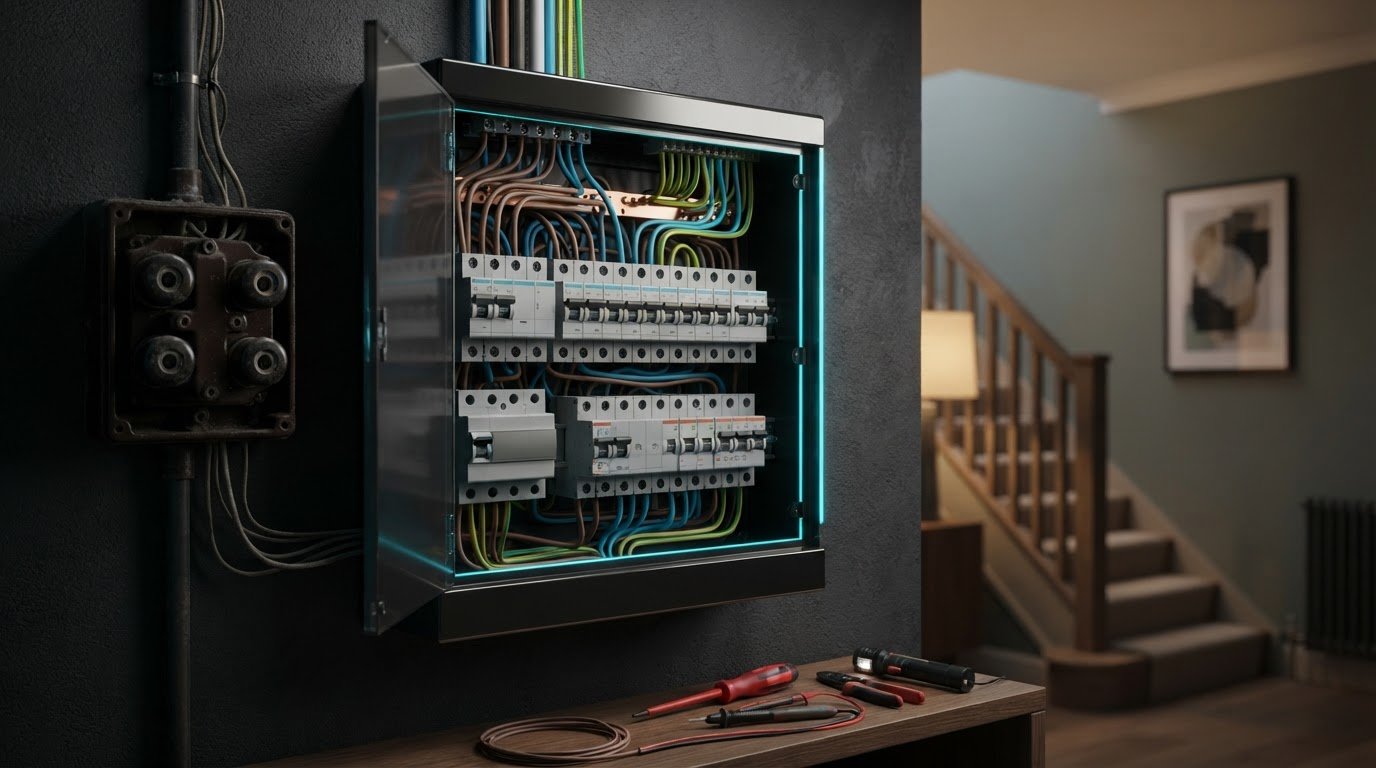
Your consumer unit acts as the primary safety gate for your home. It's designed to protect you by cutting power when it detects an anomaly. If your RCD trips frequently, it's usually detecting a "leak" of electricity to the earth, which could indicate damaged wiring or a deeper systemic fault. It's vital to distinguish between a simple circuit overload, caused by too many high-power devices running at once, and a dangerous short circuit. For a comprehensive overview of electrical wiring and how these safety mechanisms function, technical resources can provide deeper context on the complexity of your home's circuits. Outdated units often lack modern RCD protection, meaning they might fail to trip during a fault. This leaves your home vulnerable, making a professional inspection essential for long-term peace of mind.
Understanding Your Home’s Electrical System: The Anatomy of a Repair
To understand why an electrical repair is necessary, it's helpful to see your home as a complex network. This system starts at the consumer unit, the brain of the operation, and travels through cables hidden deep within your walls to reach sockets and lights. Over time, the insulation protecting these cables can become brittle or damaged. We use specialised diagnostic tools like insulation resistance testers to measure the integrity of this protective layer. This allows us to pinpoint exactly where a fault lies without having to lift every floorboard or tear down plaster in your house.
The Heart of the Home: The Consumer Unit
Your fuse box isn't just a collection of switches; it's a sophisticated safety system designed to protect your family. Modern units contain Miniature Circuit Breakers (MCBs) to prevent overloads and Residual Current Devices (RCDs) that disconnect power in milliseconds if they detect a leak. Newer standards also recommend Arc Fault Detection Devices (AFDDs) to catch the silent arcing mentioned in the previous section. For many older properties, Fuse Box Upgrades are the most effective way to modernise your home's safety in one go. It ensures every circuit is monitored by the latest technology, providing a much higher level of protection than old-fashioned fuse wire.
Circuit Integrity and Wiring Standards
Modern PVC-sheathed cabling is designed to last for decades, but older rubber insulation from the mid-20th century eventually perishes and crumbles. Most UK homes use a ring final circuit, where the wiring forms a complete loop from the consumer unit and back again. If this loop is broken, the circuit still works, but the remaining wires can easily overheat under heavy load. Continuity testing is the method used to verify that a circuit is a complete, unbroken loop with low resistance. Identifying these hidden breaks early prevents the cables from degrading further due to heat stress and keeps your system stable.
Safety also relies heavily on earthing and bonding. Earthing provides a safe path for electricity to follow if a fault occurs, whilst bonding connects your electrical system to metal gas or water pipes. This prevents you from receiving a shock if a fault accidentally makes those pipes live. Understanding these connections is vital when planning any electrical repair to ensure the entire property remains compliant. If you're unsure about the state of your current wiring, a professional electrical maintenance check can provide the reassurance and clarity you need.
Electrical Repair vs. Full Rewire: Making the Right Choice
One of the most frequent questions we hear is whether a specific problem requires a simple electrical repair or a complete system overhaul. It's a balance between managing your current budget and ensuring the long-term safety of your property. Understanding the difference between an isolated fault and a systemic failure is the first step in making an informed decision. If a single socket has failed due to a loose terminal, a targeted fix is perfectly appropriate. However, if that failure is just one of many similar issues across different rooms, it's often a sign that the entire installation is reaching the end of its useful life.
The "50-Year Rule" is a helpful benchmark for many UK homeowners. Most electrical installations are designed to last around four to five decades. If your home hasn't been rewired since the mid-1970s, the insulation on your cables is likely becoming brittle. Attempting to repair individual sections of such an aged system can be a false economy, as the act of moving old cables to fit new sockets often causes the insulation to crumble further. Beyond safety, a full rewire significantly increases property value and ensures landlords stay ahead of strict compliance regulations, making the home much easier to sell or let in the future.
Whilst we're carrying out repairs, it's also a convenient time to consider your lifestyle needs. Many older homes lack the number of sockets required for modern gadgets. Adding extra points during a repair session is often more cost-effective than booking a separate visit later, allowing you to eliminate dangerous daisy-chained extension leads.
When a Minor Repair is Sufficient
Not every electrical gremlin warrants a major project. Many issues are limited to faulty accessories that have simply worn out over time. We frequently assist clients with:
Replacing cracked or damaged sockets and switches.
Updating old light pendants or decorative fittings.
Rectifying isolated cable damage caused by rodents or water ingress from a plumbing leak.
Our team takes a straightforward approach to these tasks. We provide transparent, fixed-fee quotes for minor works, so you know exactly what the job costs before we start. It's about providing the right solution for the problem at hand, without unnecessary upselling.
Indicators That a Full Rewire is Necessary
Certain red flags indicate that a system is no longer fit for purpose. If you discover lead-sheathed or fabric-covered cabling during a renovation, it's a critical sign that the wiring is dangerously old. These materials haven't been used for decades and lack the safety properties of modern PVC. A lack of a proper earthing system is another major indicator; without it, your RCDs cannot protect you from electric shocks. When these systemic risks are present, House Rewires become the only responsible path forward to ensure your home meets current British Standards and keeps your family safe.

Compliance and Safety: Why Professional Repair Matters
Professional electrical repair isn't just about making a light work again; it's about adhering to the strict safety framework set out in BS 7671, known as the IET Wiring Regulations. These rules ensure every installation is safe from fire and shock hazards. Under Part P of the Building Regulations, certain types of electrical work in dwellings must be notified to local building control. Hiring an unaccredited "handyman" for these tasks might save a few pounds initially, but it often leads to dangerous sub-standard work that puts your family at risk. We've seen many instances where poor connections have led to overheating that could have been easily avoided with professional care.
Insurance companies are increasingly strict about professional standards. If a fire occurs and the cause is traced back to an uncertified electrical repair, your home insurance validity could be called into question. This could leave you facing significant financial loss during an already stressful time. Landlords face even stricter legal obligations; they must ensure their properties undergo regular electrical inspections at least every five years to protect their tenants. By choosing a qualified contractor, you guarantee that your home meets the latest safety standards and that all work is legally compliant. This isn't just a recommendation; it's a vital part of responsible property ownership.
The EICR: Your System’s "Health Check"
An Electrical Installation Condition Report (EICR) is the most thorough way to identify hidden faults that a visual inspection might miss. Unlike a quick check, EICR Testing involves a series of technical tests to find issues like degraded insulation or poor earthing. The results are categorised into observations:
C1 (Danger Present): There's an immediate risk of injury; the system must be made safe straight away.
C2 (Potentially Dangerous): Urgent remedial work is required to remove a potential hazard.
C3 (Improvement Recommended): The system is safe, but upgrading to modern standards would be beneficial.
Certification and Documentation
Every time a professional carries out a minor electrical repair, such as adding a new socket to an existing circuit, they should issue a Minor Electrical Installation Works Certificate. This document is your proof that the work was tested and meets British Standards. It's essential to keep these records safe. When you eventually come to sell your property, the buyer's solicitor will often ask for evidence of electrical compliance. Having a clear paper trail of professional maintenance can prevent delays in the sale process. At ALElectrical, we ensure all work is meticulously logged and fully compliant with current regulations, giving you total peace of mind.
If you're concerned about the safety of your home's wiring, get a free, no-obligation quote from our professional team today.
Choosing a Professional Electrical Contractor for Your Repairs
Finding a reliable specialist for an electrical repair involves more than just picking the first name that appears in a search. It's about ensuring the person entering your home is qualified, insured, and committed to high standards. In the UK, you should always vet contractors for professional accreditations such as NICEIC or NAPIT. These organisations regularly assess their members to ensure they're working to the latest BS 7671 standards. Choosing an accredited professional gives you the peace of mind that your home's safety is in expert hands rather than being left to chance.
Technical skill is vital, but communication and punctuality are equally important. A professional contractor respects your time and your property. They'll explain the fault in plain English, providing a clear pathway to a solution without using confusing jargon. This transparency builds a foundation of community trust, which is the cornerstone of our approach. We believe that a successful project is defined as much by the quality of the customer service as it is by the technical execution of the work. You shouldn't have to chase for updates or wonder when a job will be finished.
What to Look for in a Quotation
A professional quote should be transparent and comprehensive. Unlike a vague "estimate," which can change once the work begins, a fixed-fee quote provides certainty. Always ensure your quotation includes:
A detailed breakdown of labour and all necessary parts.
The cost of testing and issuing the required safety certification.
A clear timeline for when the work will be completed.
The cheapest quote can often be the most expensive in the long run. If a price seems unusually low, the contractor might be cutting corners on materials or failing to provide the mandatory documentation. Before work starts, ask your electrician if they're registered with a competent person scheme and whether they'll provide a Minor Works Certificate upon completion. These questions help you separate dedicated professionals from unreliable operators who may not be around if a problem arises later.
The ALElectrical Difference
We pride ourselves on being a professional alternative to "quick-fix" handymen. Our team understands that having work done can be disruptive, so we prioritise tidy work and aim for minimal disruption to your daily routine. We don't just fix the immediate symptom; we ensure the entire circuit is safe and compliant with modern regulations. Every task we undertake is driven by our commitment to safety, quality, and the long-term satisfaction of our clients. We treat your home with the same care we'd treat our own.
If you've noticed any of the warning signs discussed in this guide, don't leave your safety to chance. Contact ALElectrical today for a free, no-obligation quote and let our specialists provide the reliable, expert service you deserve.
Securing Your Home’s Electrical Future
Protecting your home starts with being proactive about small warning signs before they become major hazards. Whether you've noticed a flickering light or an outdated fuse box, taking action now ensures your property remains a safe haven for your family. We've explored how a professional electrical repair can extend the life of your system and why skipping expert help is a risk you shouldn't take. By prioritising BS 7671 compliance and keeping clear records of your home's maintenance, you protect both your safety and your property's future market value.
You don't have to navigate technical faults alone. Our team is here to guide you toward a safer, more reliable home with minimal disruption to your daily routine. If you're ready to move forward with confidence, book your professional electrical repair quote with ALElectrical. We're specialists in safety-first residential contracting and provide free, no-obligation professional quotes that are fully compliant with Part P regulations. Let's work together to keep your home running smoothly and securely for years to come.
Frequently Asked Questions
Do I need an electrician to change a light switch or socket?
You don't strictly need a professional for simple accessory changes, but it's often the safest choice for your home. Whilst "like-for-like" replacements aren't notifiable under Building Regulations, a mistake can lead to loose connections or earthing issues. A professional ensures the circuit remains safe and that the new fitting is correctly tensioned. If you're unsure about the state of the cables behind the plate, an expert eye provides the necessary reassurance.
What should I do if I smell a fishy or burning odour near a plug?
Turn off the power at the consumer unit immediately and avoid using that circuit until it's inspected. This smell is a classic sign of plastic insulation overheating due to arcing or a loose connection. It's a significant fire risk that won't go away on its own. Arrange a professional electrical repair to identify the source of the heat before it causes permanent damage to your home's structure or wiring.
Why does my fuse box keep tripping even after I unplug everything?
If your RCD continues to trip with all appliances removed, the fault likely lies within the fixed wiring of your home. This could be caused by damaged cable insulation, moisture ingress in an outdoor light, or a faulty component within the consumer unit itself. You'll need a specialist to perform diagnostic tests to locate the hidden earth leakage. These issues are often systemic and require technical equipment to resolve safely.
Is it illegal to carry out my own electrical repairs in the UK?
It isn't illegal to perform basic maintenance, but most significant work must comply with Part P of the Building Regulations. Notifiable tasks, such as installing a new circuit or working in "special locations" like bathrooms, must be certified by a registered competent person. Failing to follow these rules can make it difficult to sell your home and may put your family's safety at risk. Professional certification ensures your property meets current British Standards.
How much does a typical electrical repair cost in 2026?
Costs for an electrical repair vary widely based on the complexity of the fault and the time required for diagnostics. Factors such as the age of your installation and the specific parts needed will influence the final total. Most reputable contractors offer fixed-fee pricing for minor works or an hourly rate for fault finding. It's always best to request a transparent, no-obligation quote to understand the full scope of the work before any repairs begin.
Can a faulty electrical system affect my home insurance?
Yes, your insurer may refuse to pay out if a fire is caused by neglected wiring or uncertified electrical work. Most policies require you to maintain your home in a good state of repair. If you can't provide evidence of professional maintenance or a valid EICR following a claim, you might find your cover is void. Keeping certificates for all professional work is essential for protecting your financial interests and your home.
What is the difference between a minor repair and a rewire?
A minor repair involves fixing or replacing a specific component, such as a single faulty socket or a broken light fitting. In contrast, a rewire is a systemic project where all the old cabling, sockets, and the consumer unit are replaced with modern alternatives. Repairs are suitable for isolated damage, whilst a rewire is necessary when the entire installation has reached the end of its safe working life or no longer meets safety standards.
How often should I have my home’s electrics professionally inspected?
Homeowners should ideally arrange a professional inspection every ten years to ensure their system remains safe and compliant. If you're a landlord, the law is stricter, requiring an Electrical Installation Condition Report (EICR) at least every five years or at the start of a new tenancy. Regular checks help identify hidden wear and tear before it develops into a dangerous fault, providing long-term peace of mind for you and your tenants.


Comments