
Residual Current Device Tripped? A Step-by-Step Guide to Restoring Power Safely
You are halfway through preparing dinner when the kitchen suddenly plunges into darkness, leaving you staring at a silent oven and a lifeless fridge. It's a frustrating moment that often brings a wave of anxiety about electrical shocks or hidden faults. Most homeowners feel a bit overwhelmed when they realise a residual current device tripped, especially if they aren't sure how the switch differs from a standard fuse.
We understand that your family's safety and peace of mind are your top priorities. In this guide, you'll learn exactly how to identify the source of the problem and the safe, methodical steps to restore electricity to your home. We will walk you through a simple process of elimination to check for faulty appliances and explain when a persistent trip might signal that it's time for a professional EICR or a modern consumer unit upgrade.
Table of Contents
Understanding Why Your Residual Current Device Tripped
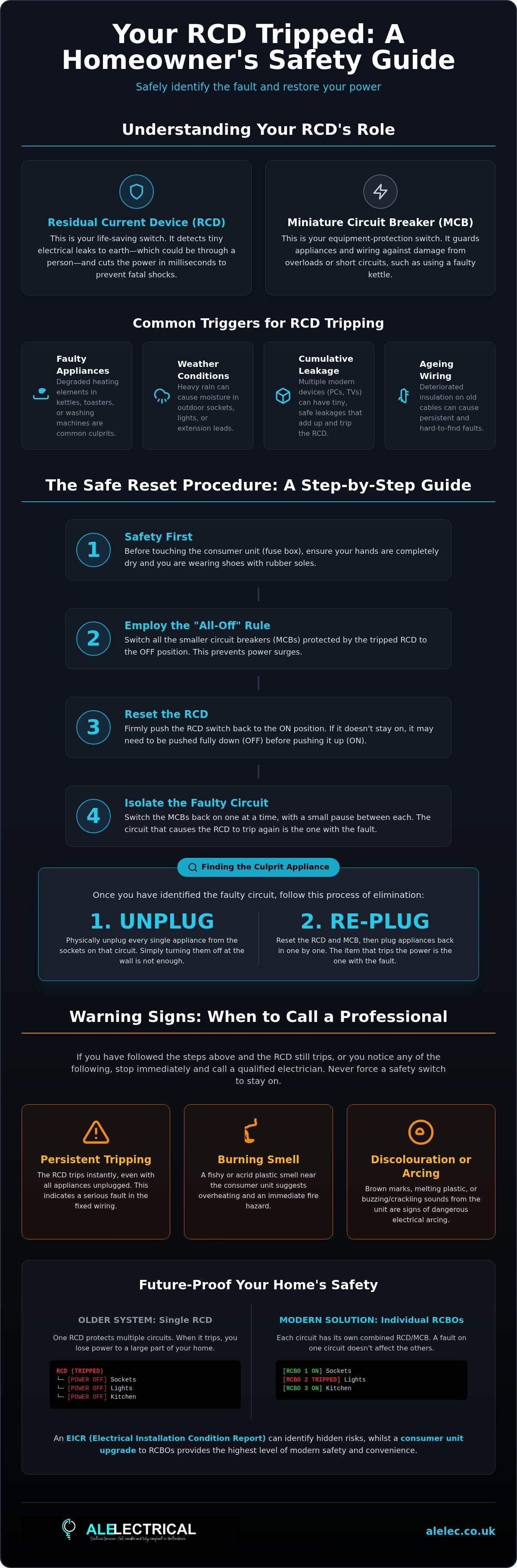
A Residual-current device (RCD) is a sensitive safety switch designed to protect you from fatal electric shocks and prevent electrical fires. It works by constantly monitoring the flow of electricity through your circuits. If it detects even a tiny amount of electricity leaking to earth, it disconnects the power in a fraction of a second. It's helpful to remember that when your residual current device tripped, it didn't fail; it actually performed exactly as intended to keep your family safe.
It's common to confuse an RCD with a Miniature Circuit Breaker (MCB), but they serve different purposes. Whilst an MCB protects your wiring from overloads and short circuits, the RCD is specifically there for life protection. It detects earth leakage, which occurs when current takes an unintended path, perhaps through a person or a damp patch of wall. This distinction is crucial because an RCD can trip even if the total power usage in your home is very low.
Common Triggers for RCD Tripping in Modern Homes
Nuisance tripping is a common headache in modern homes. High-tech appliances like PCs or LED lighting drivers often have a small amount of natural leakage. When several of these run at once, the cumulative effect can flip the switch. Weather is another factor. Heavy rain often finds its way into outdoor sockets or garden lights, creating a temporary earth fault. You might also find that your residual current device tripped because of a faulty heating element in a kettle or a loose connection in a socket. If the problem persists, it might mean your cables are reaching the end of their life. In such cases, a professional house rewiring might be the only way to guarantee your home remains safe.
How to Safely Reset a Tripped RCD: A Step-by-Step Guide
Safety is your first priority when your residual current device tripped. Before touching the consumer unit, make sure your hands are dry and you're wearing shoes. Start by switching off all the individual circuit breakers (MCBs) protected by that RCD. This "All-Off" rule prevents a sudden surge of power that could damage your electronics or cause the unit to trip again instantly.
Once the circuits are isolated, flip the RCD switch back to the "on" position. You might need to push it firmly down to the "off" position first to reset the internal mechanism. If it stays up, begin switching the MCBs back on one at a time. If you find that your residual current device tripped again during this process, you've successfully narrowed down the location of the fault. Organisations like the Consumer Product Safety Commission emphasise how critical these devices are for preventing electrocution, so never try to force a switch to stay up.
The Process of Elimination for Faulty Appliances
To find the culprit, you must unplug every device on the affected circuit. Simply switching them off at the wall isn't enough; a physical connection can still cause earth leakage. If the RCD stays on after everything is unplugged, plug items back in one by one. Watch out for "latent faults" in appliances like fridges or washing machines, which might only trip the system when they cycle on. If the RCD trips even with every appliance removed, you likely have a fixed wiring fault. In this situation, booking a professional EICR is the safest way to identify the hidden issue.
When Persistent Tripping Requires a Professional Electrician
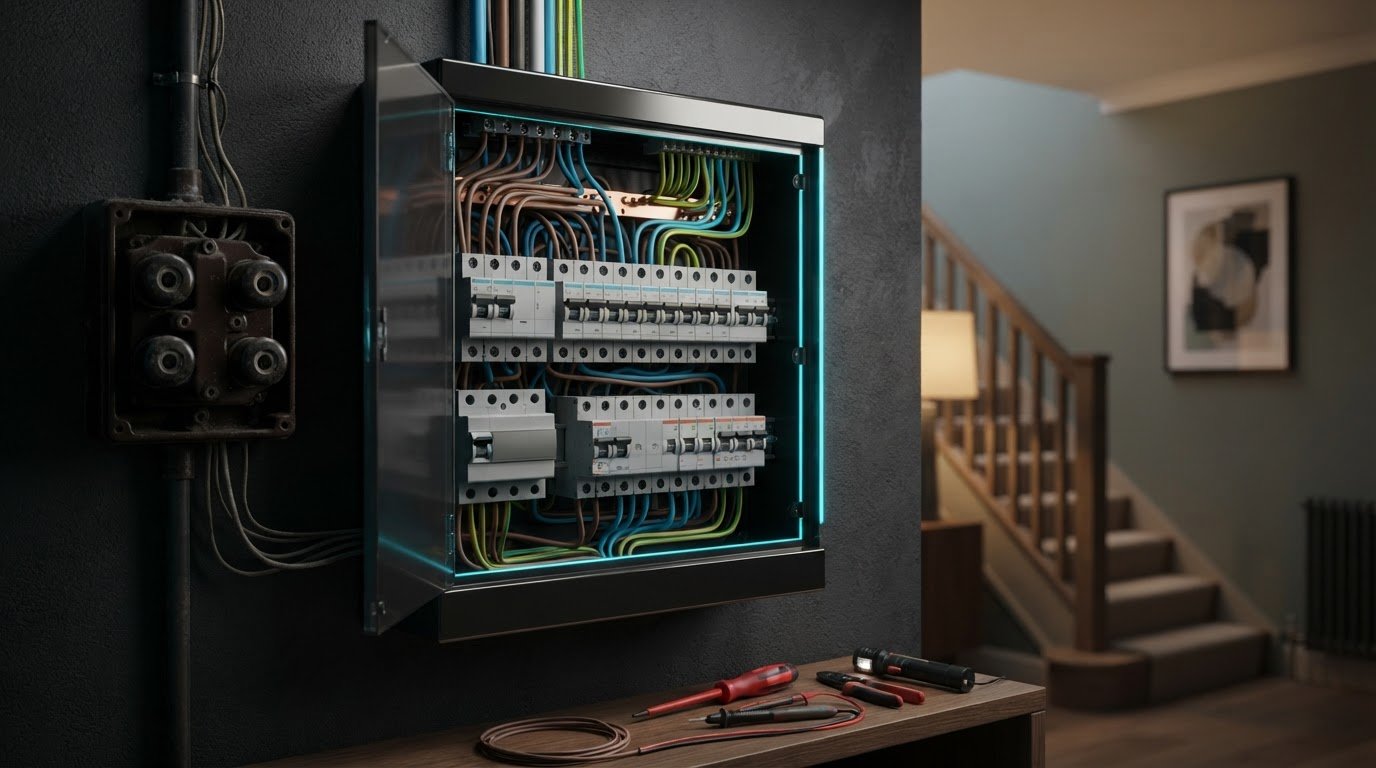
If you have followed the process of elimination and your residual current device tripped again, it's vital that you don't force the switch back up. Forcing a safety switch bypasses the very protection designed to save your life. If you notice a faint burning smell or see brown discolouration on the casing of your consumer unit, stop touching it immediately. These are signs of overheating or arcing, which are high-risk fire hazards. The Electrical Safety Foundation International highlights that whilst these devices are incredibly reliable, they cannot protect you if the underlying wiring is failing.
Older fuse boxes often struggle with the electrical demands of modern life. If your home hasn't had an inspection in over ten years, hidden faults amongst the wiring in your walls could be the culprit. A professional EICR (Electrical Installation Condition Report) is the most effective way to identify these invisible risks before they become emergencies. It provides a clear snapshot of your home's health and ensures everything is functioning within safe limits.
Upgrading Your Consumer Unit for Future-Proof Safety
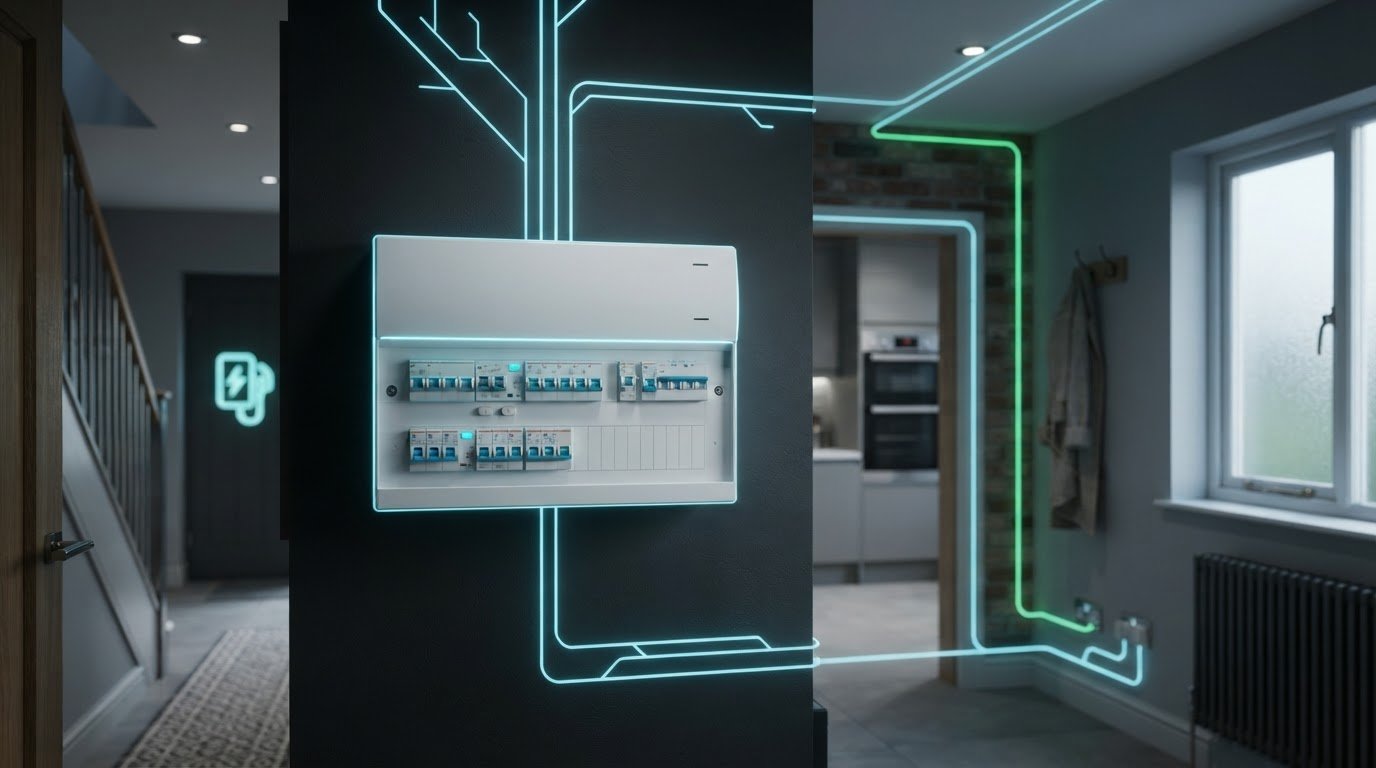
Modern electrical standards have moved towards using individual RCBOs for each circuit. Unlike older setups where one residual current device tripped and took out half the house, RCBOs isolate faults to a single circuit. This prevents total blackouts and makes troubleshooting much simpler. If you're tired of frequent trips, a fuse box upgrade provides a comprehensive safety overhaul. Regular professional maintenance ensures your system meets current BS 7671 standards, giving you long-term peace of mind and preventing the need for urgent repairs.
Securing Your Home's Electrical Future
Understanding that an RCD is a life-saving tool rather than a nuisance is the first step toward a safer home. By following a methodical process of elimination, you can often identify faulty appliances yourself. However, if your residual current device tripped and won't reset, it's a clear signal that your internal wiring or consumer unit needs expert attention.
Our team specialises in providing detailed EICR safety reporting and expert installations of modern consumer units to ensure your home remains fully compliant with BS 7671 standards. Contact ALElectrical for a professional safety inspection and peace of mind. Maintaining a safe electrical system doesn't have to be stressful; with the right guidance and professional support, you can enjoy a reliable and secure home for years to come.
Frequently Asked Questions
Can a lightbulb cause an RCD to trip?
Yes, a blowing lightbulb can occasionally cause a surge or an earth fault that triggers the safety switch. This is more common with older halogen or incandescent bulbs than modern LEDs. If your residual current device tripped exactly when you flicked a light switch, the bulb is likely the culprit. You should replace the bulb whilst the power is off to see if the circuit resets.
Why does my RCD trip only when it rains?
Moisture is a frequent cause of earth leakage faults. Rainwater often finds its way into outdoor sockets, garden lighting, or junction boxes with perished seals. Because RCDs are incredibly sensitive, even a tiny amount of dampness creates an unintended path to earth. This triggers the device to prevent a potential shock. You should check all external fittings for signs of water ingress or condensation.
Is a tripped RCD dangerous if I can reset it?
A single trip isn't always a cause for alarm, but frequent tripping is a warning sign that shouldn't be ignored. If your residual current device tripped once and resets easily, it might have been a minor nuisance. However, persistent issues indicate an underlying fault in your wiring or an appliance. Ignoring these signs can lead to electrical fires, so booking an EICR is the safest way to find hidden faults.
What is the difference between an RCD and a fuse?
A fuse or miniature circuit breaker (MCB) is designed to protect your home's wiring from overloads and short circuits. In contrast, an RCD is a life-saving device specifically intended to protect people from electrocution. It monitors the balance of current and cuts power instantly if it detects leakage to earth. Whilst a fuse stops your cables from melting, an RCD stops you from receiving a fatal shock.

Comments