
Signs of Bad Wiring in a House UK: 2026 Safety Guide
A flickering light can be more than an annoying bulb, but it does not prove that your wiring is unsafe. If you’re searching for signs of bad wiring in a house uk, it can be difficult to tell whether a symptom is harmless or needs urgent attention.
Warning signs can help you decide what to do next, but they can’t diagnose the cause. This guide explains what to look for without opening electrical fittings, when to stop using a circuit and seek professional help, and what a qualified electrician can check. If your installation needs assessing, an Electrical Installation Condition Report (EICR) can document its observed condition and help inform recommendations for repairs, an upgrade or a rewire.
Table of Contents
What are the signs of bad wiring in a house?
Common warning signs include burning smells, scorch marks, buzzing, repeatedly blown fuses or tripped circuit breakers, and switches or sockets that feel unusually warm. A single symptom doesn’t prove that the wiring is faulty. Note which fitting or area is affected, when it happens and whether the problem is becoming more frequent.
Burning smells or scorch marks around sockets and switches
Buzzing or crackling sounds from electrical fittings
Fuses blowing or circuit breakers tripping repeatedly
Switches or sockets that feel unusually warm
If a problem happens only when you use one appliance, it may be related to that appliance rather than the house wiring. You can’t confirm the cause by sight alone. Stop using the appliance if it seems unsafe, and don’t open a fitting or dismantle equipment to investigate. For background on wiring terminology and practices, see this overview of global electrical wiring standards.
Which electrical warning signs should you never ignore?
Flickering lights, discoloured sockets, crackling sounds, or any shock or tingling sensation need attention. Notice whether several lights or fittings are affected, or whether the issue appears tied to one appliance. This information can help a qualified electrician assess the problem.
Flickering lights, discolouration, unusual sounds, warmth, repeated trips, burning smells, shocks and tingles are warning signs, not a diagnosis.
If you see smoke or sparking, or notice a strong burning smell, keep everyone away and don’t touch the fitting or nearby equipment. Leave the area and call 999 if there’s a fire. The signs of bad wiring in a house uk can have different causes, so record what you observe from a safe distance and seek qualified advice rather than trying to identify the fault yourself.
What should you do if you suspect bad wiring?
Take these steps without trying to find or fix the fault yourself:
Stop using affected equipment. If a particular appliance seems linked to the problem, switch it off only if you can do so safely.
Keep people away. Don’t touch exposed conductors, remove socket covers or attempt electrical repairs. Keep children and pets clear of the affected area.
Seek qualified advice. Note what you observed, where it happened and when, then share those details with an electrician.
The signs of bad wiring in a house uk can have different causes, so don’t assume you know what’s wrong. If you rent your home, GOV.UK provides information about UK electrical safety regulations and responsibilities for landlords and tenants.
When is a suspected wiring fault urgent?
Visible smoke, active sparking or fire calls for immediate action. Move everyone to safety, don’t investigate the source, and call 999 if there’s a fire. Intermittent flickering without smoke or sparking may be less urgent, but it still needs qualified advice, particularly if it’s getting worse or happening alongside other warning signs.
Only isolate power at the consumer unit if it’s safely accessible and you can reach it without going near smoke, flames, sparks or damaged wiring. If not, leave it alone. For information about consumer unit upgrades, see a fuse box upgrade guide.
How can an electrician confirm and resolve bad wiring?
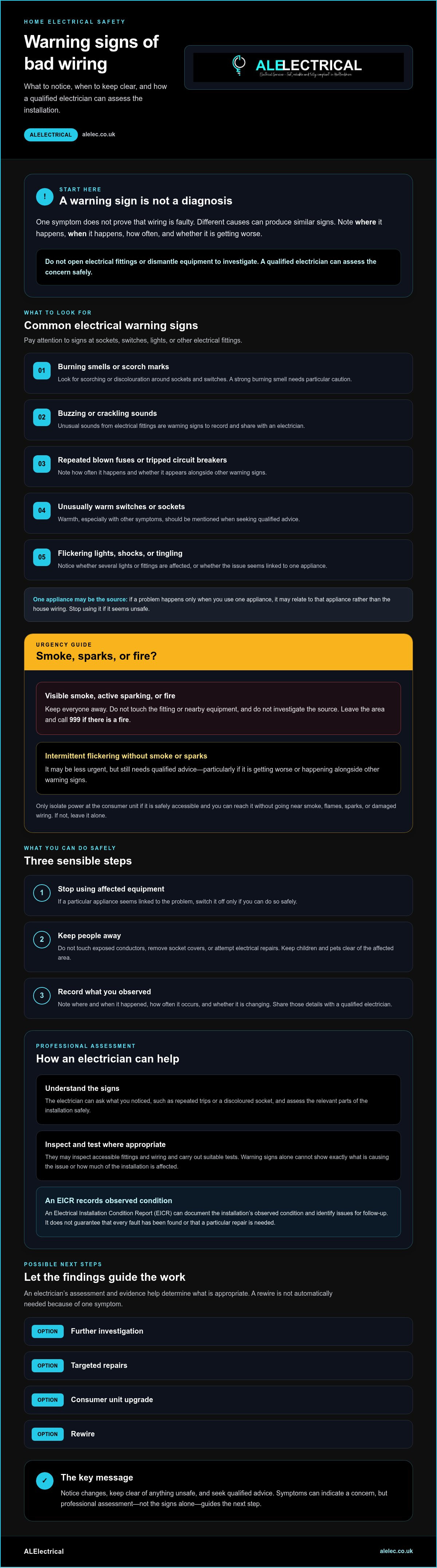
Warning signs can point to a concern, but they can’t show exactly what’s causing it or how much of the installation is affected. An electrician can assess the relevant parts of the system and, where appropriate, carry out an Electrical Installation Condition Report (EICR). The report records the installation’s observed condition and any issues identified. It doesn’t guarantee that every fault has been found or that a particular repair is needed.
What happens during a professional electrical assessment?
The electrician will ask what you’ve noticed, such as repeated trips or a discoloured socket, then assess the installation safely. They may inspect accessible fittings and wiring and carry out suitable tests. Their findings can help determine whether the concern needs further investigation, targeted repairs, a consumer unit upgrade or a rewire. The signs of bad wiring in a house uk alone can’t determine which option is appropriate.
An EICR can document the condition of the installation and explain recommended next steps. For more background, read a full house rewiring guide or an electrical installation condition report guide. Electrical Safety First also provides consumer guidance on electrical safety.
A rewire isn’t automatically needed because of one symptom. The electrician’s assessment and evidence should guide the recommendation, whether that’s a specific repair or more extensive work. ALElectrical offers EICR inspections, repairs, consumer unit upgrades and house rewires. Once the options are clear, you can request a free, no-obligation quote and consider the recommended work.
Take the next step towards a safer home
Recognising the signs of bad wiring in a house uk can help you act sooner, but symptoms alone can’t confirm the cause or the right solution. Pay attention to changes, keep clear of anything that appears unsafe, and leave electrical checks and repairs to a qualified professional.
An assessment can clarify whether an EICR is appropriate and whether the findings point to electrical repairs or further work. You don’t have to guess or commit to a particular solution before the installation has been checked. ALElectrical offers EICR inspections and electrical repairs, with free, no-obligation quotes available.
Ask ALElectrical about a professional electrical inspection and discuss the next step. A clear assessment can help you make an informed decision about the work required.
Frequently Asked Questions
What are the most common signs of bad wiring in a house?
Common warning signs include burning smells, scorch marks or discolouration around sockets, buzzing or crackling, warm switches, repeated fuse or circuit-breaker trips, flickering lights, and shocks or tingles. These signs of bad wiring in a house uk can have other causes, so one symptom isn’t a diagnosis. Note where and when it happens, and whether it’s becoming more frequent.
Can bad wiring cause lights to flicker or circuit breakers to trip?
Faulty wiring can cause flickering lights or repeated trips, but these symptoms can also have other causes, including a problem with one appliance or fitting. Notice whether several lights are affected, whether the issue happens when particular equipment is used, and whether trips recur after resetting. Don’t repeatedly reset a tripping circuit. Stop using affected equipment and seek qualified advice.
Is a burning smell from an electrical socket an emergency?
A burning smell from a socket needs prompt attention, particularly if it’s strong or accompanied by heat, smoke or visible sparking. Stop using the socket and keep people away. Don’t touch it, remove its cover or investigate. If there’s smoke or fire, move to safety and call 999 if there’s a fire. Don’t approach the source to isolate power.
How can I check whether my house wiring is safe?
You can watch for visible warning signs from a safe distance, but you can’t confirm wiring safety by looking or testing fittings yourself. Don’t remove socket covers or attempt repairs. Ask a qualified electrician to assess the installation. An Electrical Installation Condition Report (EICR) may document its observed condition and identify issues for follow-up. The findings can guide appropriate next steps.

Comments