_.jpg)
The Homeowner’s Guide to Full House Rewiring: Safety, Process, and Future-Proofing
Did you know that homes with older, degraded wiring are significantly more likely to have connections reach fire-hazard temperatures compared to modern systems? It's natural to feel a bit uneasy about what's happening behind your walls, especially if you're considering a full house rewiring project to fix flickering lights or sockets that feel warm to the touch. You want a home that's safe for your family, but the thought of disrupting your decor or deciphering technical jargon like "Part P compliance" and "Consumer Units" can feel overwhelming.
This guide will demystify the entire process, showing you how a modernised system protects your property and adds real value. We'll explore the clear signs that your electrical installation is past its prime and explain how the latest BS 7671:2018+A4:2026 standards keep you safe. You'll also discover how to future-proof your home for modern technology like EV chargers and solar batteries, ensuring your system is ready for the 2020s and beyond. Whether you're planning a renovation or simply want peace of mind, we're here to help you navigate the journey to a safer, smarter home.
Table of Contents
What is House Rewiring and Why is it Essential?
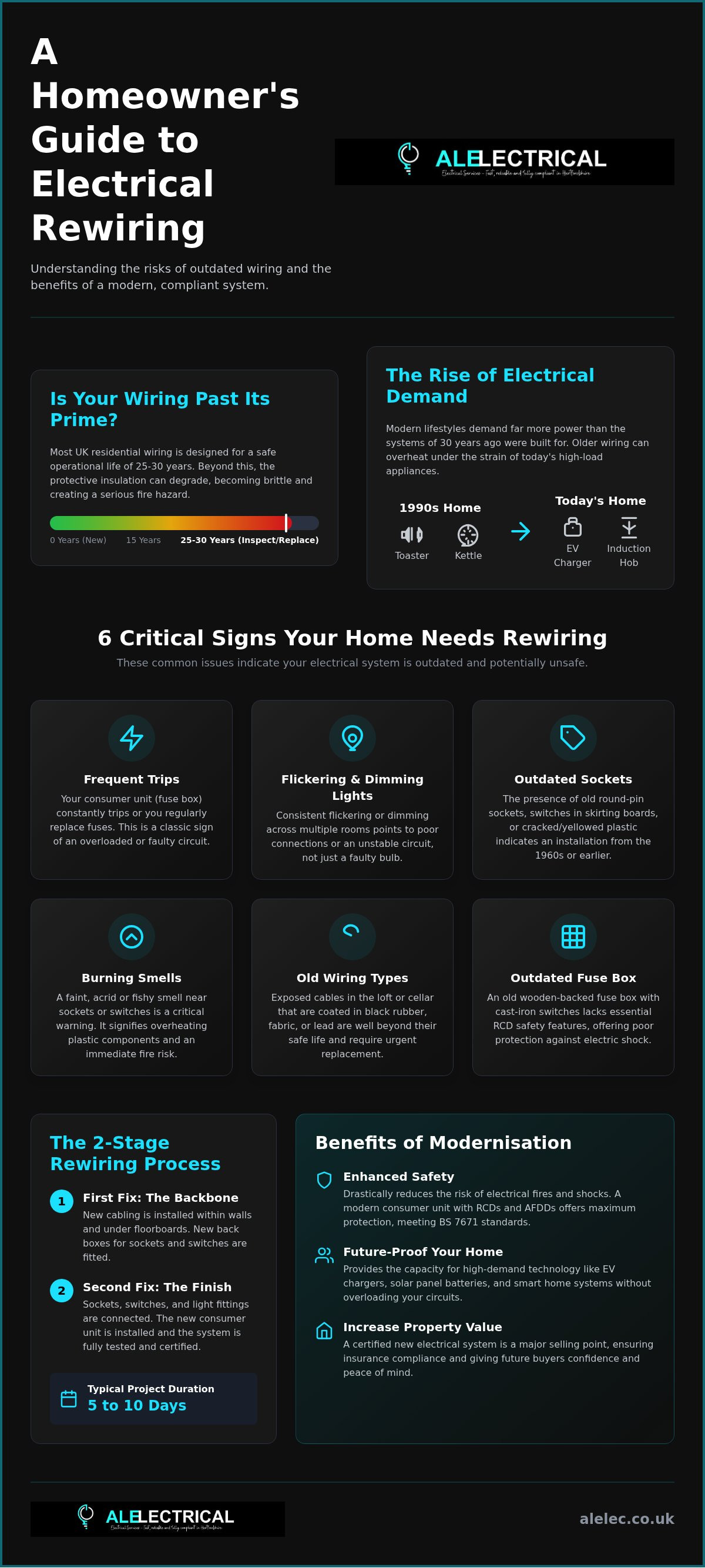
A full house rewiring project is one of the most significant investments you can make in your property's infrastructure. It isn't just about fitting new faceplates or moving a light switch; it's a comprehensive replacement of every electrical cable, socket, and switch throughout the building. Crucially, it also involves upgrading the consumer unit (often called the fuse box) to a modern version equipped with Residual Current Devices (RCDs) or Arc Fault Detection Devices (AFDDs). Understanding basic electrical wiring principles helps clarify why these components must work in harmony to prevent overheating and circuit failure.
Our homes have changed dramatically over the last thirty years. In the 1990s, a kitchen might have powered a kettle and a toaster. Today, that same circuit might struggle under the simultaneous load of air fryers, coffee machines, induction hobs, and electric ovens. Older systems simply weren't designed for this level of demand. When you push an outdated system too hard, the cables can become dangerously hot, increasing the risk of an electrical fire.
The Lifespan of Residential Wiring
While your walls might look the same for decades, the copper and insulation inside them have a finite life. Most UK electrical systems are designed to last roughly 25 to 30 years before the materials begin to perish. Environmental factors can speed up this process; for example, damp conditions in older stone properties or rodent damage in loft spaces can compromise cable integrity much sooner.
A critical concern for older properties is thermal degradation. Thermal degradation happens when the protective insulation around a wire becomes brittle and cracks due to repeated overheating, eventually exposing live conductors and creating a severe fire risk. If your home still uses lead-sheathed or black rubber-coated cables, these are now well beyond their safe operational life and require immediate attention to meet the current BS 7671:2018+A4:2026 regulations.
The Benefits Beyond Safety
While safety is the primary driver, modernising your electrics offers hidden advantages that many homeowners overlook. New copper wiring has lower electrical resistance than old, degraded cables, which can slightly improve the overall energy efficiency of your home. It's a small but meaningful way to reduce wasted energy as electricity travels through your property.
There's also the practical matter of insurance and value. Most home insurance providers assume your property's electrics are in a safe, maintainable condition. If a fire occurs and the cause is found to be ancient, unmaintained wiring, you might find your claim is rejected. Conversely, a house rewiring certificate provides tangible proof of quality to future buyers. It removes a major hurdle during the survey process, often increasing property resale value and giving potential owners the confidence to pay a premium for a home that is safe and ready for the future.
Identifying the Signs: When Does Your Property Need a Rewire?
It's easy to overlook the health of your home’s electrical system when everything seems to be working. However, electricity behaves predictably, and your property often provides subtle warnings before a major failure occurs. One of the most common indicators that you need to consider a house rewiring project is the persistent tripping of your consumer unit or the frequent blowing of old-fashioned fuses. This happens because the system is overloaded or a fault is developing within the aged insulation.
Flickering lights are another red flag. While a single flickering bulb might just be a loose connection, lights that dim or pulse across several rooms suggest a wider issue with the circuit's integrity. Perhaps more urgent is the presence of a faint, acrid burning smell near sockets or switches. This often indicates that the plastic components are melting due to heat build-up, a situation that requires immediate professional investigation.
Visual Cues for Homeowners
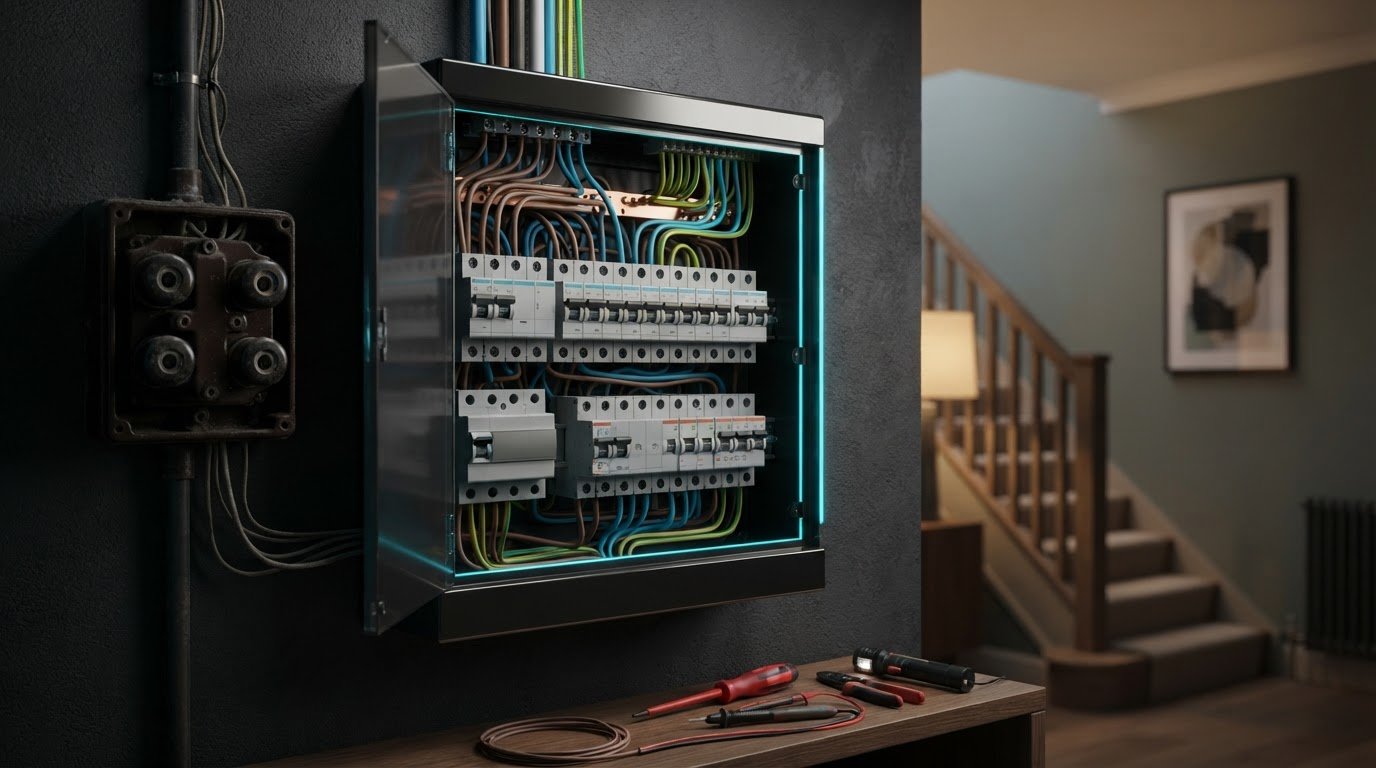
Take a look at your sockets. If you see old-fashioned round-pin sockets or switches mounted directly into skirting boards, your installation likely dates back to the 1960s or earlier. In the loft or cellar, inspect the cables. Black rubber, lead, or fabric-coated wiring are all signs of an ancient system that has outlived its safe lifespan. You should also check your fuse box; modern units are constructed from metal and feature RCD protection, whilst older wooden-backed boxes lack the essential safety features required today. Identifying these signs early allows you to plan a house rewiring at a time that suits your schedule rather than waiting for an emergency.
Keep an eye out for a green, sticky substance known as green "goo" or surfactant. This is a chemical reaction between the plasticiser in older PVC cables and the copper inside. It can cause poor connections and eventually lead to fires, making it a clear sign that the wiring is degrading and requires replacement.
The Role of the EICR
Because so much of your system is hidden, a visual check only goes so far. An Electrical Installation Condition Report (EICR) is the only definitive way to assess the safety of your home. During this inspection, a qualified professional uses specialist equipment to test the resistance and integrity of the cables buried within your walls.
The resulting report categorises findings from C1, where danger is present and immediate action is required, to C3, where an improvement is recommended. If you're unsure about the state of your electrics, booking a professional EICR is the most reliable way to gain peace of mind and determine if your property requires a full upgrade.
The Rewiring Process: What to Expect During an Overhaul
Rewiring a property is a significant project, but understanding the professional workflow can ease many of the anxieties regarding disruption. Most homeowners worry about the mess, yet a well-organised team can typically complete a full house rewiring in between 5 and 10 days. The actual duration depends on factors like whether the house is empty, the thickness of the walls, and the overall size of the property. To keep the project manageable and efficient, electricians split the work into two distinct stages: the First Fix and the Second Fix.
Professional specialists prioritising safety and quality will always ensure that the power is managed carefully throughout the project. Whilst there will be periods without electricity, a structured plan allows for a smoother transition from your old, unsafe system to a modern installation that meets current standards. This methodical approach ensures that every new circuit is correctly routed before any finishing touches are applied.
Phase One: The First Fix
This is the most intensive and disruptive part of the overhaul. During this stage, we install the heavy-duty infrastructure that stays hidden behind the scenes. It involves lifting floorboards and "chasing" channels into the walls to create paths for the new cables. We also install the new consumer unit and the back boxes for every socket and switch. Because this stage involves dust and structural access, it's essential to move furniture away from the walls or cover it with protective sheets. Whilst it may feel like a building site for a few days, this phase is where the foundation for a safe, modern home is laid.
Phase Two: The Second Fix and Testing
Once the new cables are in place and the walls have been made good, we move to the Second Fix. This stage is much cleaner and more rewarding for the homeowner. We connect the actual faceplates, light fittings, and switches to the new wiring. This is also the perfect time to integrate modern upgrades like USB sockets or smart lighting controls as the final components are fitted.
The final part of this phase is the most critical: rigorous testing. We perform both "dead" and "live" tests to verify that every circuit is safe and functioning exactly as it should. Once satisfied, we issue the Building Regulations Compliance Certificate and the EICR. These documents are your legal proof that the work complies with the latest BS 7671 standards, which is vital for your home insurance and any future property sales.
Future-Proofing: Modernising Your System During a Rewire
Many homeowners view house rewiring as a necessary chore to fix old faults. It's actually the most cost-effective moment to transform your property into a high-performance home. Whilst the floorboards are up and the walls are open, you can install the infrastructure required for the technologies of the next decade. Instead of a simple like-for-like replacement, you're building a system capable of handling smart lighting, energy-saving controls, and integrated energy management. This proactive approach ensures your home remains functional as our reliance on electricity grows.
Modern living places incredible stress on electrical systems. Planning for energy independence now saves thousands of pounds in future renovation costs. By integrating high-load circuits and dedicated data cabling today, you avoid the need for messy structural work or unsightly surface-mounted trunking later on. It's about creating a stable backbone that supports your lifestyle for the next thirty years.
Solar and Battery Integration
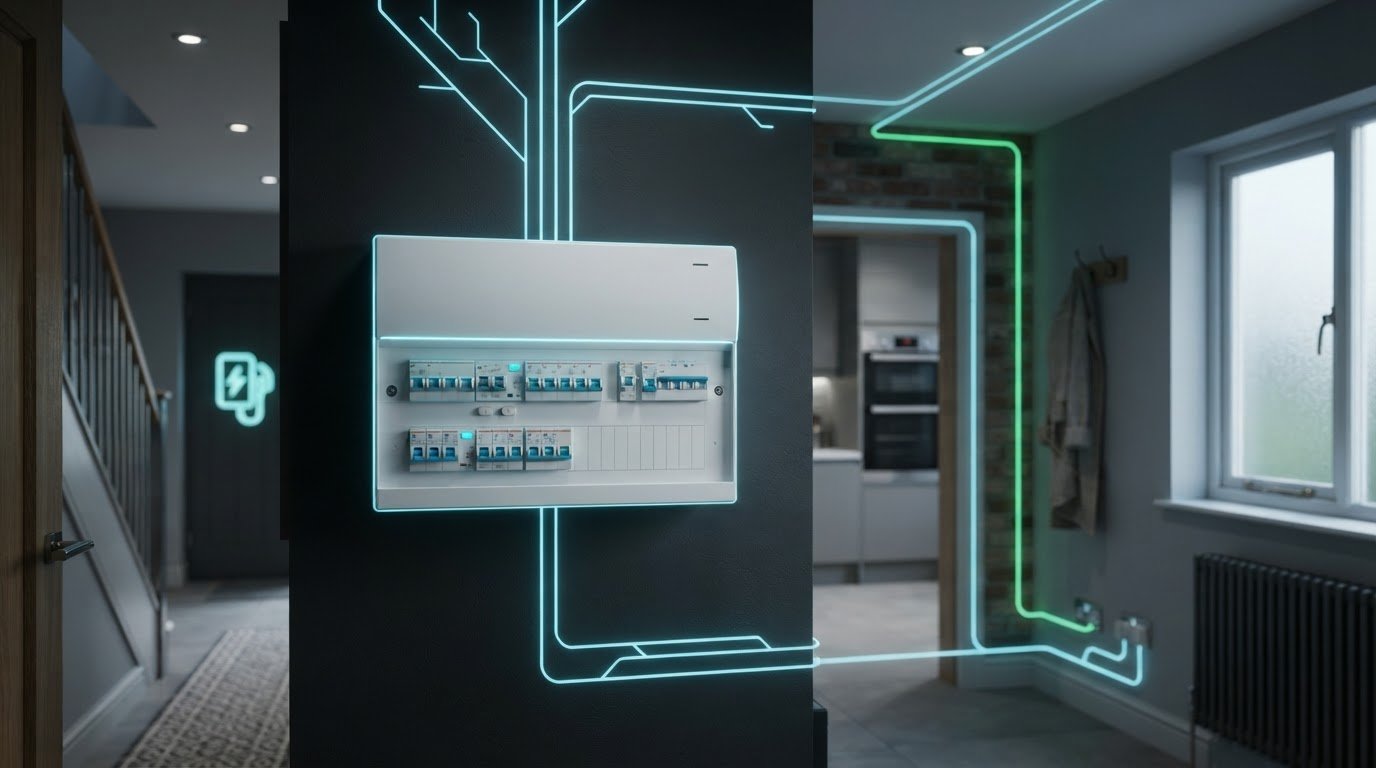
Installing solar panels or a battery storage unit often requires specific cabling between the roof, the inverter, and the consumer unit. During a rewire, we can pre-install these heavy-duty cables to ensure your home is ready for immediate or future energy generation. Modern consumer units act as the "brain" of the house, efficiently managing the flow between the National Grid and your home-grown power. ALElectrical recommends installing solar-ready consumer units during every overhaul because they provide the necessary expansion space and safety components to integrate renewables without needing a second fuse box upgrade later.
Electric Vehicle (EV) Charging
If you don't already own an electric car, you likely will in the coming years. A standard three-pin plug isn't a safe or efficient way to charge a vehicle long-term. A dedicated 7kW circuit is essential for safe home EV charging, providing the speed and reliability needed for daily use without overheating your domestic circuits.
Installing the heavy-duty 6mm or 10mm cable during your house rewiring project is a smart financial move. It prevents the need for expensive future labour and decor repairs once your driveway is ready for a charger. We also ensure your new system includes Surge Protection Devices (SPDs). These are vital for protecting the sensitive and expensive battery technology in your car from unexpected voltage spikes on the grid. If you're ready to upgrade your home's infrastructure, you can request a no-obligation quote to see how we can future-proof your property.
Choosing a Contractor: Ensuring Safety and Compliance
Selecting a specialist for your house rewiring is a decision that impacts your family's safety for decades. It's about more than just finding the lowest price; it's about ensuring the person in your home is qualified, accountable, and thorough. Always verify that your electrician is registered with a professional body like NICEIC or NAPIT. These organisations operate "Competent Person Schemes," which means the electrician's work is regularly assessed to ensure it meets the strict safety standards of BS 7671. This accountability is what separates a trusted local specialist from an unverified handyman.
Transparency is the hallmark of a professional. When you receive a proposal, look for a detailed, fixed-fee quote rather than a vague estimate. A clear quote should outline exactly what is included, from the number of sockets in each room to the type of consumer unit being installed. It should also clarify what isn't included, such as specific plastering or decorating work. This level of detail prevents unexpected costs from surfacing mid-project and gives you the peace of mind that you're paying a fair price for high-quality labour.
The Importance of Part P Compliance
In England and Wales, Part P of the Building Regulations makes it a legal requirement to notify local building control of major electrical work. This includes any full house rewiring project. This isn't just red tape; it's a critical safety measure designed to protect homeowners. Using a registered electrician allows them to "self-certify" the work. They'll handle the paperwork and automatically notify the local authority, saving you the significant expense and hassle of hiring a council inspector to sign off the job.
Failing to secure the correct certification can lead to serious problems down the line. If you decide to sell your home in the future, the buyer's solicitor will ask for these certificates as part of the legal process. Without them, the sale could fall through or you might be forced to pay for a retrospective inspection. Professional certification is your definitive proof that the work was completed safely and legally.
What to Ask Before Hiring
Before you sign a contract, have a direct conversation with your potential electrician. A reliable contractor will be happy to answer your questions and provide evidence of their credentials. You might find it helpful to use this checklist during your initial meeting:
Do you provide a full schedule of work and a fixed-price quote?
Will you provide the Building Regulations Compliance Certificate and an EICR upon completion?
Are you fully insured for the duration of the project?
Look for clear communication and a willingness to explain technical terms in plain English. A professional team should feel like a partner in your renovation, not a faceless service provider. If you're ready to start your project with a team that values transparency and safety, you can contact ALElectrical for a free rewire quote to discuss your requirements and secure your home's future.
Ready to Secure Your Home’s Electrical Future?
Investing in a full infrastructure upgrade is about more than just replacing old cables; it's about building a foundation for a safer and more efficient lifestyle. Identifying the warning signs early and choosing a qualified professional transforms a complex process into a manageable home improvement. By prioritising the latest safety standards and preparing your property for technologies like solar batteries and EV chargers, you're ensuring your home remains a valuable, modern asset for decades to come.
As NICEIC-registered electrical contractors, we're here to guide you through every stage of the journey. Our team is fully insured and Part P compliant, acting as comprehensive solar and EV integration experts to help you achieve true energy independence. We believe in transparency and reliability, providing the expert care your property deserves.
When you're ready to take the next step, request a free, no-obligation house rewiring quote from ALElectrical. We look forward to helping you create a home that is safe, compliant, and perfectly equipped for the future.
Frequently Asked Questions
Do I have to move out whilst my house is being rewired?
You don't have to move out, but many homeowners find it easier to stay elsewhere during the most disruptive phases. A full house rewiring involves lifting floorboards and creating dust, which can be challenging to live around. If you choose to stay, we can work room-by-room to maintain power to essential areas. However, an empty property allows the team to work much faster, potentially reducing the overall project duration.
Can I rewire my own house to save on labour costs?
It isn't recommended and is legally restricted. House rewiring is a notifiable task under Part P of the Building Regulations. This means the work must be certified by a registered professional or inspected by local building control at a significant cost. Incorrect DIY wiring poses severe fire and shock risks. Most insurance providers also require a valid Electrical Installation Certificate from a registered contractor to maintain your property's coverage.
How much mess does a full house rewire actually create?
A rewire is a significant undertaking that involves "chasing" channels into walls and lifting floorboards, which inevitably creates dust and debris. Professional electricians use industrial vacuum systems and dust sheets to minimise the impact on your home. We recommend removing or covering furniture and electronics in every room where work is planned. Once the second fix is complete, there will be some surface making good required to restore your decor.
Will a rewire improve the energy efficiency of my home?
A rewire improves efficiency primarily by replacing old, high-resistance cables with modern copper wiring that conducts electricity more effectively. It also provides the perfect opportunity to install energy-saving technologies like LED lighting, smart thermostats, and energy management systems. By upgrading your consumer unit, you gain better control over your home's power distribution. This helps reduce wasted energy and ensures your system is ready for high-efficiency appliances and renewables.
Is it possible to do a partial rewire instead of a full one?
Partial rewires are possible if large sections of your existing system are still in a safe, serviceable condition. This often happens in properties that have had recent extensions or kitchen renovations. We usually determine the feasibility of this through an EICR. If the main consumer unit and the majority of the cabling meet current standards, we can focus on upgrading only the specific circuits that are found to be degraded or outdated.
How long does a full rewire usually take for a 3-bedroom house?
For a standard three-bedroom property, the process typically takes between five and ten working days. The exact timeframe depends on whether the house is occupied and the complexity of the wall structures. Solid brick walls take longer to "chase" than stud walls, for example. We provide a clear schedule of work before starting, ensuring you know exactly when each stage, from the first fix to final testing and certification, will be completed.
What happens if I don’t have a certificate for my electrical work?
Operating without a Building Regulations Compliance Certificate or an EIC can cause serious complications when you try to sell or remortgage your home. Solicitors will request this documentation as part of the standard legal checks. Your home insurance may also be invalidated if a fire occurs and you cannot prove the system was professionally installed. Certification is your legal guarantee that the work meets all current UK safety regulations and standards.
Do I need to replaster my walls after a rewire is finished?
You will likely need some replastering where new cables have been recessed into the walls. While we aim to keep "chases" as neat as possible, these channels need to be filled and smoothed before you can repaint or re-wallpaper. Some homeowners choose to use this as an opportunity to skim entire rooms for a fresh finish. We can discuss how to coordinate with plasterers to ensure your walls are ready for decorating quickly.

Comments