
Fuse Box Upgrade: Modernising Your Home Electrical System
An old-looking fuse box doesn’t automatically mean your whole electrical supply needs replacing. If you’re considering a fuse box upgrade, the important questions are whether the consumer unit is in suitable condition, whether its protective devices meet the needs of the installation and whether planned electrical changes affect what it needs to do.
A consumer-unit upgrade deals with the circuits inside your home. A supply-fuse upgrade concerns the incoming electricity supply and the network side, so it is a different job. This guide explains what an electrician can assess, what an upgrade may involve and how to think about additional work. Knowing what to ask can help you understand the proposed scope before deciding how to proceed.
Table of Contents
Fuse box upgrade: what changes, and does every older unit need replacing?
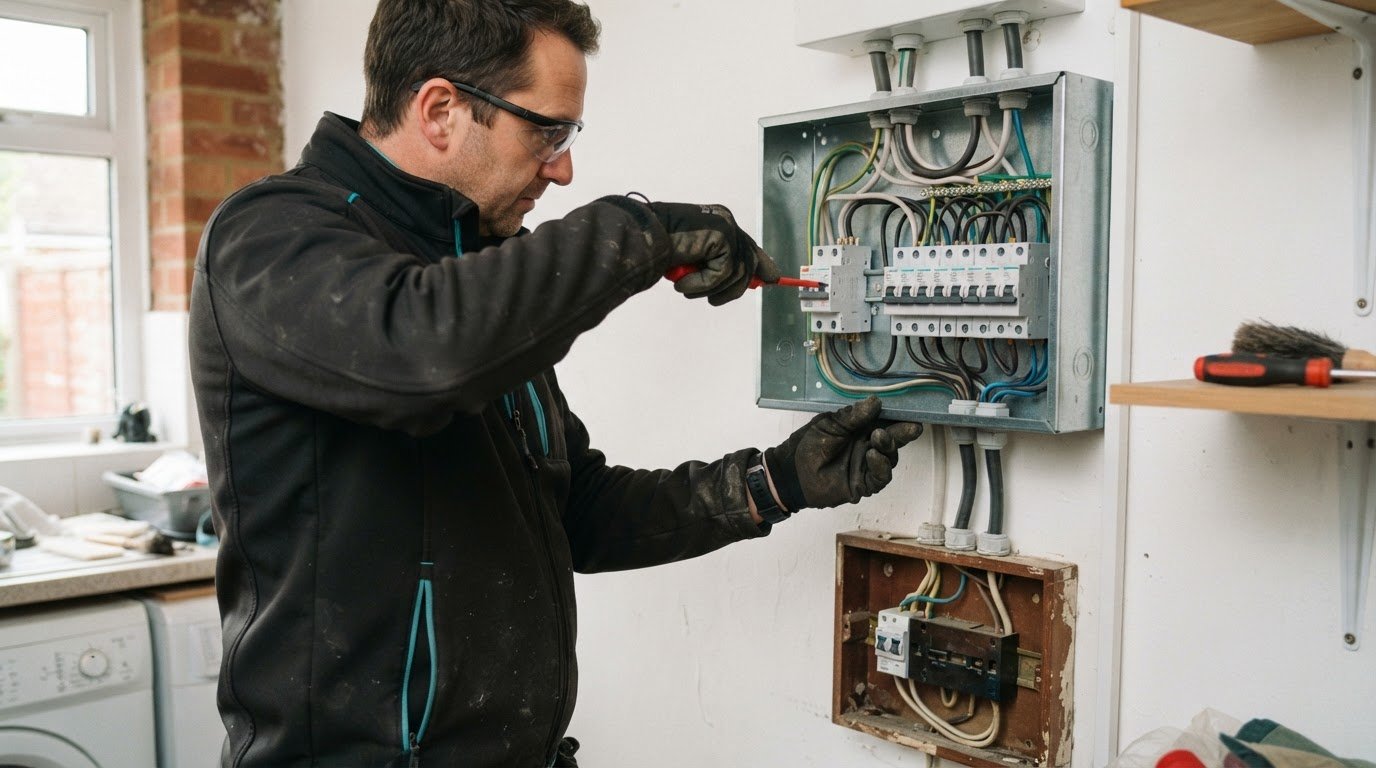
A fuse box upgrade usually means replacing or modernising the property’s consumer unit. This is the equipment that distributes electricity to circuits around the home, such as lighting and sockets, and contains protective devices that help disconnect a circuit if a problem occurs. Older fuse-based equipment and newer circuit-breaker consumer units serve this broad purpose in different ways. For background on how fuses work as safety devices, see Understanding Electrical Fuses.
An older appearance alone doesn’t mean replacement is necessary. The unit’s condition, the protection it provides and the needs of the property all matter. A professional assessment can establish whether an upgrade is appropriate. Avoid treating age or appearance as the only test, or assuming that a new-looking unit proves the wider installation is in good condition.
Consumer unit or supply fuse: which upgrade are you asking about?
These terms refer to different parts of the electrical system. The consumer unit is inside the property and distributes power to individual circuits. A supply fuse is part of the incoming electricity connection and belongs to the network, not to the household consumer unit.
A consumer-unit upgrade concerns the circuits in your home; a supply-fuse upgrade concerns the incoming connection managed by the electricity network operator. If a change to the incoming supply is needed, it involves the responsible network operator. It isn’t the same work as replacing the consumer unit.
This distinction matters when planning electrical changes, such as adding equipment that could affect the property’s supply needs. An electrician can assess the household installation and clarify which part requires attention. Don’t remove covers, handle wiring or attempt to alter either unit yourself. Electrical equipment can remain dangerous even when a switch appears to be off, so leave inspection and work to a professional.
How to tell whether your home needs a fuse box upgrade
An old unit isn’t automatically unsafe, and a newer-looking one isn’t proof that the installation is in good condition. Age and appearance can prompt questions, but they can’t establish on their own whether replacement is necessary. The decision should take account of the unit’s condition, the circuits it serves, the protection in place and any changes you’re planning for your home.
Get a professional assessment before deciding to replace a consumer unit. It can help distinguish work needed to address the installation from an upgrade that may be useful for planned changes. It should also give you a clearer picture of the scope before you agree to work.
What an electrician assesses before recommending an upgrade
An electrician can examine the existing unit, how the circuits are arranged and the protective devices fitted. They’ll also consider the wider installation, since the consumer unit is only one part of the home’s electrical system. Ask what the assessment has found, which parts of the installation need attention and why a replacement is being recommended. This gives you a property-specific explanation rather than a blanket recommendation based on age.
Explain any changes you’re considering. For example, adding an EV charger may prompt a discussion about the existing circuits and whether the installation can accommodate the planned electrical demand. That doesn’t automatically mean the consumer unit or incoming supply needs upgrading. The relevant equipment and circumstances need to be assessed.
For more detail on modern consumer units, the article Fuse Box Upgrade: A Complete Guide to Modern Consumer Units in 2026 provides further context. ALElectrical provides fuse box upgrades and can assess your installation and provide a free, no-obligation fuse box upgrade quote.
What to expect from a professional fuse box upgrade
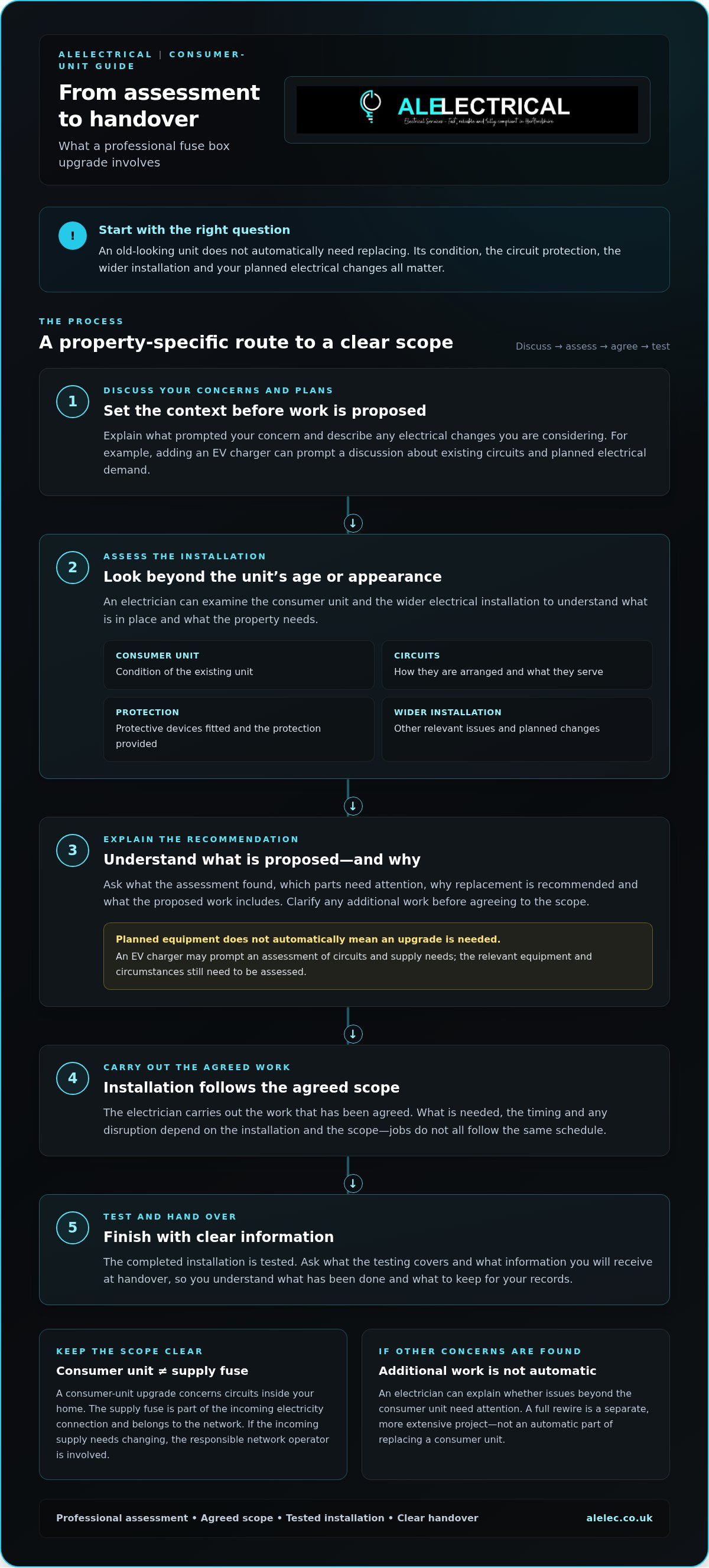
A clear process starts before installation. The electrician discusses your concerns and plans, assesses the existing setup, then explains the proposed work. The scope depends on the property: the condition of the consumer unit, the circuits and any issues found can all affect what’s needed. Before work begins, make sure you understand what is included and which additional work, if any, is being proposed.
Assessment, installation and handover
Once the work is agreed, the electrician carries it out and tests the completed installation. Ask what the testing covers and what information you’ll receive at handover, so you understand what has been done and what to keep for your records. The timing and any disruption depend on the installation and agreed scope, so don’t assume every job follows the same schedule.
If the assessment identifies concerns beyond the consumer unit, the electrician can explain whether broader wiring work may be needed. A full rewire is a separate, more extensive project, and isn’t an automatic part of a consumer-unit replacement. If rewiring is identified, The Homeowner’s Guide to Full House Rewiring is relevant background to that work.
Before the assessment, make a note of any electrical changes you’re planning and any concerns about the existing installation. During the discussion, ask which work is essential, what it addresses and whether there are separate items to consider. This helps keep the recommendation focused on your home rather than a one-size-fits-all approach. ALElectrical provides professional fuse box upgrades and can outline the proposed work in a free, no-obligation quote. To discuss your installation, request a free fuse box upgrade quote.
Take a clear next step for your home
You don’t need to commit to work before you understand what it involves. If you’re unsure whether a fuse box upgrade is right for your property, a tailored discussion can help turn that uncertainty into a practical plan. Explain what prompted your concern, describe any changes you’re considering and ask what work is proposed and why. This gives you a clearer basis for deciding how to proceed.
A planned upgrade can also be discussed alongside future electrical changes, so the assessment takes account of what you need now and what you may be preparing for. ALElectrical provides professional fuse-box upgrades, with safety, compliance and customer satisfaction at the heart of its service. Request a free, no-obligation quote for your fuse box upgrade to discuss your installation and the work involved.
Frequently Asked Questions
Is a fuse box upgrade the same as a supply-fuse upgrade?
No. A fuse box upgrade relates to the consumer unit serving the property, while a supply-fuse upgrade concerns equipment on the incoming electricity supply. The distinction matters because the work involves different equipment and responsibilities. If you’re unsure which equipment is causing concern, describe its position and what you’ve noticed to an electrician, without removing covers or touching it.
Does an old fuse box always need replacing?
No. An older unit doesn’t automatically need replacing, and a quick look can’t establish whether it’s safe or suitable. Consider its condition and protective devices as part of a professional assessment. If you notice damage, scorching or a burning smell, don’t investigate inside the unit. Keep clear and arrange a professional assessment.
Can a fuse box upgrade be done without rewiring the whole house?
Yes. Replacing a consumer unit doesn’t automatically mean the whole property needs rewiring. An electrician may find that the unit needs attention while the existing wiring doesn’t call for a full rewire. The assessment determines the scope. If wider work is identified, ask for a clear explanation of why it’s relevant and how it changes the proposed project.
Will the electricity be switched off during a fuse box upgrade?
Circuits must be safely isolated during work on the consumer unit, so expect an interruption to the electricity supply. How this affects the household depends on the installation and agreed scope. Before work begins, discuss practical arrangements, such as planning around equipment that needs power, and follow the electrician’s instructions. Don’t attempt to restore power or operate equipment during the work unless advised.
Comments