
How to prepare for an electrical inspection by clearing access
You don’t need to unplug every appliance when preparing for an electrical inspection. Instead, switch off sensitive electronics and clear access to the consumer unit, sockets, light fittings and fixed appliances. Some circuits may be isolated during testing, so focus on access and protecting equipment rather than emptying every socket.
It’s natural to want everything ready, especially if the visit affects tenants, household routines or business operations. Preparation depends on the property and who is responsible for it, so a landlord’s checklist may differ from what’s useful for a homeowner or commercial site.
Learn what to unplug, how to make electrical points accessible and what to organise before the visit. The steps can also be adapted for rented homes, owner-occupied properties and workplaces, helping avoid unnecessary access problems.
Table of Contents
How Can You Ensure Clear Access to All Electrical Points?
In England, private rented homes need an inspection at least every five years under the Electrical Safety Standards in the Private Rented Sector (England) Regulations 2020, according to UK Government. Homeowners are advised to arrange one every ten years, or sooner if wiring is ageing. Check the electrician’s qualifications and inspection-and-testing experience, and ask to see evidence before booking.
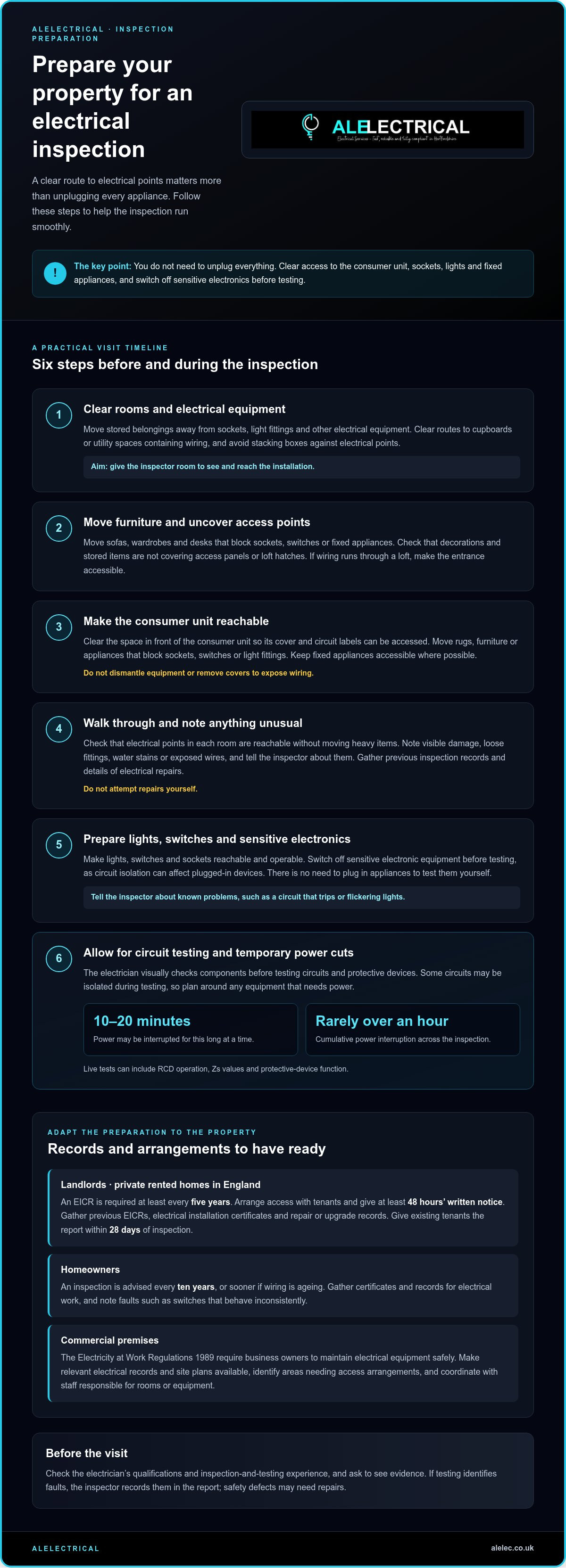
Clear rooms and electrical equipmentMove stored belongings away from electrical equipment, sockets and light fittings in each room. Clear the route to cupboards or utility spaces containing wiring, and avoid stacking boxes against electrical points. This helps the inspector complete a visual assessment and reach areas where hazards or previous repairs may need attention.
Move furniture and open loft accessMove sofas, wardrobes and desks that block sockets, switches or fixed appliances. Check whether furniture, stored items or decorations cover access panels or loft hatches, and clear them before the visit. If wiring runs through a loft, make the entrance accessible and gather any relevant records.
Make the consumer unit and electrical points accessibleClear the area in front of the consumer unit so the cover and circuit labels are accessible. Move rugs, furniture or appliances that block sockets, switches or light fittings. Keep fixed appliances accessible where possible, but don’t dismantle equipment or remove covers to expose wiring.
Carry out access and visual checksWalk through the property and check that electrical points in each room are accessible without moving heavy items. Note visible damage, loose fittings, water stains or exposed wires, and tell the inspector about them. Gather previous inspection records and details of electrical repairs, but don’t attempt repairs yourself.
Should You Unplug Everything Before an Electrical Inspection?
No, you don’t need to unplug everything. The time required can vary depending on the number of circuits and how well the property is prepared. If testing finds faults, the inspector records them in the report; safety defects may need repairs.
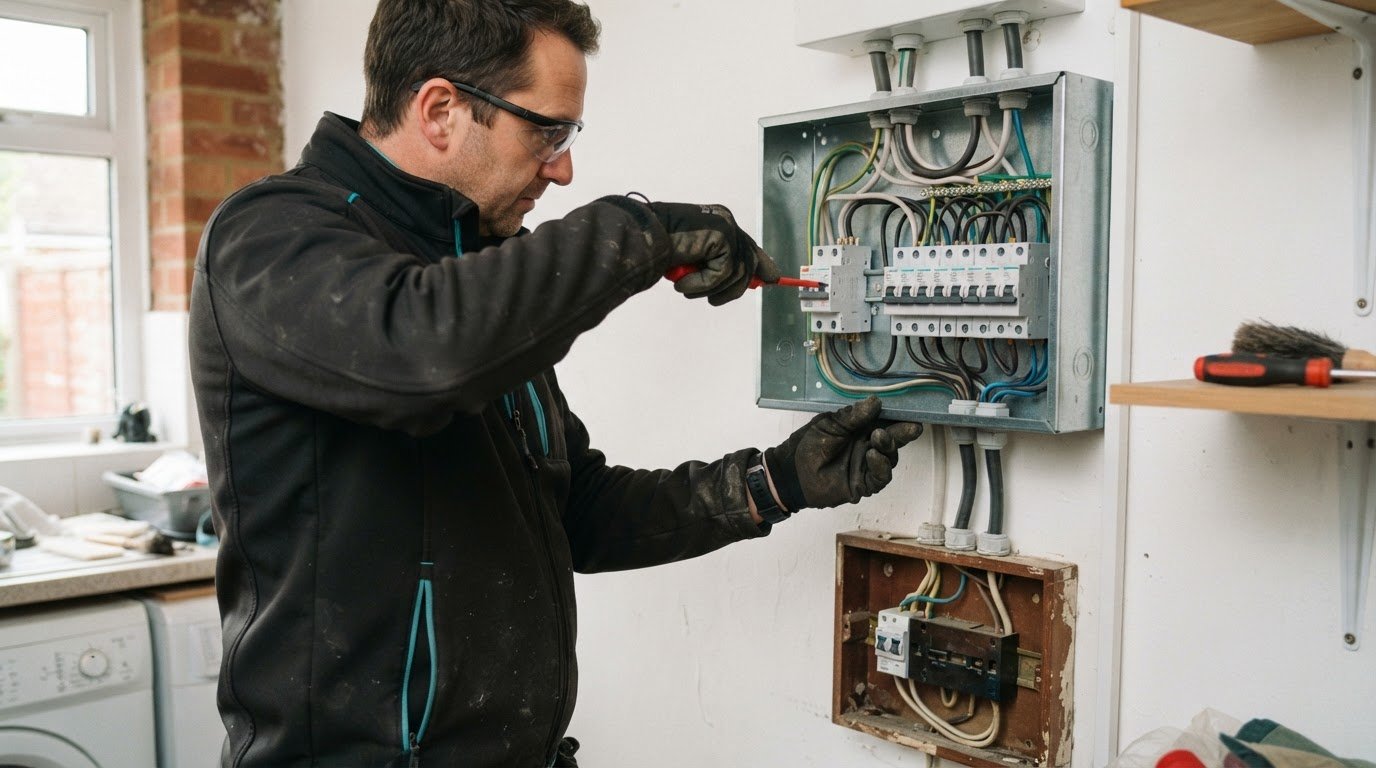
Allow for visual and circuit testingKeep the consumer unit and electrical installation accessible for inspection and testing. The electrician visually checks components before testing circuits and protective devices. Move furniture away from sockets and wiring, and don’t remove covers or attempt repairs yourself. Tell the inspector about known problems, such as a circuit that trips or flickering lights.
Prepare lights, switches and outlets for testingMake sure lights, switches and sockets can be reached and operated during checks. Clear items from in front of sockets, but don’t plug in appliances to test them yourself. The inspector may check that fittings work properly and form part of the electrical system. If you’re a landlord, arrange access to every room and explain any concerns raised by tenants.
Allow for live testingSwitch off sensitive electronic equipment before testing, as circuit isolation can affect plugged-in devices. Power may be interrupted for 10 to 20 minutes at a time; the total is rarely more than a cumulative hour across the inspection. Live tests can include RCD operation, Zs values and protective-device function. Keep essential equipment plans in mind, and arrange suitable electrical safety checks if ongoing faults need attention.
Landlord, homeowner and commercial preparation
For private rented homes in England, an EICR is required at least every five years under the Electrical Safety Standards in the Private Rented Sector (England) Regulations 2020, according to UK Government. In England, landlords must give existing tenants the report within 28 days of inspection, according to UK Government.
Landlords: Arrange access with tenants and give at least 48 hours’ written notice. Gather previous EICRs, electrical installation certificates and records of repairs or upgrades. These help the inspector understand the installation’s condition and identify whether earlier faults were addressed.
Homeowners: Gather certificates and records for electrical work, then note any faults you’ve noticed, such as switches that behave inconsistently. Give the inspector this information at the visit. It can help focus the assessment on the relevant devices and parts of the electrical system.
Commercial premises: The Electricity at Work Regulations 1989 require business owners to maintain electrical equipment safely, according to UK Government. Make relevant electrical records and site plans available, and identify areas where access needs arranging. This helps the inspector carry out a thorough assessment without disrupting work unnecessarily.
Plan for the premises: For a workplace, coordinate access with staff responsible for rooms or equipment. Keep certificates and records together, and explain any known faults or previous repairs. If electrical maintenance is needed to address an issue, arrange electrical maintenance for the installation.
ALElectrical: House Rewires
ALElectrical provides EICRs and can carry out electrical work identified during an inspection. If the report highlights faults, the next step depends on their nature and the condition of the installation. Electrical maintenance may suit specific issues, while a fuse box upgrade or house rewire may be appropriate for more extensive work.
For homeowners planning improvements alongside electrical work, ALElectrical also offers Solar & Battery. Start by understanding the inspection findings and recommended work, then choose a service that suits the property’s needs.
Contact ALElectrical to discuss an EICR, house rewire or other electrical work.
Turn inspection findings into a clear next step
Preparing for an electrical inspection is a practical first step, and the findings can help shape future decisions about your property. Keep the report with your property records and use it to prioritise recommended work. If you’re planning improvements, consider how electrical work fits into those plans.
After preparing for an electrical inspection, use the report to guide your decisions about next steps. ALElectrical offers House Rewires, Solar & Battery and Fuse Box Upgrades. These services may suit wider electrical projects identified in the report or planned improvements.
Contact ALElectrical to plan your next step and move forward with confidence.
Frequently Asked Questions
What Information Should You Give the Electrician on Arrival?
Tell the electrician about symptoms, alterations and any access limits they should know about. For example, mention a circuit that trips when a particular appliance runs, recent renovation work, or a locked meter cupboard. Point out the location of the main stop tap and any areas that need a key or staff escort, so the visit can be planned safely.
Do I need to be at home during the EICR?
An adult aged over 18 must be present during an EICR, either the person arranging it or someone else. If you can’t attend, arrange for a responsible adult to let the electrician in and explain how to reach all parts of the property. Make sure they can also share relevant access information and contact you about questions during the visit.
How Are EICR Reports Structured and What Do the Codes Mean?
An EICR records observations using codes that show the seriousness of findings. C1 means danger is present and immediate remedial work is required; C2 identifies a potentially dangerous defect needing urgent attention. C3 recommends an improvement. An FI observation may call for further investigation, so ask the electrician how it affects the report’s overall assessment.
How Can Homeowners Best Prepare Their Residential Properties?
As well as making electrical points accessible, check that household safety devices are present and working. Test smoke alarms and carbon monoxide alarms using their test buttons, and note any that fail to respond. Keep pets away from the inspection area, and have someone available to answer questions about unusual behaviour from lights, switches or appliances.
How Does Preparation Help Avoid Additional Fees and Delays?
Good preparation mainly reduces avoidable hold-ups: clear access lets the inspection progress, while notes about alterations can help explain the installation. Clearing access can save up to an hour during an EICR inspection. Before the appointment, clarify what the inspection covers and how any separately identified repair work will be discussed and agreed.


Comments