
How Often Should You Book Residential Electrical Services?
For most UK homes, a residential electrical safety check is recommended every five to ten years, depending on the property type and the age of its wiring. A formal Electrical Installation Condition Report (EICR) is recommended at least every 10 years for an owner-occupied home and every 5 years for a rented property. If you’re focused on ensuring electrical safety for your family, these intervals offer a practical starting point, not a reason to wait if you spot a warning sign.
A professional inspection can assess more than visible sockets and switches. This article explains when to arrange one, what a home electrical inspection can cover and how to choose a qualified electrician. You’ll also learn how an EICR supports ongoing home safety, helping you decide what checks your property may need.
Table of Contents
1. Why Have an Electrical Safety Check ?
Around 20,000 accidental house fires in the UK each year are linked to electrical faults. Electrical accidents also cause around 350 serious injuries and 30 deaths in UK homes each year. A qualified electrician can identify faulty wiring, damaged cables, unsafe appliances and overloaded circuits before a failure causes harm.
Arrange a home electrical safety check every five to ten years, depending on wiring age and property type. A formal Electrical Installation Condition Report (EICR) is recommended at least every 10 years for owner-occupied homes, and every 5 years for rented properties. Pools, outdoor circuits and high-use areas may need more frequent checks.
During a safety check, an electrician tests appliances, sockets, lighting and other fittings. They can assess whether the installation is safe and identify issues needing attention. Regular checks matter after renovations, when wiring is older, or if you notice changes such as a circuit repeatedly tripping.
Part P of the Building Regulations sets requirements for electrical safety in homes. Electrical work must meet the relevant requirements, and electricians authorised to self-certify can certify work under Part P. Landlords should arrange an EICR at least every 5 years for rented properties.
If someone receives an electric shock, don’t touch them whilst they’re still in contact with electricity. Isolate the supply only if it’s safe, then call 999 if they’re unconscious, struggling to breathe or seriously injured.
Warning signs include burn marks, buzzing or crackling sockets, blown fuses, tripped circuit breakers and overheating. Stop using a socket that smells of burning or shows sparks or smoke, and seek an electrician’s advice.
2. What Does a Full Home Electrical Inspection Include?
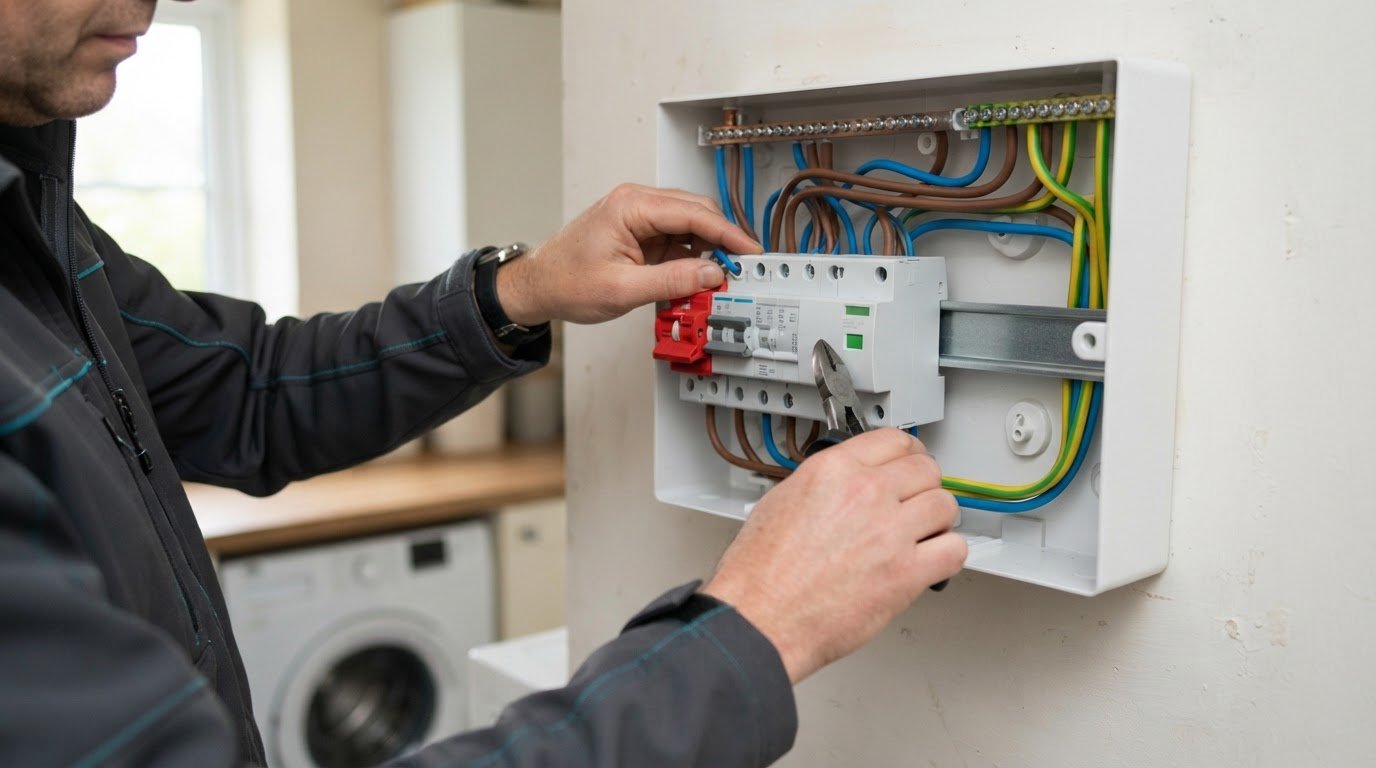
A professional inspection can cover the consumer unit, earthing, sockets, switches and light fittings. The electrician checks whether circuits and protective devices work correctly, including residual current devices (RCDs). An RCD is designed to switch off electricity automatically when it detects a fault, helping protect against electric shock.
Water makes damaged electrical equipment especially dangerous. An electrician can assess fittings and wiring in bathrooms, kitchens, garages and outdoor areas, and check protective bonding to metal pipes. Keep drinks away from electrical items, and avoid touching switches with wet hands. Electrical Safety First’s 2026 Electrical Fire Safety Week campaign encouraged households to check and test smoke alarms. Smoke alarm testing is separate from an electrical inspection. An RCD can also be tested as part of a professional check.
Common hazards include overloaded sockets, damaged cables, appliances with blocked ventilation and combustible materials near electrical equipment. Candles can add a fire risk if placed near curtains, cables or appliances. A professional can inspect electrical installations and explain faults that need attention. For ongoing electrical maintenance, regular professional checks can help identify wear before it becomes a hazard.
To reduce fire risks, keep appliances uncovered, follow their care instructions and don’t dry clothes on heaters. Never plug one extension lead into another or overload a socket. Use only one heat-producing appliance in an outlet at a time. Keep chargers and portable heaters clear of fabrics, and don’t use damaged cables. These safety tips help protect children and adults from accidents around sockets, switches and electrical equipment.
3. Choosing a residential electrical services company
Start by checking qualifications and registration. Electrical Safety First recommends using an electrician registered with a government-approved scheme for electrical installation work in a UK home. This helps you assess whether the electrician is recognised for the work involved.
Match the electrician’s experience to the job, too. A home inspection, a new circuit and electrical work during renovations involve different checks. Part P of the Building Regulations applies to electrical safety in homes, and authorised electricians can self-certify relevant work. Ask for a clear explanation of the proposed work, testing and required documentation.
For an inspection, look for a process that considers the electrical system as a whole. This includes the consumer unit, earthing, sockets, switches, lighting and protective devices. After a domestic safety check, the electrician should provide a detailed report and explain the findings. This helps you understand which faults need attention and whether breakers or wiring need further work.
Clear communication matters. A qualified electrician should explain findings in plain language, distinguish urgent concerns from planned improvements, and show how each recommendation relates to your home. Repeated trips or a faulty socket, for example, may point to an underlying problem that needs investigation, not simply a device to replace. Good testing looks for the cause, not just the symptom.
For ongoing support with your home’s electrical system, arrange professional electrical maintenance. A qualified professional can assess the work required and explain the next steps for your property.
ALElectrical: Electrical Maintenance
ALElectrical provides electrical maintenance to help homeowners address inspection findings and keep their electrical installations in safe working order. If an inspection identifies deteriorating wiring, an outdated fuse box or faults needing attention, professional maintenance can help determine the appropriate next steps.
For more extensive work, ALElectrical also undertakes house rewires and fuse box upgrades. Solar and battery solutions may be relevant when planning changes to your home’s electrical setup. The right work depends on the installation’s condition and the inspection findings.
Share the report and any concerns, such as repeatedly tripping circuits or damaged fittings, to help put the work in context. Contact ALElectrical to discuss electrical maintenance for your home.
Take the Next Step Towards a Safer Home
If you’re focused on ensuring electrical safety for your family, treat an inspection as a starting point for a safer, better-planned home. Use its findings to decide what needs attention now and what can form part of future electrical work. A clear plan helps you approach changes with confidence, whether you’re updating an older installation or planning for new household needs.
If the findings point to ageing wiring, a house rewire or fuse box upgrade may be appropriate. Solar and battery solutions can also be considered when planning electrical changes. The right choice depends on your property’s needs and the electrician’s findings.
Contact ALElectrical for an inspection to discuss a suitable next step. A practical plan begins with an informed decision.
Frequently Asked Questions
How Often Should You Book Residential Electrical Services?
For an owner-occupied home, arrange a formal EICR at least every 10 years; rented homes should have one every 5 years. A broader safety check is recommended every five to ten years, guided by wiring age and property type. Consider an assessment for areas with particular electrical demands, and arrange one sooner if alterations or new electrical problems arise.
What Can Homeowners Ask an Electrician to Check Between Inspections?
Ask an electrician to investigate specific changes rather than waiting for the next scheduled inspection. Request checks if lights flicker, a breaker trips repeatedly, a socket feels unusually warm or an RCD fails to operate. A routine professional assessment is also a practical step towards ensuring electrical safety for my family when household needs change, such as adding a new appliance circuit.
What Does a Full Home Electrical Inspection Include?
A full inspection can include garages and outbuildings, where outdoor equipment or older wiring may need attention. The electrician can also check protective bonding, which connects metal pipes and other parts to the earthing system. After testing, expect a detailed report and an explanation of the findings, including defects that need follow-up.
What Qualifications Should a Reliable Electrician Have?
Choose an electrician qualified and registered with a government-approved scheme for domestic electrical installation work. Electrical Safety First recommends this approach for UK homes. For work covered by Part P of the Building Regulations, an electrician authorised to self-certify can certify their work. Ask for a clear account of the testing and documentation relevant to your job.
What Causes Electrical Fires in Homes?
Faulty or damaged wiring and electrical equipment can cause fires, as can overloaded sockets and extension leads. Heat can build up if an appliance’s ventilation slots are covered or combustible items are placed close to electrical equipment. Damaged cables, repeated circuit trips and burning smells are reasons to stop using the affected socket or equipment and seek an electrician’s advice.

Comments