_.jpg)
NAPIT vs NICEIC Registered Electrician: Does the Badge Matter in 2026?
If you're looking for an electrician, you might think the logo on their van determines the quality of your house rewire. But is there actually a difference between the two biggest names in the industry? It's completely normal to feel overwhelmed by the jargon surrounding a napit vs niceic registered electrician when you just want to ensure your home is safe. You deserve to know exactly who is entering your property and whether they're truly qualified.
Discover the real differences between these registration bodies to ensure your electrical work is safe, compliant, and fully insured. We'll explore how these schemes protect your property, the reality of their work quality guarantees, and what you need to know about legal compliance for installations. By the end, you'll have the clarity needed to hire a professional with total peace of mind.
Table of Contents
Understanding Competent Person Schemes: Why Professional Registration Matters
A Competent Person Scheme (CPS) is a government-authorised body that allows qualified electricians to self-certify their work. This means they can notify local building control on your behalf, which simplifies the process and avoids the extra cost of independent inspections. For most domestic projects, hiring a registered professional isn't just a choice; it's a legal requirement under Part P of the Building Regulations. Whether you're comparing a napit vs niceic registered electrician, both badges indicate the installer has been vetted to work safely in your home.
Registration provides several essential layers of protection for your property:
Mandatory public liability insurance to cover accidental damage.
Regular technical assessments to verify high standards of workmanship.
A formal complaints procedure and work quality guarantees.
Full legal compliance for safety-critical documents like an EICR.
Whilst NICEIC is often the name homeowners recognise first, NAPIT is an equally valid and highly respected body. Both organisations are fully accepted by local authorities, mortgage lenders, and professional insurers across the country, meaning your certificates will be valid for any future property sale.
The Role of NAPIT and NICEIC in UK Electrical Safety
These industry-led bodies have spent decades raising safety standards across the trade. To maintain their membership, electricians must pass rigorous annual inspections of their on-site work and office records. This consistent auditing ensures every contractor stays current with the latest 18th Edition Wiring Regulations and modern digital certification requirements. When you weigh up a napit vs niceic registered electrician in 2026, you're choosing between two bodies dedicated to the same goal: keeping your household safe through strict technical oversight.
NAPIT vs NICEIC: Key Similarities and Differences for Homeowners
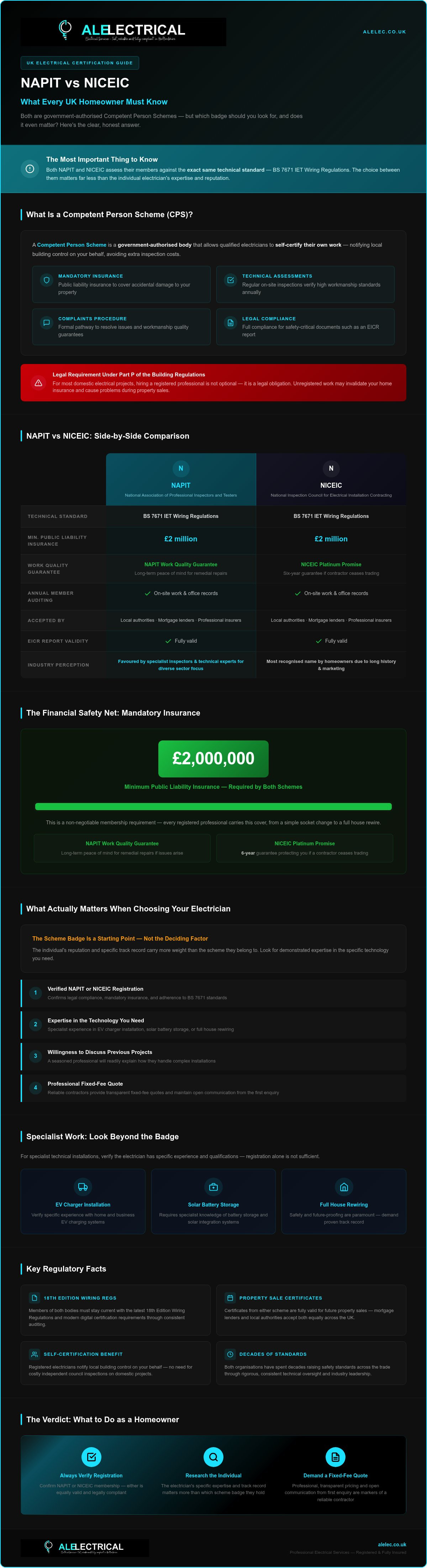
When comparing a napit vs niceic registered electrician, it's helpful to remember that both organisations assess their members against the exact same technical standards: the BS 7671 IET Wiring Regulations. While NICEIC is often the name people request due to its long history and marketing, NAPIT is frequently the choice of specialist inspectors and technical experts who value its focus on diverse electrical sectors. Both badges serve as a mark of quality, proving that the installer has the skills and knowledge to work safely in your home.
For landlords and homeowners, this choice doesn't affect your legal standing or the validity of your certificates. An EICR report produced by a member of either scheme is equally valid for proving compliance with the UK Building Regulations for electrical work. If you ever find that work doesn't meet these required safety standards, both bodies offer a clear pathway for consumer complaints to help resolve the issue. This ensures your home remains safe and your legal obligations are fully met without the need for independent council inspections.
Comparing Standards, Insurances, and Workmanship Guarantees
Both schemes provide robust financial protection to give you confidence in your hire. The NICEIC Platinum Promise is a six-year guarantee that protects you if a contractor ceases trading before fixing non-compliant work. Similarly, the NAPIT Work Quality Guarantee offers long-term peace of mind for remedial repairs. To maintain their registration, members of both bodies must hold at least £2 million in public liability insurance. This ensures that your property is fully protected against accidental damage during any project, from a simple socket change to professional electrical maintenance. This level of insurance is a non-negotiable requirement for membership, ensuring that every registered professional is properly backed by a financial safety net.
Choosing the Right Electrician for Your Home or Business
Ultimately, while deciding between a napit vs niceic registered electrician is a great starting point, the individual's reputation and specific track record carry more weight. You should look for a professional who demonstrates clear expertise in the modern technologies you need, such as ev charging installation or solar battery storage. Technical competence is non-negotiable for large-scale projects like a house rewiring, where safety and future-proofing are paramount. A seasoned professional will be happy to discuss their previous projects and explain how they handle complex installations.
Reliable contractors will always provide a professional, fixed-fee quote and maintain open communication from your first enquiry. This transparency builds trust and ensures there are no hidden surprises once the work begins. It's often the small details, like how they protect your flooring or how clearly they explain the technical aspects of the job, that set a truly professional team apart from the rest. This approach ensures you feel secure and well-cared for throughout the entire process.
Beyond the Logo: Essential Qualifications and Safety Checks
To ensure you're hiring a genuine professional, follow this simple verification checklist:
Ask for their registration number and confirm it matches their business name.
Verify their current status using the NICEIC or NAPIT online search tools to ensure their membership hasn't lapsed.
Check if they hold specific qualifications for technical tasks like a fuse box upgrade.
Confirm they provide a building regulations compliance certificate upon completion of the work.
Part P compliance acts as the essential legal bridge between high-quality electrical work and the validity of your home insurance policy. By choosing a napit vs niceic registered electrician who prioritises these standards, you protect your property and your investment for years to come.
Securing Your Home with Confidence
Choosing between a napit vs niceic registered electrician doesn't have to be stressful. Both schemes ensure your installer is vetted and legally authorised to self-certify work under Part P regulations. While their logos differ, their commitment to safety standards is identical. Your focus should be on finding a professional with the right expertise for your specific project, from technical fuse box upgrades to house rewires. Verifying registration and insisting on transparent communication ensures your property remains safe and compliant.
We're here to assist with expert EICR safety inspections and fully insured installations. Get a professional, compliant quote for your next project from ALElectrical and benefit from our transparent fixed-fee pricing. We look forward to helping you keep your home safe and efficient.
Frequently Asked Questions
Is NICEIC better than NAPIT for residential work?
No, neither body is technically superior for residential projects. Both assess their members against the same BS 7671 safety standards. While NICEIC is a more widely recognised brand name amongst homeowners, a napit vs niceic registered electrician has undergone the same rigorous annual inspections. Both can legally self-certify their work and notify building control on your behalf to ensure full compliance.
Will my home insurance be valid if I use a NAPIT registered electrician?
Your home insurance will be fully valid as long as the work is completed by a member of a government-approved scheme. Insurers look for compliance with Part P of the Building Regulations. Since NAPIT is a fully authorised body, their members provide the official certification required to prove your electrical system is safe. This legal documentation is essential for maintaining your policy coverage.
How do I check if an electrician is actually registered with NICEIC or NAPIT?
You can easily verify a napit vs niceic registered electrician by visiting their respective official websites. Simply ask the contractor for their registration number and use the online search tools to check their current membership status. This confirms they are up to date with technical assessments and hold the mandatory public liability insurance required to protect your home during any electrical project.
Can a NAPIT electrician sign off a NICEIC electrician’s work?
An electrician cannot usually sign off installation work performed by another person. Scheme rules require the professional who designed and installed the circuits to test and certify them. However, if you need to verify the safety of work done by a previous contractor, any qualified professional can carry out an EICR. This provides a formal safety report for your legal records.


Comments