_.jpg)
What is a Competent Person Scheme? A Guide to Electrical Safety in 2026
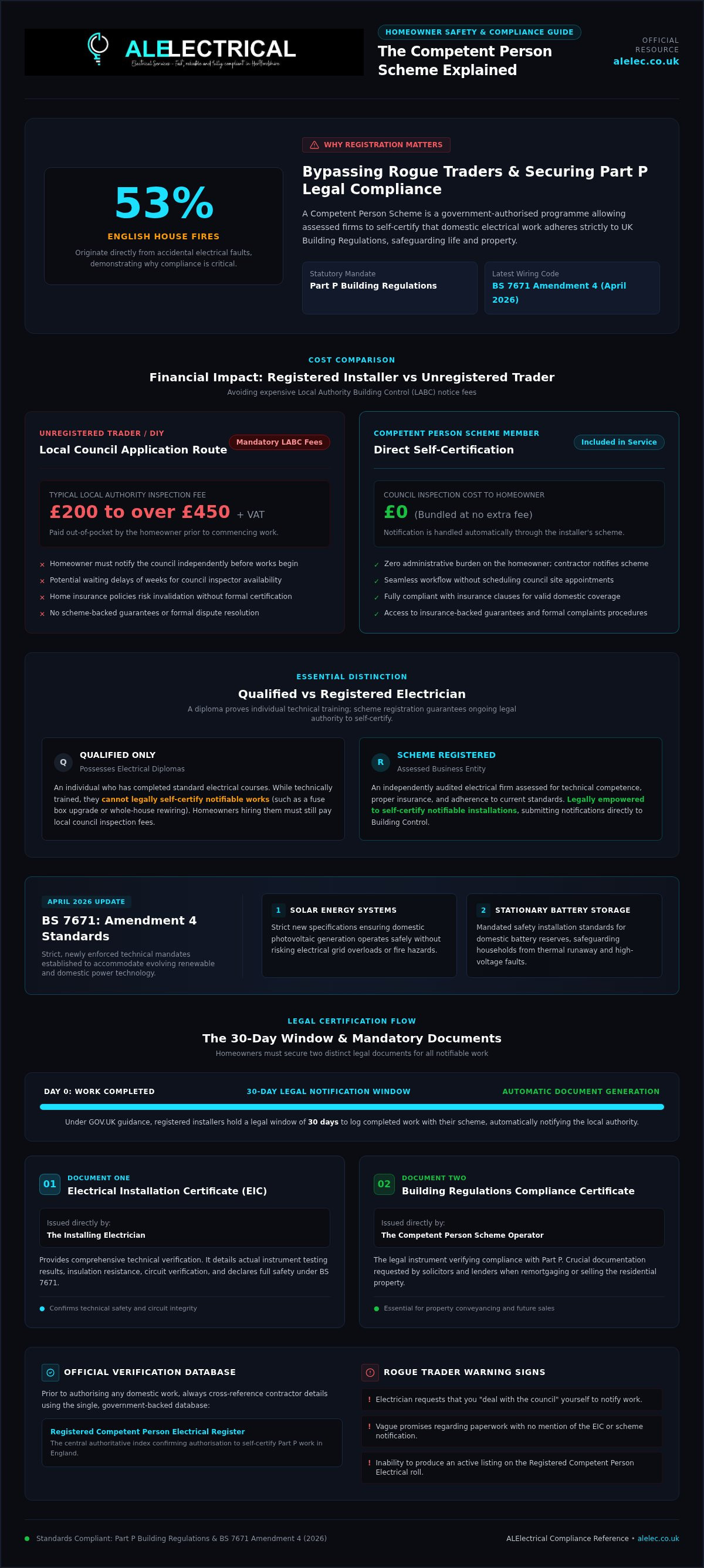
Did you know that accidental electrical faults cause over 53% of all house fires in England? It’s a sobering statistic that highlights why home safety shouldn't be left to chance. We understand that trying to decode Part P regulations or worrying about rogue traders can make any home improvement project feel stressful. You want the job done right without the headache of invalidating your insurance or facing unexpected Building Control fees that often top £450.
This guide explains how hiring an electrician registered with a competent person scheme provides a legal fast-track to safety and compliance. We'll show you how to verify credentials easily and explain why the right certification is vital for your peace of mind and any future home sale. You'll learn exactly what documents you need to stay on the right side of the 2026 wiring standards while keeping your project on budget and fully protected.
Table of Contents
Understanding the Competent Person Scheme: The Legal Framework for Safety
A competent person scheme is a government-authorised programme that allows individual businesses to self-certify that their work complies with Building Regulations. It relies on the statutory definition of a competent person, ensuring that the firm has been independently assessed for technical skill, insurance, and safety standards. This system was introduced to streamline home improvements, effectively reducing the administrative burden on local authority building control departments whilst maintaining high safety bars for homeowners.
At its core, the scheme is the primary mechanism for meeting Part P of the Building Regulations. This law requires all electrical installations in dwellings to be designed and installed to protect residents from fire and electric shock. In 2026, this is more critical than ever. Registered electricians must now adhere to the latest Amendment 4 of the BS 7671 wiring regulations. This update, published in April 2026, introduces strict new standards for stationary battery storage and solar energy systems, ensuring your modern home upgrades remain safe and compliant.
Qualified vs Registered: Why the Distinction Matters
It's a common mistake to assume that any qualified electrician can sign off every job. While a diploma confirms an individual's training, only a registered business can legally self-certify "notifiable" work. For instance, a complex project like a house rewiring requires formal notification to the local council. Whilst qualifications prove technical knowledge, scheme registration proves ongoing accountability and insurance-backed safety. Choosing a professional registered with a competent person scheme ensures your work is logged correctly without you having to pay for separate council inspections or waiting weeks for a local authority visit.
Why Choosing a Registered Electrician Saves You Money and Stress
Opting for a contractor in a competent person scheme isn't just about safety; it's a savvy financial decision. Most home insurance policies contain strict clauses requiring that electrical work is performed by a registered professional. If a fault occurs and you cannot produce a compliance certificate, your insurer may refuse to pay out. By using a registered expert, you gain access to insurance-backed guarantees and formal complaints procedures. This ensures you aren't left stranded if a contractor stops trading or provides substandard work.
According to GOV.UK guidance on competent person schemes, registered installers handle all legal notifications on your behalf. This removes the stress of chasing your local council for paperwork. They have a legal window of 30 days to log the work, which automatically triggers the issuance of your Building Regulations Compliance Certificate. This document is essential when you decide to sell or remortgage your property amongst other legal requirements.
The Financial Benefits of Self-Certification
The most immediate saving comes from avoiding Local Authority Building Control (LABC) fees. If you use an unregistered trader for a fuse box upgrade, you must notify the council yourself before work begins. These inspection fees typically range from £200 to over £450 plus VAT depending on your local council. Registered contractors bundle the notification process into their standard service at no extra cost to the homeowner. This makes the professional route significantly cheaper than the DIY or "rogue trader" alternative. If you're planning a project, choosing an accredited electrical team ensures you stay compliant without these hidden costs.
Verifying Credentials and Navigating Building Regulations
Before hiring any contractor, it’s vital to check their standing on the official Registered Competent Person Electrical database. This website is the single, government-backed register for checking if a firm is legally authorised to self-certify domestic work. You can find more detail in the Planning Portal's guide to self-certification schemes. Be wary of warning signs such as vague promises about paperwork or an electrician asking you to "deal with the council" yourself. Professional firms like ALElectrical prioritise these standards to protect your home’s safety, ensuring every job is correctly logged and compliant.
You must receive two distinct documents for notifiable work. First is the Electrical Installation Certificate (EIC), which covers the technical testing results. Second is the Building Regulations Compliance Certificate, issued by the scheme operator like NICEIC or NAPIT. This second document is your legal proof that the work meets national standards and is essential for any future property transactions.
What to Expect After the Work is Complete
A registered member of a competent person scheme has a 30-day window to notify their scheme operator after finishing the job. You should receive your official compliance certificate shortly after this notification is processed. It's best to store these documents safely; you'll need them for future electrical safety certificate inspections or when selling your home. If you've lost a certificate, you can often request a duplicate from the relevant scheme operator for a small fee, which is much simpler than trying to regularise uncertified work during a house sale.
Securing Your Home’s Future with Professional Standards
Choosing an electrician through a competent person scheme is the simplest way to ensure your home remains safe and legally compliant. By opting for a registered professional, you're doing more than just following Part P regulations; you're protecting your family from electrical hazards and securing your property's value for future sales. This approach eliminates the need for expensive Building Control inspections, as your contractor handles all the necessary notifications and paperwork on your behalf.
Our fully registered and insured contractors at ALElectrical prioritise your safety through transparent fixed-fee inspections and comprehensive certification for every job. Ensure your home is safe and compliant with our registered electrical experts. We’re here to help you move forward with confidence, knowing your electrical system is in expert hands.
Frequently Asked Questions
What happens if I use an electrician who is not in a competent person scheme?
If you hire an unregistered installer for notifiable work, you must personally notify Building Control and pay their inspection fees, which often exceed £450. Without this, you won't receive a compliance certificate. This can invalidate your home insurance and cause significant delays during a property sale, as solicitors require proof that electrical work meets national safety standards.
Is Part P still a legal requirement for electrical work in 2026?
Part P is absolutely a legal requirement in 2026. It dictates that electrical installations in homes must be safe. To comply, work must follow the latest technical standards, currently BS 7671 Amendment 4. Hiring a member of a competent person scheme is the standard way to ensure your project meets these laws without the hassle of arranging independent council inspections.
How do I get my Building Regulations Compliance Certificate if I have lost it?
If you've lost your certificate, you should contact the scheme operator used by your electrician, such as NICEIC or NAPIT. They maintain digital records of all notified work. You can typically request a duplicate copy online by providing your postcode and the approximate date of the installation. This is much faster than trying to get an installation retrospectively approved by the local authority.
What is the difference between NICEIC and NAPIT registration?
There is no functional difference for the homeowner. Both NICEIC and NAPIT are government-approved bodies that assess the competence of electrical firms. While NICEIC is the most recognised brand, NAPIT provides identical legal standing for self-certification. Both schemes offer peace of mind through rigorous annual assessments and insurance-backed guarantees, ensuring that the contractor you hire is professional, accountable, and fully insured.


Comments