
Cost to Move a Light Switch in the UK: What Affects the Price
The cost to move a light switch in the UK is typically £150-£191 on the market, with a median of about £150. That’s a useful starting point, but it isn’t a one-price job: the wall and wiring layout can change the work involved.
A straightforward move may involve less work than relocating a dimmer, two-way or smart switch, or routing cables through solid masonry. The wall finish matters too: repairing the surface after the electrical work can add to the overall cost.
This guide explains how wall type, cable routes and switch configuration affect the cost to move a light switch in the UK. You’ll see what can make a relocation more involved and which details help explain an estimate, so you can plan the work with greater confidence.
Table of Contents
How Much Does It Cost to Move a Light Switch?
The cost to move a light switch in the UK is typically £150-£191 on the market. The final amount depends on the wiring route, wall surface, switch type and finishing work.
Factors influencing relocation costs
Relocation costs depend on cable distance, wall construction and switch configuration, all of which affect the labour involved. Routing wiring through plasterboard differs from cutting into solid masonry. Adding a new switch may also require a separate cable route rather than reusing the wiring at the existing position, changing the job’s scope.
Short moves and available cable slack
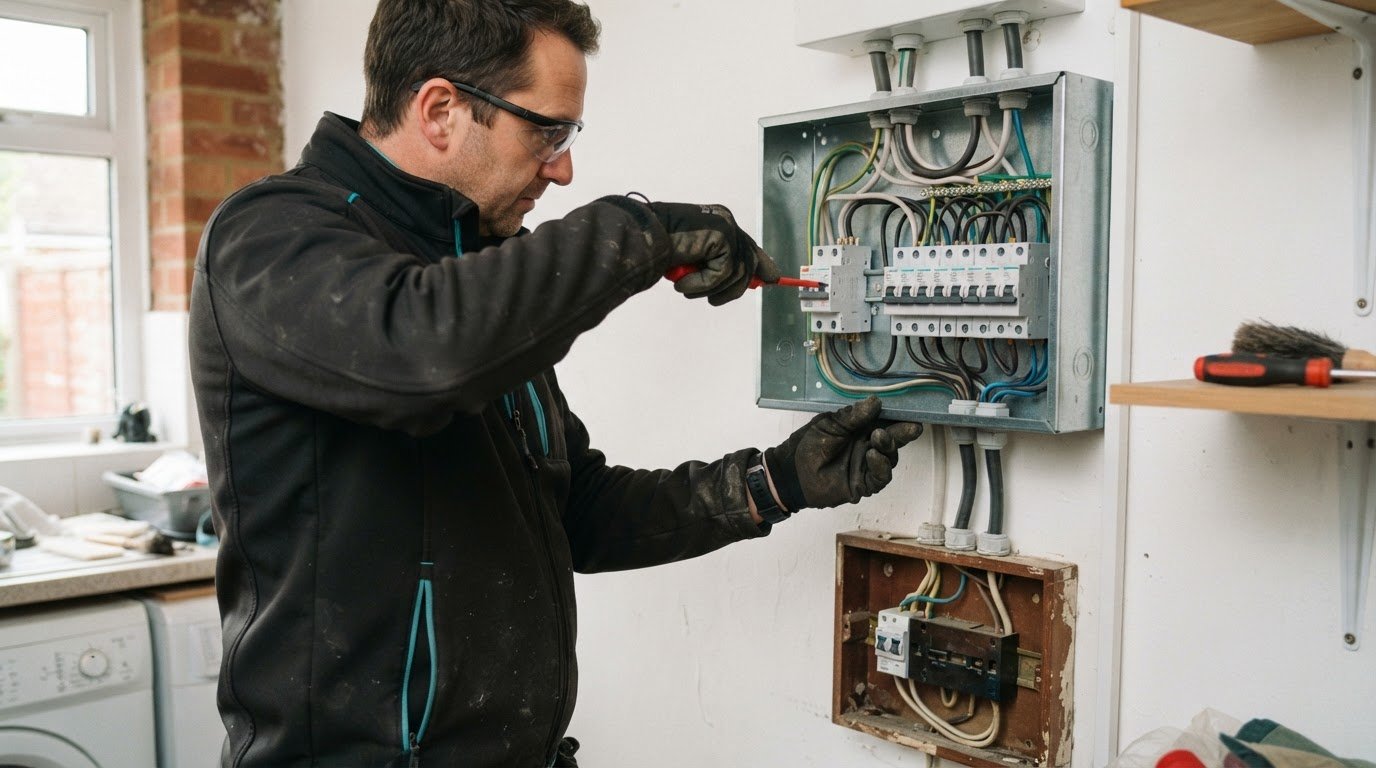
A switch can sometimes move a short distance if the existing cables have enough slack. The electrician still needs to remove it, check the connections and secure it in the new position. Before work begins, the circuit must be isolated at the consumer unit and tested afterwards. Live wiring poses an electric-shock risk, and careless cutting can damage concealed cables.
Typical costs and job duration
A standard relocation typically takes 2 to 3 hours. Adding a new switch may also take 2 to 3 hours, as it can require a new cable route. For homeowners comparing the cost to move a light switch in the UK, the estimate should reflect the actual work. Electrical work must comply with BS 7671, according to the British Standards Institution.
Moving multiple switches
Planning several electrical jobs together can make better use of the appointment, though every location still needs suitable wiring and testing. Replacing five switches like for like takes around two to three hours; relocating them can involve extra cable work or wall chasing.
Costs for different wall types and switch configurations
Wall construction affects how the electrician routes the wiring and restores the finish. In masonry, extra work may include cutting a channel and repairing the surface afterwards.
Configuration also changes the work involved.
These figures help distinguish the electrical work from the plastering and finishing.
In England and Wales, moving a switch must comply with Part P of the Building Regulations, according to the UK Government. Moving a switch on an existing circuit is described as minor work that doesn’t require local authority notification. In Scotland, the Building (Scotland) Regulations require electrical installation work to be carried out by a competent person.
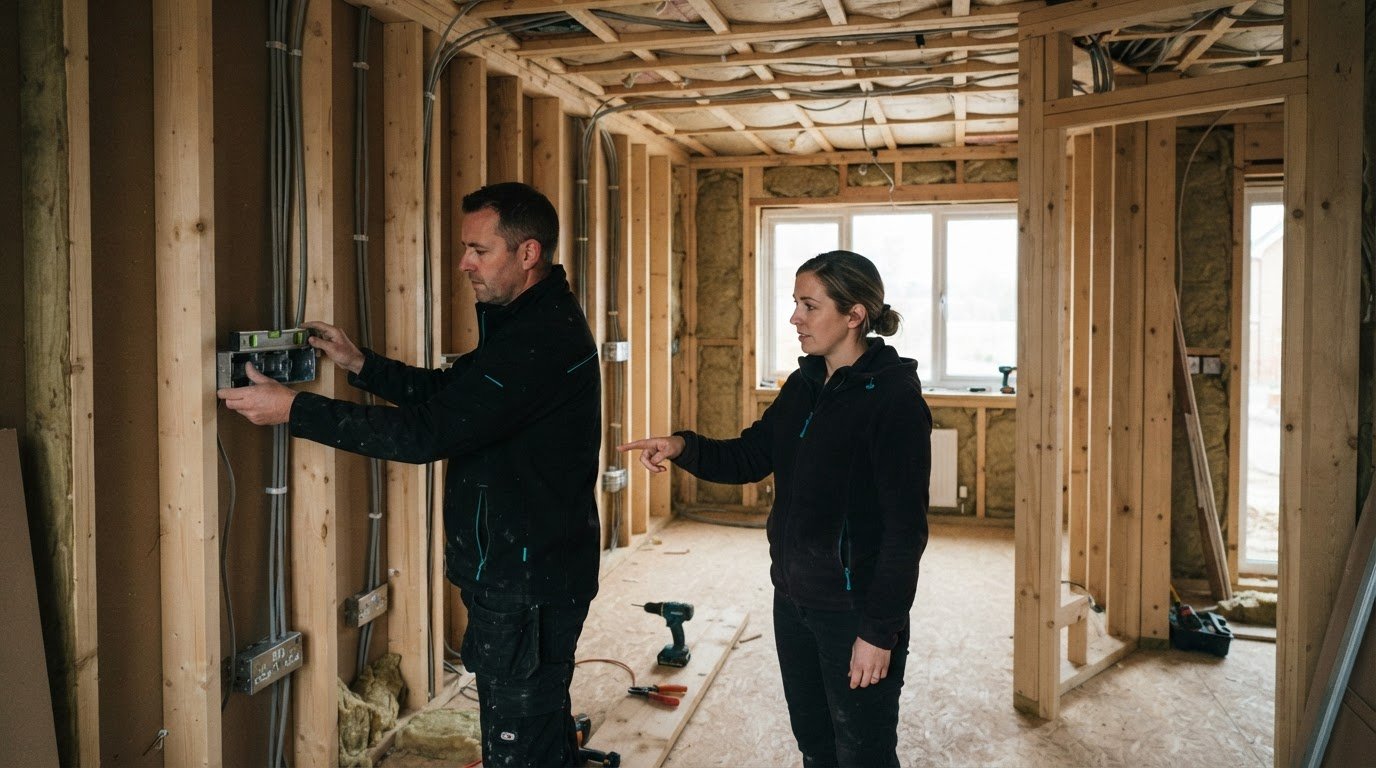
If the switch move is part of wider property work, renovations and new builds can bring related electrical changes into the same project.
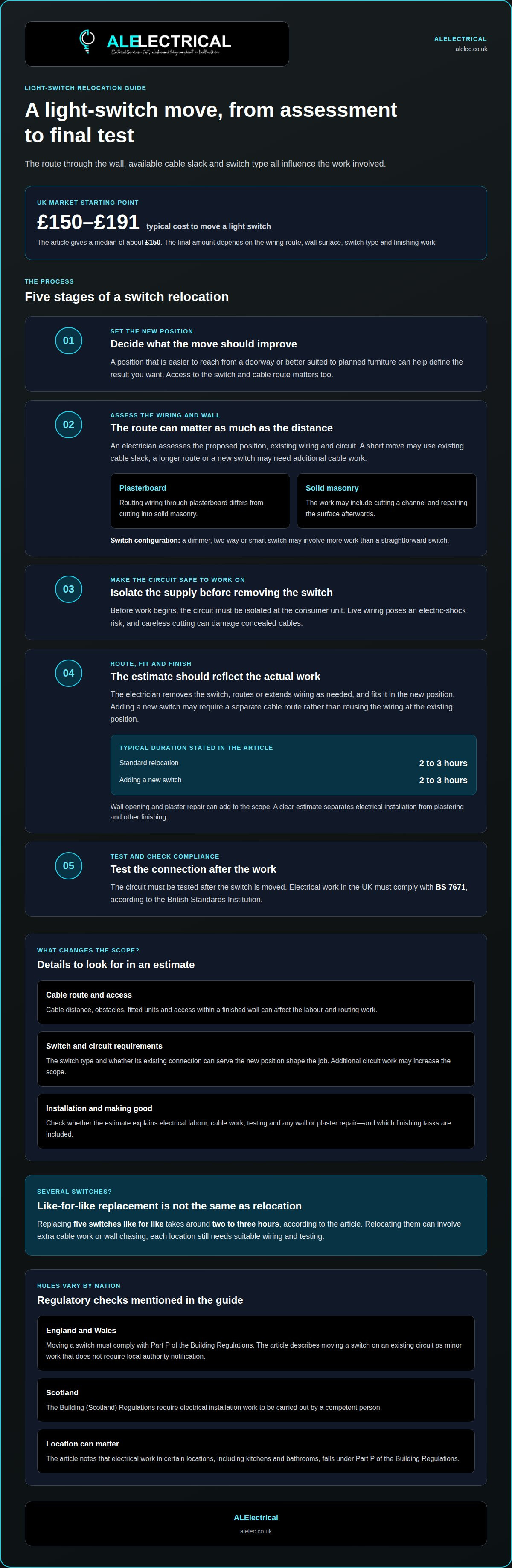
Factors affecting the cost of relocating a switch
The final estimate depends on the cable route, access and electrical work needed at the new position. A qualified electrician will assess the switch position, existing wiring and circuit before planning the installation. If cables need rerouting, walls need opening or the circuit requires additional work, labour and making good can increase the overall scope.
Location can affect labour costs, and access matters too. A clear route to the switch and wiring is easier to work with than a position behind fitted units or within a finished wall.
The room and circuit can affect the checks required. Electrical work in certain locations, including kitchens and bathrooms, falls under Part P of the Building Regulations, according to the UK Government. A new position in these areas may involve additional considerations compared with a hallway. The switch type and whether its existing connection can serve the new position also shape the job.
For homeowners, the clearest estimate separates the electrical installation from plastering and other finishing, and explains any extra circuit work. If the switch move forms part of broader electrical upkeep, discuss electrical maintenance for the property’s wider requirements.
ALElectrical: House Rewires
ALElectrical can help when moving a switch is part of a wider electrical project. If the existing wiring needs broader changes, its House Rewires service may suit plans that go beyond relocating one switch. ALElectrical also offers EICR services for homeowners reviewing the condition of an electrical installation. These options may be relevant if a small alteration raises wider questions about the wiring or forms part of renovation work. A single switch move may not require a rewire or an EICR, so the right service depends on the work needed. Contact ALElectrical for a free, no-obligation quote.
Plan a switch position that suits your home
Before arranging the work, consider how you use the room and what you want the new position to improve. You may want the switch to be easier to reach from the doorway or better positioned for a planned furniture layout. Defining that everyday goal helps keep the conversation focused on the result you need, not just the electrical task.
If the change sits within wider plans for the property, ALElectrical also offers House Rewires, Solar & Battery and Fuse Box Upgrades. The cost of moving a light switch in the UK depends on the work involved, so describing your intended outcome is a helpful starting point.
Contact ALElectrical about your switch move to discuss the next step, and move towards a setup that feels right for your home.
Frequently Asked Questions
Cable Routing Distance: How Far Is It Moving?
The farther the new position is from the existing wiring, the more cable and routing work may be needed. A short move can be simpler if the cable has enough slack; moving a switch across a room may require a longer route around obstacles. The route through the wall can matter as much as the straight-line distance.
What should a clear quote explain?
A clear quote should describe the planned switch position and explain what the work includes. Look for details on electrical labour, the switch and back box, cable, testing, certification and any plaster repair. It should also clarify whether the wall finish is included, so you understand which parts of the job are covered.
What’s involved in moving a light switch?
The electrician assesses the existing circuit and proposed position, then isolates the supply before removing the switch. They route or extend the wiring, fit the switch in its new location and test the connection. Wall repairs may follow. Clearing access to the switch and cable route can help the work proceed smoothly.
Which property details can change the scope?
Wall construction, the route from the existing switch and the number of control points can all affect the job. For example, a switch beside a doorway may be easier to reach than one behind fitted furniture. A dimmer or smart switch may also need different wiring arrangements from a basic switch, so describe the existing setup and the position you want.
⏱ How long does it take?
A light-switch relocation usually takes around 1-3 hours, while complex work can take 3-4 hours. The timing depends on the cable route, wall construction and whether extra rewiring is needed. For example, a longer route through a solid wall can take more time than a simple move on the same circuit. Wall repairs may require separate finishing work.
Comments