
Surge protection for home electronics: choosing a protector
A plug-in protector isn’t always the whole answer. Under UK wiring rules, protection against transient overvoltage is required unless a risk assessment supports omitting it; the assessment considers possible serious injury or loss of life, disruption to services or business, damage to cultural heritage, or effects on many people in one place. The IET identifies BS 7671:2018 as the current edition.
It’s understandable to want a clear answer before choosing protection for your home. Surge protection for home electronics can help reduce the risk of damage from sudden voltage increases, but the right option depends on what you need to protect and how your home’s electrical system is set up. This guide explains what causes surges, how plug-in and consumer-unit protection differ, and which features matter when choosing a protector. You’ll also learn when an installed surge protective device may be appropriate, so you can make a more informed decision about protecting your equipment.
Table of Contents
What is a Surge Protector?
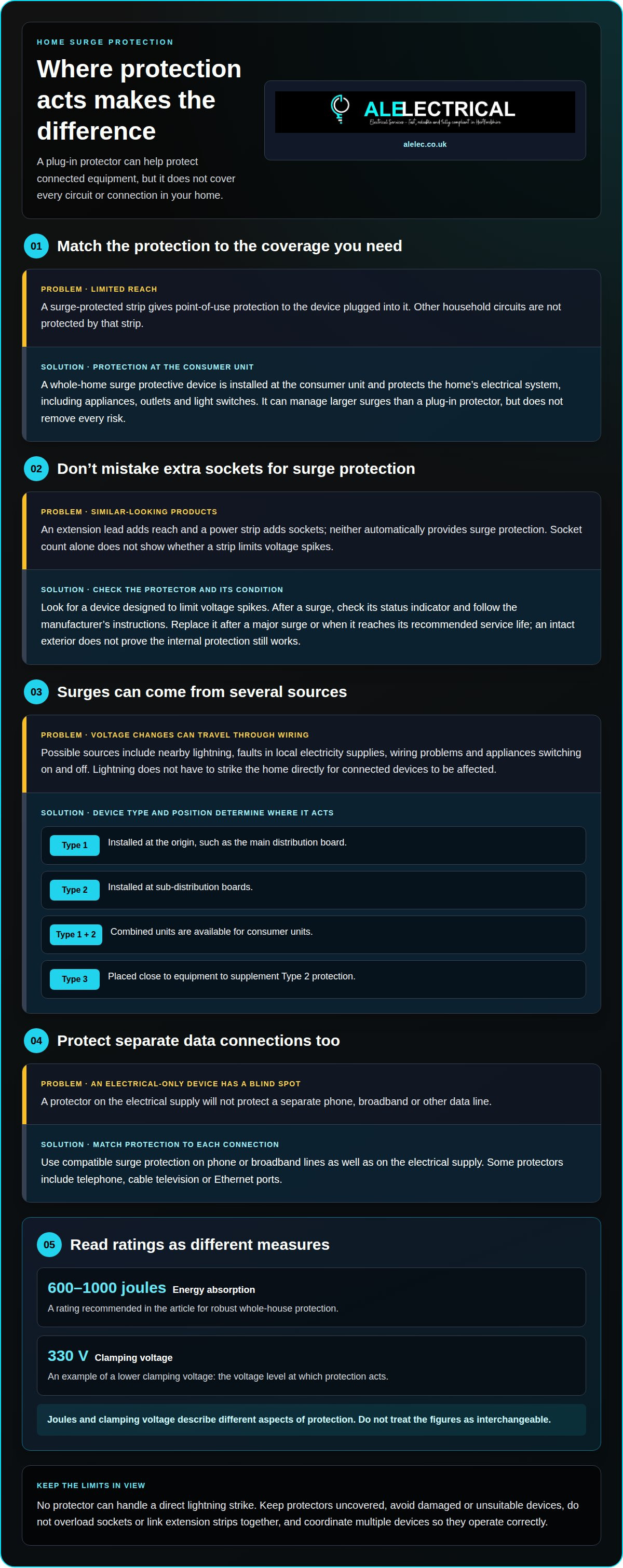
A surge protector limits the effects of a sudden voltage increase on connected equipment. It can protect one device or, when installed at the consumer unit, cover more of the home.
Whole-home surge protection
A whole-home surge protective device is installed at the consumer unit to protect the home’s electrical system, including appliances, outlets and light switches. It can help manage larger surges than a plug-in protector and provides longer-lasting protection, although it doesn’t remove every risk. Inside many protectors, a metal oxide varistor absorbs excess voltage and diverts current to ground. This matters during events such as lightning-related surges, which can affect more than one connected device.
In the UK, the Institution of Engineering and Technology identifies BS 7671:2018 as the current edition of the IET Wiring Regulations, and BS 7671:2008+A3:2015 as the previous edition. The applicable requirements depend on the electrical work and risk assessment.
Surge protectors, extension leads and power strips
An extension lead adds reach, while a power strip provides several sockets; neither automatically offers surge protection. A surge protector contains components designed to limit voltage spikes, so the number of outlets alone doesn’t show whether a strip provides protection. For example, a television plugged into a surge-protected strip receives point-of-use protection, but other household circuits don’t.
After a surge, check the protector’s status indicator and follow the manufacturer’s instructions. If it has taken a major surge or reached its recommended service life, replace it; an intact exterior doesn’t prove its internal protection still works. A surge protector, extension lead and power strip aren’t interchangeable.
What Causes Electrical Surges?
Surges can follow nearby lightning, faults in local electricity supplies, wiring problems or appliances switching on and off. These sudden voltage changes may travel through electrical wiring and affect connected devices, even when lightning doesn’t strike the home directly.
Surge protective devices limit the voltage reaching equipment by diverting excess current. Their type and position determine where they act: Type 1 devices are installed at the origin, such as the main distribution board; Type 2 devices go at sub-distribution boards. Combined Type 1 and Type 2 units are also available for consumer units. Type 3 devices sit close to equipment and supplement Type 2 protection.
Thyristor surge protection devices use a switching component that changes from a non-conducting state to a conducting state when triggered, providing a path for surge current. Multiple devices need to be coordinated to operate correctly. No protector can handle a direct lightning strike.
For phone or broadband lines, use compatible surge protection on those connections as well as on the electrical supply. Some protectors have ports for telephone, cable television or Ethernet connections; an electrical-only protector won’t protect a separate data line.
To reduce fire and electrical risks, avoid damaged or unsuitable protectors, keep them uncovered, and don’t overload sockets or link extension strips together. Replace a protector after a major surge or when it reaches the manufacturer’s recommended service life.
Home insurance cover depends on the policy. The IET advises checking whether it requires equipment to be protected by an SPD, as a claim may not be paid otherwise.
Choosing a surge protector
Choose protection to match the equipment and connections at risk. Ratings and intended use help distinguish options beyond socket count or appearance.
Safety standards and UKCA marking
UL 1449 is a testing standard for surge protectors, but it isn’t a UKCA mark. A mark alone doesn’t tell you a device’s surge capacity or clamping voltage. Look for clear manufacturer information about its intended use, performance and product conformity for the UK market. That helps you assess whether it suits sensitive electronic equipment rather than relying on a label alone.
Costs of surge-protecting devices
UK prices for surge-protecting extension leads and plug-in devices vary with their design and stated capacity. The number of sockets, protection for telephone or Ethernet connections, and declared energy-handling capability can affect the features offered. Compare devices with similar functions, not just similar appearances. A higher socket count, for example, doesn’t by itself show how well a device protects appliances from surge damage.
Ratings describe different aspects of protection. A 600-1000 joule rating is recommended for robust whole-house protection, while 330 V is an example of a lower clamping voltage. Don’t treat these figures as interchangeable: joules describe energy absorption, while clamping voltage indicates the voltage level at which protection acts.
For surge protection for home electronics, match the device’s declared capabilities to the equipment and connections you want to protect. Clear specifications make it easier to compare options and choose protection suited to your setup.
ALElectrical
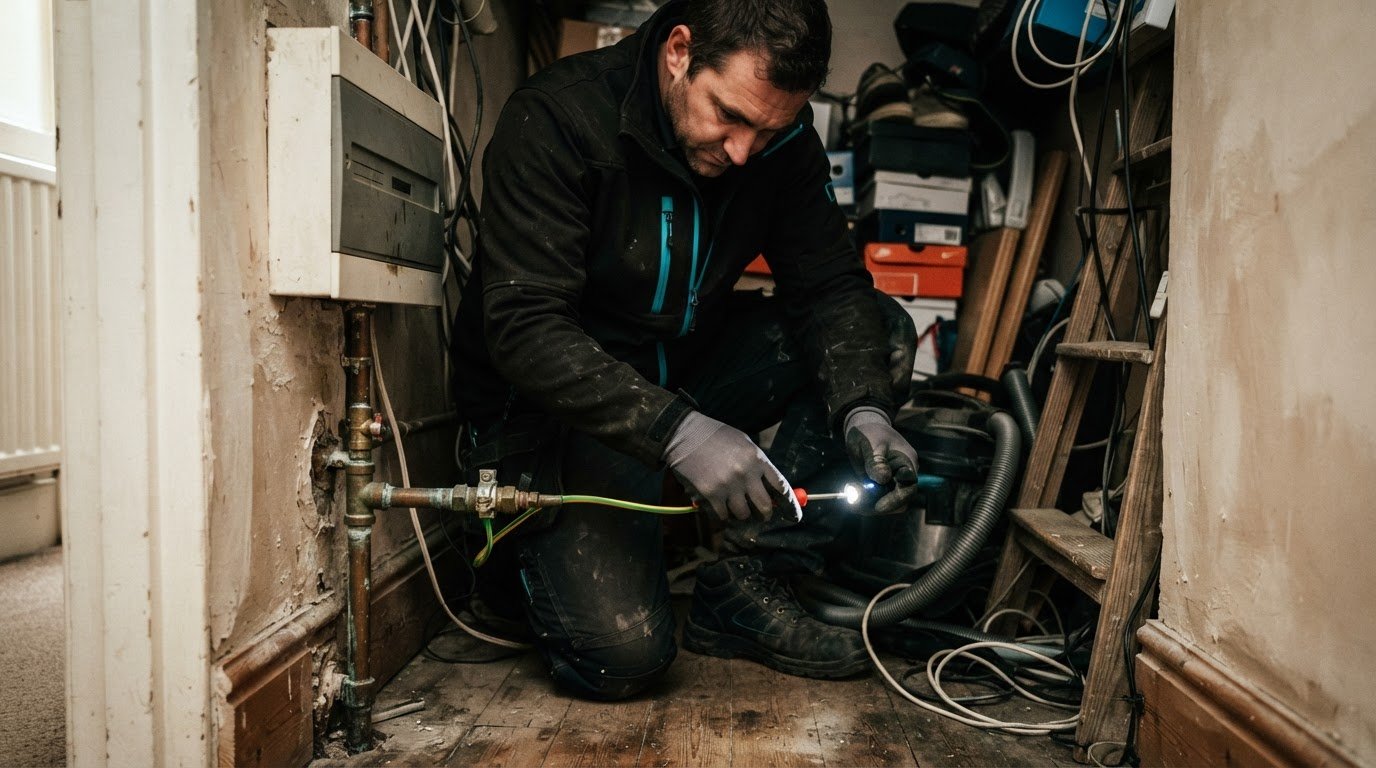
ALElectrical can help when questions about surge protection point to wider concerns with your home’s electrical installation. If an ageing consumer unit or wiring issues are part of the picture, a Fuse Box Upgrade, House Rewire or EICR can help address the condition of the system. Electrical Maintenance may also be relevant when you need electrical work assessed as part of looking after your property.
The right next step depends on what you’re protecting and the condition of the existing installation. An electrical assessment can help clarify whether the issue relates to the consumer unit, wiring or another part of the system, rather than assuming a plug-in device will address every concern.
For help considering your home’s electrical needs, contact ALElectrical.
Plan protection around your home
A considered plan for surge protection for home electronics starts with the equipment you rely on and the electrical system supporting it. If you’re already planning changes to your home, include protection in those conversations early. This gives the electrical work and your priorities room to be considered together, rather than treating surge protection as an afterthought.
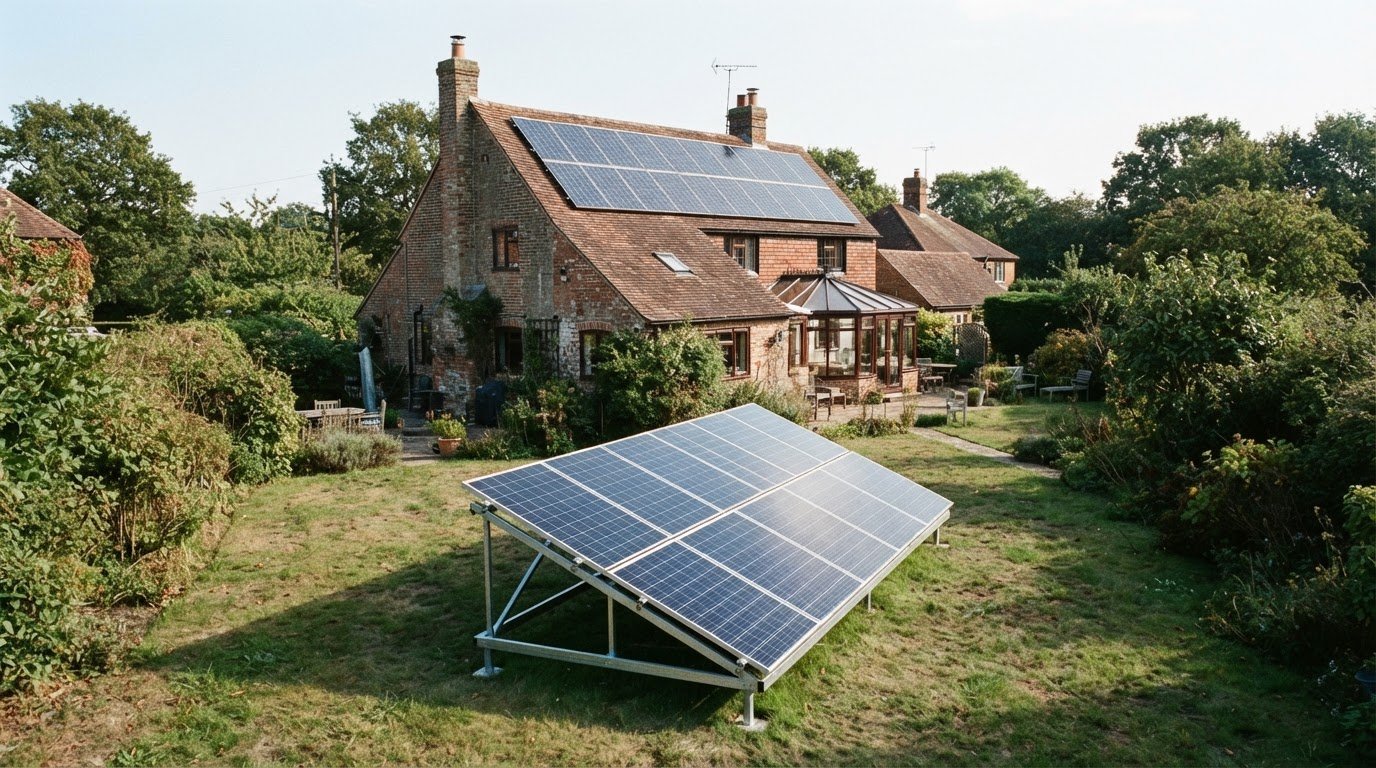
ALElectrical offers House Rewires, Fuse Box Upgrades and Solar & Battery work. These projects can provide a natural opportunity to consider the installation as a whole and how it supports your household’s electrical needs. The appropriate next step depends on your home and planned work, so focus on understanding your options before deciding what suits you. For advice about your electrical installation, contact ALElectrical. A clear conversation can help you move forward with greater confidence and make a considered choice for your home.
Frequently Asked Questions
Do I have to have SPDs installed?
Surge protection can help reduce the risk of damage from transient overvoltages, though whether it is needed depends on the circumstances. These include possible serious injury or loss of life, disruption to public services or business, damage to cultural heritage, or effects on many people in one location. The Institution of Engineering and Technology identifies BS 7671:2018 as the current edition; an electrician can assess how the requirements apply to electrical work in your home.
What are transient overvoltages?
Transient overvoltages are brief increases in voltage caused by a sudden release of stored energy or other electrical events. For example, switching a motor or transformer can create a transient within a building, while an indirect lightning strike near overhead lines can send one along those lines. Their short duration doesn’t prevent them from stressing connected equipment.
How do surge protectors work, and what types are suitable for home electronics?
Surge protectors limit excess voltage reaching connected equipment by diverting surge current. A Type 2 device at a distribution board can provide installation-level protection, while a Type 3 protector near a computer or television supplements Type 2 protection. For a router, consider protection for its power and telephone or broadband connection, since a mains-only device doesn’t protect separate data wiring.
What joule rating and clamping voltage should I look for in a surge protector?
For robust whole-house protection, the stated recommendation is a joule rating of 600-1000 joules; 330 V is an example of a lower clamping voltage. These figures measure different things: joules relate to energy absorption, while clamping voltage indicates the level at which protection acts. Compare each rating with the manufacturer’s intended use and the equipment you want to protect.
Which UK surge protectors are best for TVs, computers, gaming consoles and routers?
There isn’t one best protector for every setup. For a television, computer or console, choose a device whose manufacturer clearly states its surge-protection capability and whose sockets suit the equipment. A router may also need protection on its telephone or broadband line. A plug-in protector covers only equipment connected to it, so it won’t protect other circuits around your home.

Comments