_.jpg)
DIY Electrical Work vs Professional Electrician in the UK: How to Choose
A job that looks like a simple electrical fix can hide risks behind the wall. If you’re weighing diy electrical work vs professional uk options, base your decision on the work involved, your ability to do it safely and any regulatory requirements, not just how straightforward it appears.
It’s understandable to want to handle minor jobs yourself whilst feeling unsure where the boundary lies. This guide explains how to assess a task, when to use a qualified electrician and why building regulations, certification and insurance may matter. You’ll also find practical ways to spot when a job needs professional assessment and what to expect from a clear scope of work.
Table of Contents
DIY electrical work vs professional help in the UK: where is the safety line?
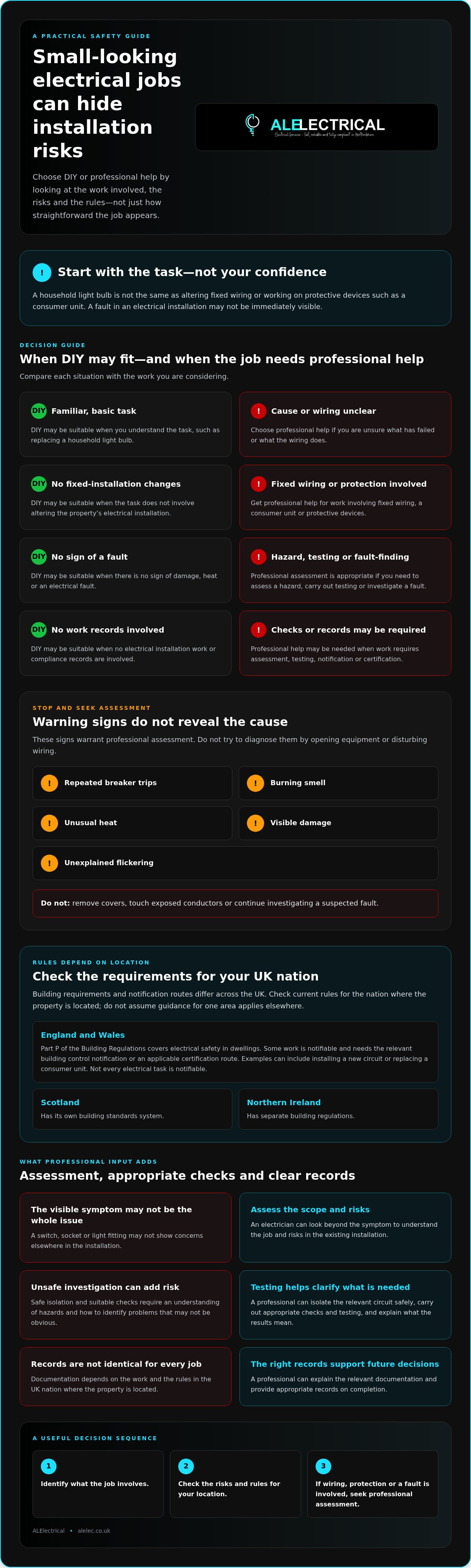
The choice between DIY and professional help depends on the task’s complexity, risk and compliance requirements, not how easy it looks. Replacing a household light bulb is different from altering fixed wiring or working on protective devices such as a consumer unit. A mistake with the electrical installation can leave a fault that isn’t immediately visible. The Electrical Safety Principles offer a general overview, but they don’t replace the knowledge needed to assess an installation safely.
For diy electrical work vs professional uk decisions, first identify what the job involves and which nation’s rules apply. Building requirements differ across England, Wales, Scotland and Northern Ireland, so don’t assume guidance for one part of the UK applies elsewhere.
What do UK electrical rules mean for homeowner DIY?
In England and Wales, Part P of the Building Regulations covers electrical safety in dwellings. Some work is notifiable, meaning it needs the relevant building control notification or an applicable certification route. Examples can include installing a new circuit or replacing a consumer unit. Not every electrical task is notifiable; requirements depend on the work and location.
Scotland has its own building standards system, whilst Northern Ireland has separate building regulations. Before work begins, check the current rules for the nation where the property is located, including the notification and documentation requirements. Rules can change, so don’t rely on an old guide or assume requirements in England and Wales apply across the UK.
Even if a task is legally permitted as DIY, that doesn’t mean you have the skills to complete it safely. Electrical work calls for an understanding of hazards, safe isolation and how to identify problems that may not be obvious. If the job involves fixed wiring, a consumer unit or uncertainty about the existing installation, a professional assessment can help establish the risks and appropriate next steps.
How to compare DIY and professional electrical work before deciding
Judge the task itself, not your confidence alone. Before starting, ask whether it affects the fixed installation, whether you can identify the source of the problem and whether the work may need testing or records. Use this comparison to spot when a small-looking job could turn into fault-finding or work on the installation.
Stop and seek professional assessment if the work involves wiring, electrical protection or fault-finding. Don’t remove covers, touch exposed conductors or continue investigating a suspected fault. HSE guidance on UK Electrical Safety Regulations explains why electrical hazards need to be taken seriously.
Which warning signs mean it is time to stop and call an electrician?
Repeated breaker trips, a burning smell, unusual heat, visible damage or unexplained flickering all warrant professional assessment. These signs don’t identify the cause, so don’t try to diagnose them by opening equipment or disturbing wiring. If a consumer unit is part of the concern, understanding the purpose of a consumer unit upgrade can help put the issue in context.
For diy electrical work vs professional uk decisions, a tailored quote can clarify the scope of professional work before it begins. ALElectrical provides electrical installation, inspection and repair services. Explore professional electrical support if a fault or upgrade needs assessment.
What a professional electrician adds: safe assessment, work and records
A professional electrician looks beyond the visible symptom to understand the job’s scope and any risks in the existing installation. They can isolate the relevant circuit safely, carry out appropriate checks and testing, then explain what the results mean. This helps distinguish a local fault from a wider issue and gives you a clearer basis for deciding what work is needed.
Records matter too. The documents required depend on the work and the rules in the UK nation where the property is located. Don’t assume every job needs the same certificate or that one record covers every building regulation requirement. For electrical installation work and safety inspections, ALElectrical can explain the relevant documentation and provide the appropriate records on completion.
How professional work supports safety and future maintenance
An assessment can reveal concerns that aren’t apparent from a switch, socket or light fitting alone. If checks suggest broader problems with the wiring, a house rewiring homeowner guide can help you understand the considerations involved. Planned electrical maintenance can also help you keep track of the condition of an installation. Electrical Safety First provides independent consumer information through its electrical safety advice.
Professional input is particularly useful when you need a fault assessed, work tested or suitable records provided. ALElectrical carries out electrical safety inspections, house rewires, fuse-box upgrades, EV charger installations and solar-battery solutions. Describe the job to receive a free, no-obligation ALElectrical quote, with the proposed scope set out so you can consider the next step.
Make your next electrical decision with confidence
The right next step isn’t always to start work. For diy electrical work vs professional uk decisions, note what the task involves, what you’ve noticed and what remains uncertain. This makes it easier to judge whether it’s a straightforward household task or one that needs professional assessment.
If professional work is the sensible route, a tailored quote can help you understand its scope before deciding how to proceed. ALElectrical offers free, no-obligation quotes for electrical work, giving you space to consider your options. Request a free, no-obligation electrical quote to discuss your electrical work and its next steps.
Frequently Asked Questions
Can I do my own electrical work in the UK?
Some minor electrical tasks may be suitable for a homeowner, but what’s appropriate depends on the task, your ability and the rules where you live. A simple like-for-like replacement is different from altering an installation. Before starting, consider whether you can complete the task safely and whether it affects a property you rent or share with others.
Is DIY electrical work illegal in the UK?
No, DIY electrical work isn’t automatically illegal, but it must meet applicable safety and building requirements. Rules and notification arrangements differ across England, Wales, Scotland and Northern Ireland. A task that doesn’t require formal notification still needs to be completed safely. If you’re unsure about the requirements or your competence, pause and get professional advice before making changes.
What electrical work should I leave to a professional?
Leave work involving new circuits, consumer unit changes, rewiring, EV charger installation or diagnosis of a fault to a professional electrician. These jobs can affect the wider installation and require more than basic familiarity with the task. In the diy electrical work vs professional uk decision, uncertainty about how a circuit is protected is a good reason not to proceed yourself.
Can DIY electrical work affect my home insurance?
It can, depending on your policy, the work and whether an electrical fault causes damage. Don’t assume cover is automatically invalidated, but check your policy wording and speak to your insurer if you’re uncertain about work you’ve carried out or plan to do. Keep relevant paperwork for electrical work, as it may help explain what was done if you later need to make a claim.



Comments