_.jpg)
Home Car Charger: A Professional Buyer's Guide
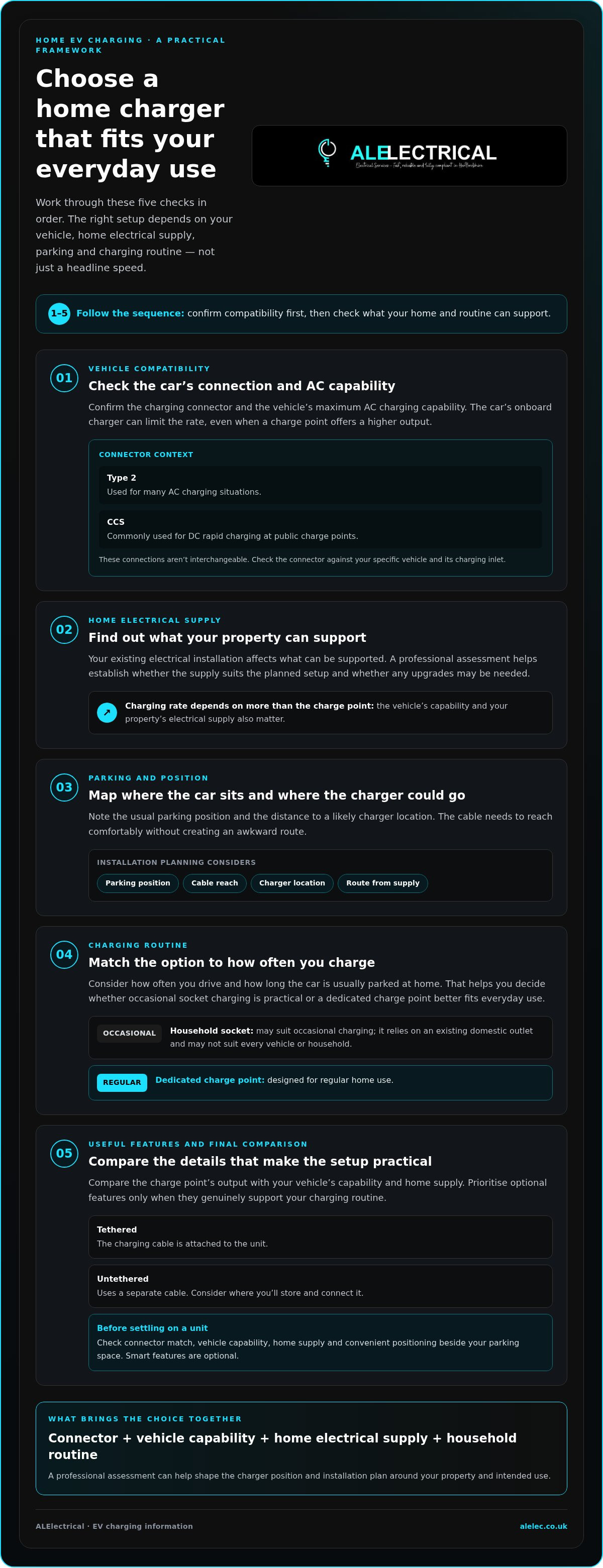
The fastest car charger isn’t automatically the right one for your home. Your choice needs to suit your vehicle, daily driving and the electrical supply at your property. Headline charging speeds are only one part of the decision.
If you’re unsure which connector your vehicle uses, how quickly you need to recharge or whether your home’s electrics can support a charging point, start with the basics. This guide explains the main home-charging options and shows how to match them to your household routine without getting lost in technical specifications.
You’ll also learn what to expect from a professional installation, including how your electrical setup is assessed and when upgrades may be needed. With a clear picture of the choices, you can plan a safe, practical arrangement for charging at home.
Table of Contents
What does a car charger do, and which charging options suit home use?
A car charger supplies electricity to an electric vehicle (EV) through a compatible charging connection. At home, you can charge using a standard household socket or a dedicated charge point installed for vehicle charging. A dedicated unit is designed for regular home use, while socket charging relies on an existing domestic outlet and may not suit every vehicle or household. Public charge points are a separate option for charging away from home.
Charging speed depends on more than the charge point. The vehicle’s charging capability and the electrical supply at your property also matter. For AC charging, the vehicle’s onboard charger can limit the rate, even if the charge point can provide more. So, a headline speed alone won’t tell you how quickly your car will charge. The Electric Vehicle Charging Station Overview gives further background on charging station types and connections.
Home charging or public charging: what is the difference?
Home charging lets you plug in while your car is parked at home, making it easier to fit charging into your usual routine. Public charge points are useful when you’re out, travelling or need to charge away from your property. The two settings can use different charging speeds and connections, so check what your vehicle supports before choosing equipment.
Type 2 is used for many AC charging situations. CCS is commonly used for DC rapid charging at public charge points. These connections aren’t interchangeable, so confirm compatibility with your specific vehicle and its charging inlet. A suitable car charger setup brings together the connection, the vehicle’s onboard capability and your home’s electrical supply, rather than relying on a single speed figure.
How to choose a home car charger that fits your vehicle and household
Start by considering how your vehicle and home work together, rather than choosing the highest output on a product specification. A household socket may suit occasional charging, but a dedicated unit is designed for regular home use. Use this framework to narrow down what matters:
Check the vehicle. Confirm its charging connector and maximum AC charging capability. The car can limit the charging rate, even if the charge point offers a higher output.
Consider the home supply. Your existing electrical installation affects what can be supported. A professional assessment helps establish whether the supply suits the planned setup.
Think about parking. Note where the vehicle usually sits and how far it is from the likely charger position. The cable needs to reach comfortably without creating an awkward route.
Match your routine. Consider how often you drive and how long the car is normally parked at home. This helps you decide whether occasional socket charging is practical or a dedicated charge point better fits everyday use.
Choose useful features. Optional features should help refine your choice, not become a checklist to complete. Focus on what would genuinely support your charging routine.
Which charger specifications should you compare?
First, check that the connector matches your vehicle. Then compare the charge point’s output with your vehicle’s capability and your home supply. A tethered unit has its cable attached; an untethered unit uses a separate cable. Consider where you’ll store and connect that cable, and whether the charger can be positioned conveniently beside your parking space. Smart features are optional, so prioritise those that suit your needs.
For more detail on planning the work, see this professional EV charging installation guide. The EV charger installation cost and grant guide covers those topics without implying grant eligibility. A professional assessment helps shape a car charger installation around your property and electrical supply. ALElectrical provides EV charger installation, with safety and compliance in mind.
What to expect when arranging professional car charger installation
A professional installation turns your chosen equipment into a charging setup planned for your home. The work is tailored to the property, existing electrical supply, charger position and equipment. The process starts by understanding how you intend to use the charger and where it will fit best.
How does a home car charger installation begin?
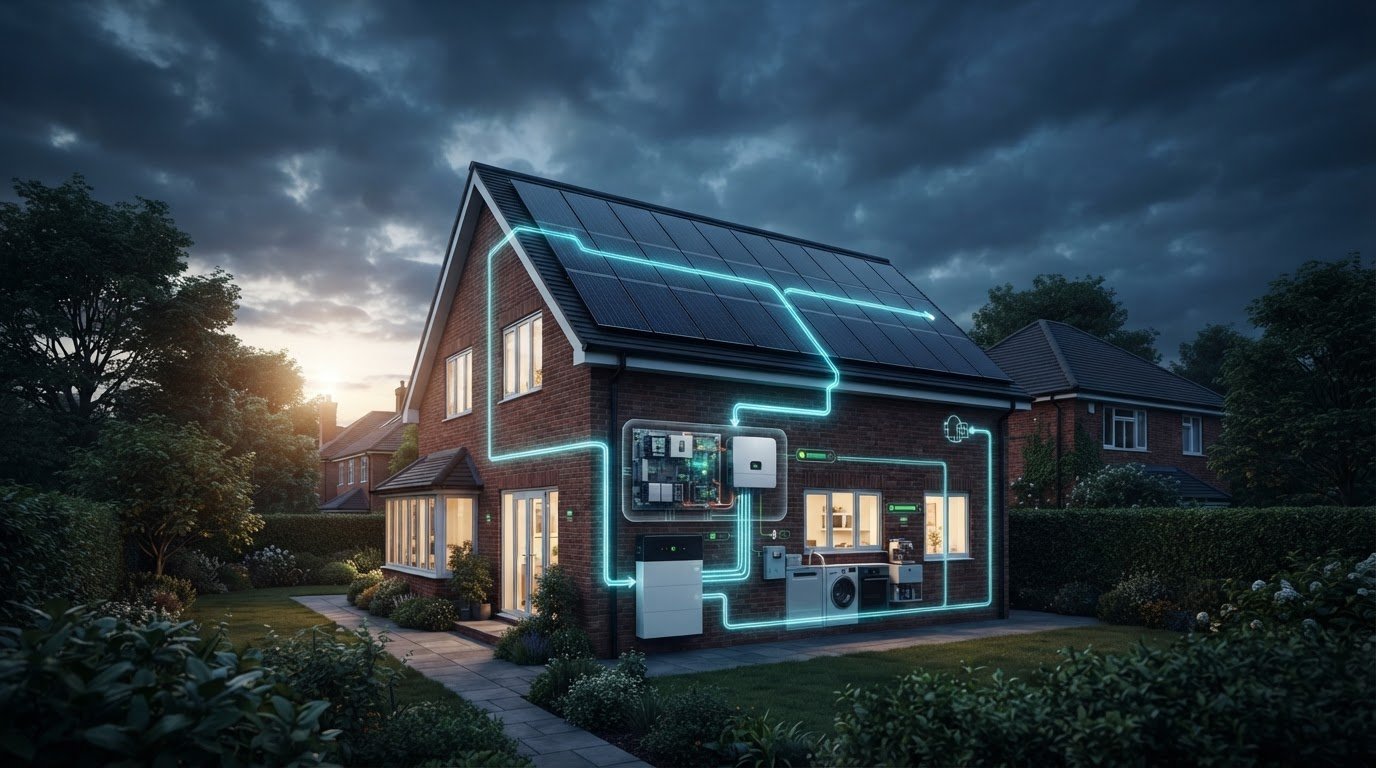
Share which vehicle you drive, where it’s usually parked and how you expect to charge it. If you have solar panels or are planning a solar setup, include that context too. The solar EV charger installation comparison guide explores considerations for combining solar and EV charging.
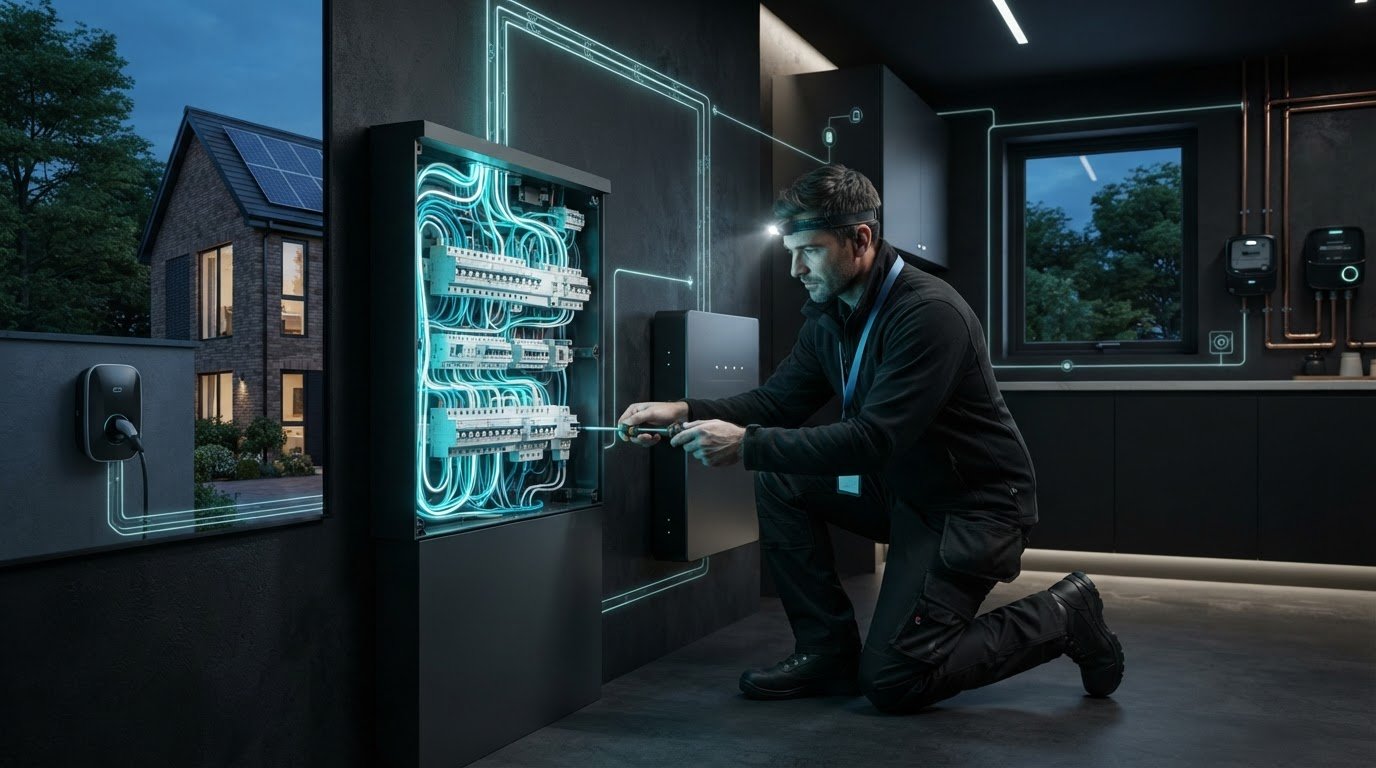
A qualified electrical professional assesses the existing installation before planning the work. This helps establish how the proposed charge point can fit with the property’s electrical supply and the route from the supply to the chosen location. The plan may differ between homes, even when the same charger is being considered.
In broad terms, the process involves:
Discussing the intended setup, including your vehicle, charging needs and parking position.
Assessing the electrical installation to understand the existing supply and what the proposed equipment requires.
Planning the work around the property, charger location and chosen equipment.
Completing and testing the installation so the installed setup can be checked before use.
Clear details about where you park and how you charge help shape a practical plan. ALElectrical provides EV charger installation with safety and compliance in mind, taking your property and charging needs into account.
Take the next step towards charging at home
Choosing a car charger is a chance to make everyday charging work smoothly for your household, not simply to add equipment to the property. With a clear idea of your vehicle, parking arrangement and charging needs, you’re well placed to plan an installation that fits your home.
ALElectrical provides EV charger installation with a focus on safety, compliance and customer satisfaction. Request a free, no-obligation quote to discuss your home charging project and take the next step towards a setup that suits your routine.
Frequently Asked Questions
Can I charge an electric car from a normal household socket?
Yes, a standard household socket can charge an electric car, but it’s generally slower than a dedicated charge point. It may suit a driver with modest daily mileage and a car that stays parked for long periods. Check the vehicle manufacturer’s guidance for socket charging and suitable equipment, then consider whether the time available at home meets your regular charging needs.
Will every car charger work with every electric car?
No. Compatibility depends on the vehicle’s connector and the type of charging. Many UK and European vehicles use Type 2 for AC charging, while CCS is common for DC rapid charging. Check your vehicle handbook or manufacturer specifications to identify the connection it accepts. For AC charging, the car’s onboard charger may also restrict the rate, regardless of the charge point’s capacity.
How long does it take to charge an electric car at home?
There isn’t one charging time that applies to every car. Battery capacity and current charge level matter, as do the charge point’s output, the vehicle’s onboard charging capability and the available electrical supply. To estimate your own needs, compare the vehicle and charge point specifications, then consider how much charge you need to add during the hours your car is usually parked.
Do I need an electrician to install a home car charger?
A dedicated home charge point involves electrical work, so have a qualified electrical professional assess and install it. The assessment can consider the existing installation, electrical supply and proposed charger position, helping identify work needed for your property. Requirements can vary with the installation and applicable rules, so a professional assessment is the practical way to establish an appropriate plan for your home.

Comments