_.jpg)
Expert Solar Battery Storage Solutions for Harpenden Homes
Could a smaller home battery make more sense than the largest system on the market? The right capacity depends less on headline figures and more on when your household uses electricity, how much your solar panels generate, and whether surplus power would otherwise be exported. If you’re considering battery storage options, it’s understandable to wonder whether a battery will make a noticeable difference and what installation involves.
This guide explains how to compare battery capacity with household demand, what to consider when planning a safe electrical installation, and why it’s important to be clear about backup-power expectations. You’ll also see how solar generation and everyday energy habits shape system design. ALElectrical provides solar and battery installation, with professional electrical integration and safety at the centre of the work.
Key Takeaways
Compare your solar generation with when your household uses electricity to judge whether a battery could suit your routine.
For Battery storage Harpenden, assess usable capacity and power alongside your existing solar setup, rather than choosing by headline size alone.
Review your storage needs and the property’s installation conditions to help shape a practical system plan.
ALElectrical tailors solar and battery installation to your home, from assessing requirements through electrical integration and handover.
Battery storage Harpenden: Table of Contents
Is home battery storage right for your household’s energy use?
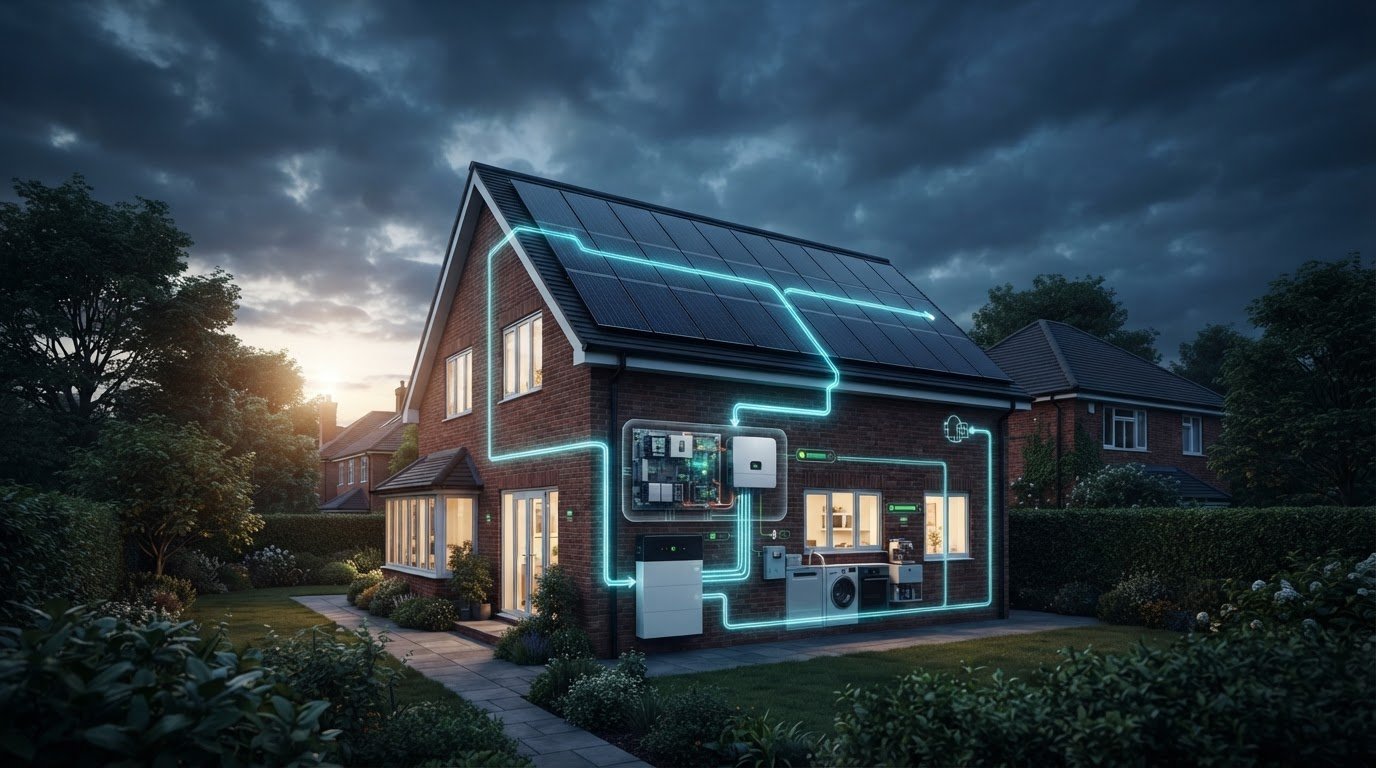
Home battery storage holds electricity so it can be used later, rather than only when it’s generated or supplied. For a home with solar panels, this can mean storing surplus daytime generation for use after the sun has set. A battery may also charge from the grid, depending on the system design and how it’s operated. The general principles and applications of battery storage help explain why the timing of charging and use matters. Battery storage Harpenden planning should start with your household’s patterns, not a headline capacity.
Suitability depends on the relationship between generation and demand. If the household is often empty during sunny hours but uses more electricity in the evening, stored solar power may be useful. If most electricity is used while the panels are generating, there may be less surplus to store. Your ability to shift some electricity use to sunnier periods also affects how much a battery contributes.
Which household energy patterns make a battery worth considering?
Start with your electricity bills and, if available, half-hourly usage data. Look at when demand rises, how it changes across seasons, and whether solar generation tends to exceed daytime use. This gives you a more grounded starting point than choosing by headline capacity or relying on a broad savings claim. For Battery storage Harpenden decisions, these records can make a project discussion more specific.
Note regular evening demand, such as cooking, lighting and entertainment.
Compare it with the times your solar system usually generates surplus electricity.
Decide whether your main aim is using more of your own generation or having stored energy available during a power cut.
Those aims aren’t the same. A battery may increase energy independence, but savings depend on system design, electricity use and charging patterns. Backup power also isn’t automatic: whether the system can supply power during an outage, and what it can run, depends on its design and the energy available. A tailored assessment helps set realistic expectations before installation is planned.
How to assess battery capacity, solar compatibility and installation needs
A useful battery assessment starts with your home’s actual energy patterns, then considers how storage can fit your existing solar and electrical setup. Capacity describes how much energy a battery can store. Usable capacity is the amount available to your home, while power describes how quickly it can deliver that energy. Both matter: a battery with ample capacity may still not suit your needs if its power output doesn’t match the loads you want to run. For Battery storage Harpenden planning, start with these practical factors rather than a headline figure.
What should a battery assessment take into account?
Work through these points in order to build a practical picture of your requirements:
Review household demand. Use bills or available energy data to understand how much electricity you use and when, including seasonal changes.
Check solar generation. Look at when your panels generate electricity and whether generation is often greater than daytime demand.
Define storage needs. Decide whether you want to use more of your own solar power later, charge from the grid at selected times, or explore backup power. Grid charging may be possible, but its value depends on the system, tariff terms and your usage. It doesn’t guarantee lower bills.
Consider compatibility and installation conditions. Existing inverter compatibility, the electrical setup and available installation space all inform the design. A solar retrofit may need a different integration approach from a new combined system.
This assessment helps avoid a mismatch between the energy a battery can store and the way your household would use it. The home solar battery storage buying guide offers further context for comparing the factors involved in Battery storage Harpenden projects.
Once you’ve considered your usage, solar generation and installation conditions, a project-specific plan can bring those details together. Explore ALElectrical’s solar and battery installation service to see how a system can be planned around your property and requirements.
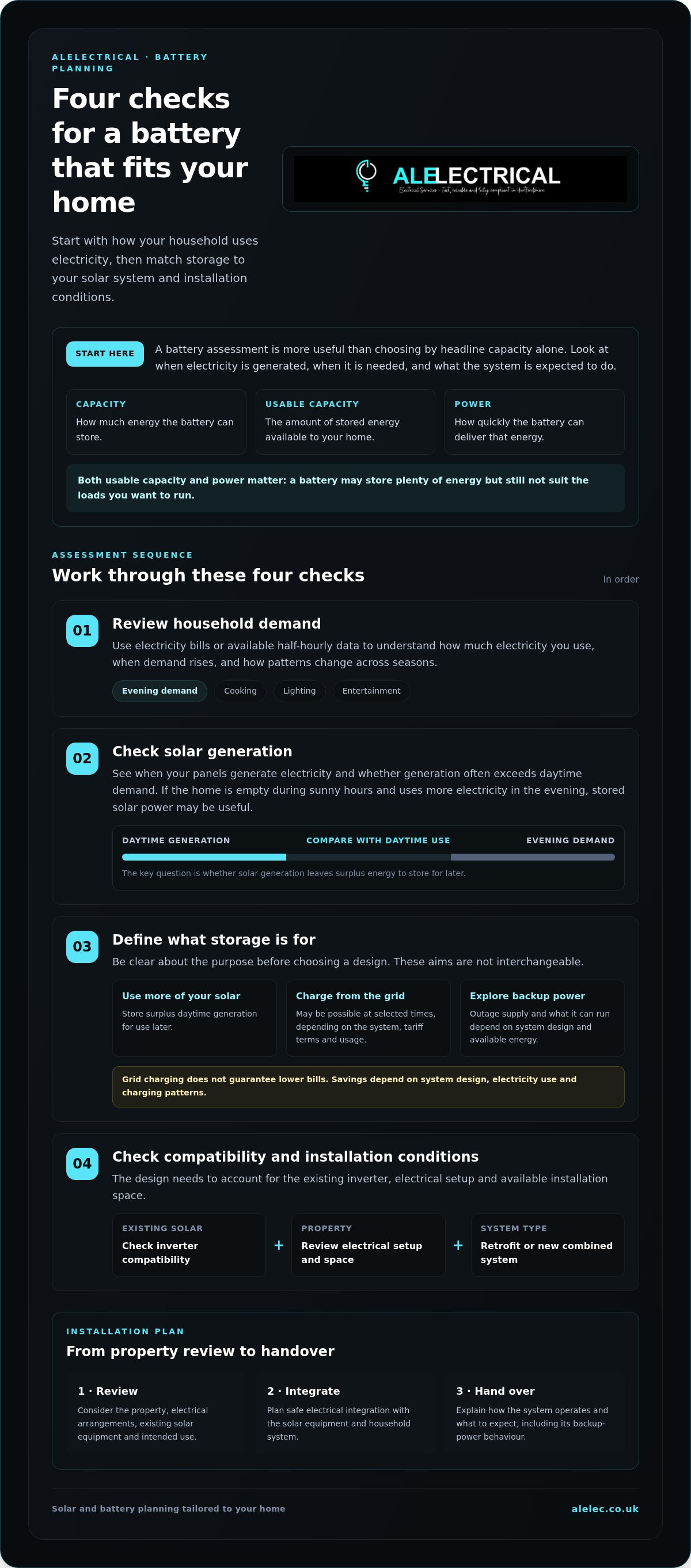
Plan a safe home battery installation with ALElectrical
A well-planned installation starts with the home, not a standard package. ALElectrical tailors solar and battery work to the property, existing electrical setup and household requirements. This helps shape a practical plan for integrating the battery safely with the solar system and the rest of the installation.
What happens during a battery installation project?
The project begins with a review of the property and its electrical arrangements. Existing solar equipment, the consumer unit, available installation space and the intended use of stored electricity all help inform the design. If electrical capacity is relevant to your plans, the modern consumer unit upgrade guide explains what a consumer unit does and why its condition matters.
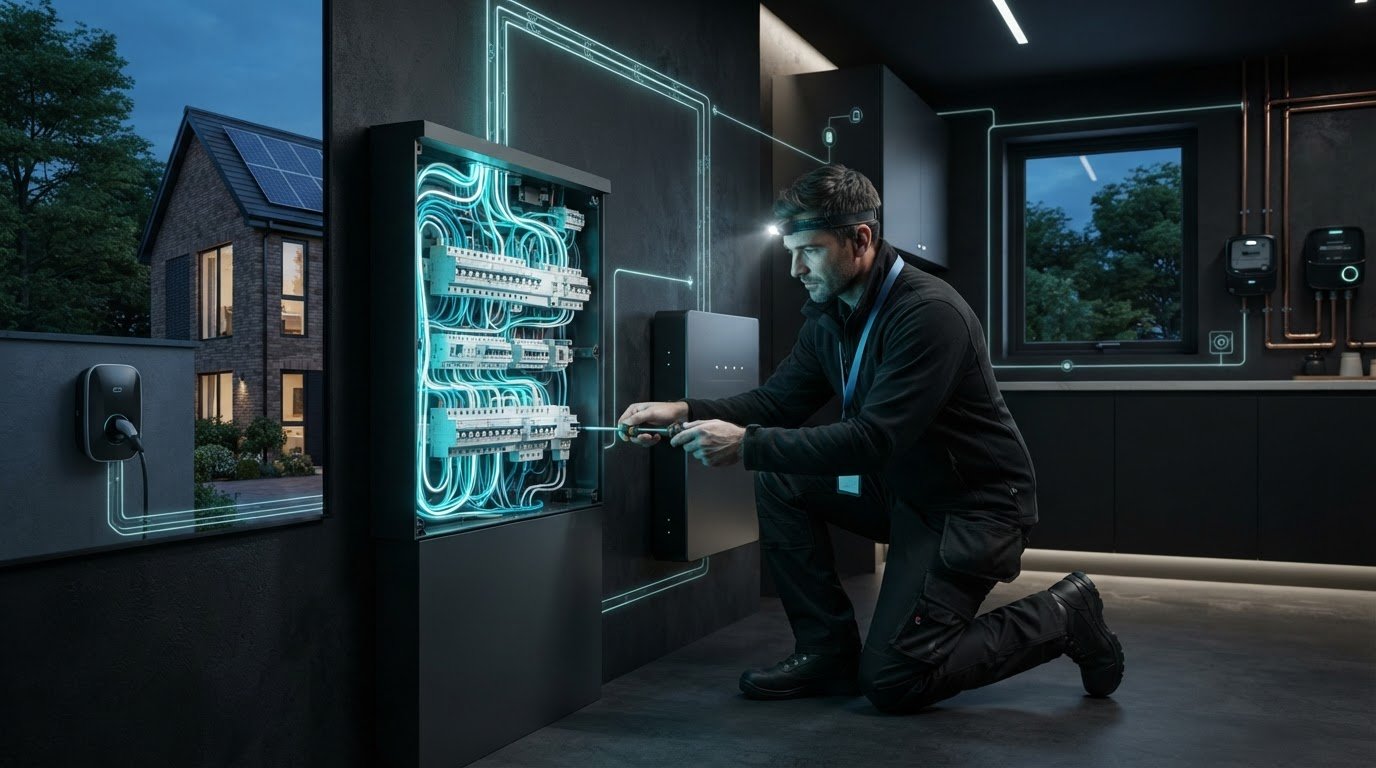
That assessment guides the integration plan. The battery needs to work appropriately with the solar equipment and household electrical system, and the installation approach must account for safety and compliance. Planning these details early helps avoid treating the battery as a standalone addition.
Once the plan is established, the work involves installing and electrically integrating the system, followed by a handover to help you understand how it operates and what to expect. Backup-power behaviour, for example, depends on the system design, so it’s useful to be clear about your priorities before work begins.
Sharing your solar setup, typical electricity use and intended purpose for a battery gives the project a helpful starting point. ALElectrical provides a free, no-obligation quote based on your requirements, so you can discuss a tailored solar and battery installation with a clear understanding of the proposed work. Request a solar and battery quote when you’re ready to take the next step.
Take the next step towards a system that suits your home
A battery project is an opportunity to plan how your home uses and stores electricity around your priorities. The next step is a tailored conversation about your property and the outcome you want, whether that’s making better use of solar generation or exploring backup options. You don’t need to settle on a system before those details have been considered.
ALElectrical provides professional solar and battery installation, with safety and compliance guiding the electrical work. A free, no-obligation quote gives you a clear starting point for discussing your project and its requirements. Request a free, no-obligation solar and battery quote to take the next step with a plan shaped around your home.
Frequently Asked Questions
Can a home battery provide power during a power cut?
Yes, but only if the battery, inverter and system configuration support backup operation. Which circuits are connected matters: an arrangement might keep selected essential loads available, not every socket or appliance. For Battery storage Harpenden planning, list priorities such as lighting, refrigeration and communications, then account for their demand in the design. Don’t assume any system will provide uninterrupted power.
How long does a home battery last?
A home battery’s service life varies with its chemistry, operating conditions, usage and the manufacturer’s specifications. Frequent or heavier use may affect how it performs over time, so avoid relying on a generic lifespan figure. Check the documentation for the specific equipment to understand its expected performance, and consider how future replacement might fit your household’s energy plans.
Can a home battery be installed outside?
Some batteries may be suitable for outdoor installation, but this depends on the manufacturer’s instructions, environmental rating, required clearances and conditions at the property. Don’t assume every unit can be placed outside. During project planning, the installation position should be assessed for suitability, safe access and the space needed for fitting and any future maintenance.
Does a home battery need regular maintenance?
Maintenance needs vary between battery systems and manufacturers, so follow the guidance supplied for your specific equipment. Keep the area around the battery clear, allowing access for inspection or servicing where required. Don’t assume a system is maintenance-free or apply a generic service schedule. Understanding the equipment instructions at handover helps you know what care is appropriate.

Comments