_.jpg)
Solar Panel Installation in Harpenden: A Complete Guide
Could the right solar system for your home depend more on when you use electricity than on how many panels fit on your roof? If you are researching domestic solar solutions, it is worth considering how your household uses energy and whether battery storage could suit your needs.
A good decision starts with understanding your energy use, not simply comparing panel specifications. This guide covers the main factors to weigh up, how solar panels and battery storage work together, and what to expect from a professional ALElectrical installation. You will also learn how safety and compliance fit into the project, so you can prepare for a discussion about a system suited to your home and request a no-obligation quote.
Table of Contents
Solar panel installation: how to decide whether it suits your home
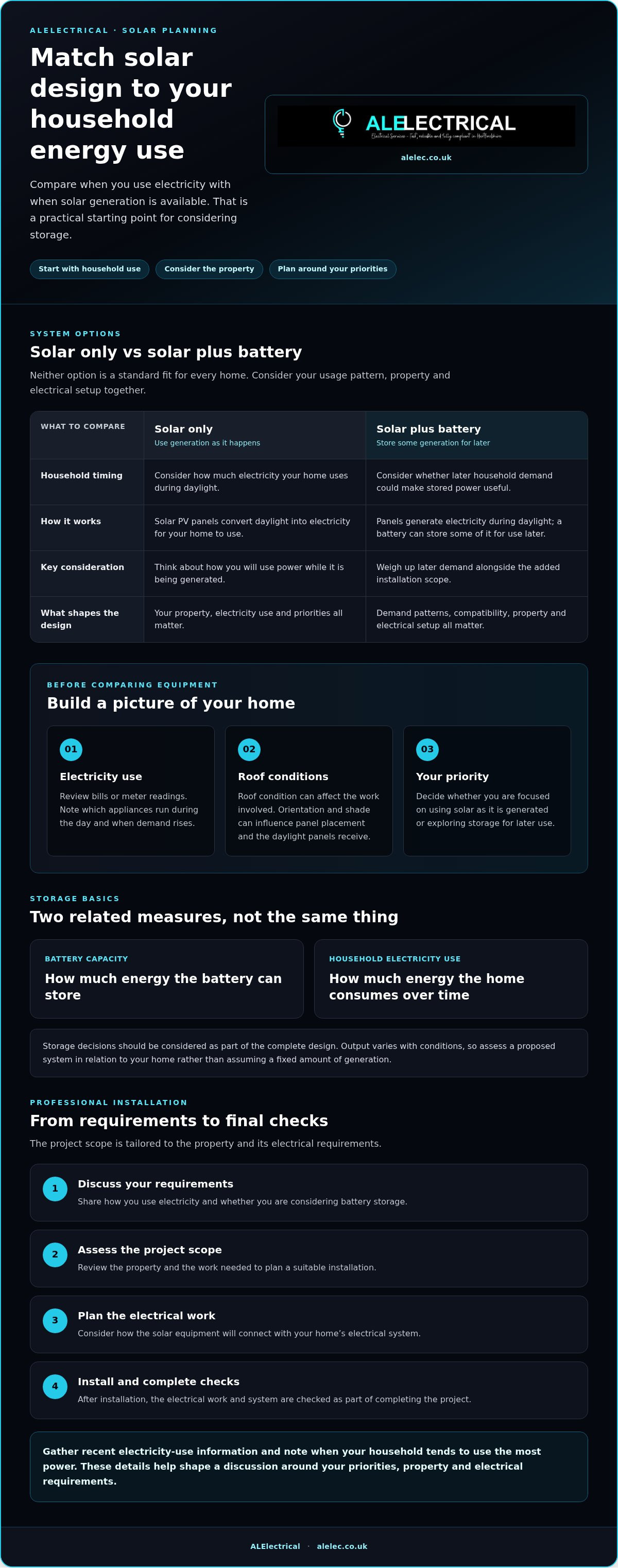
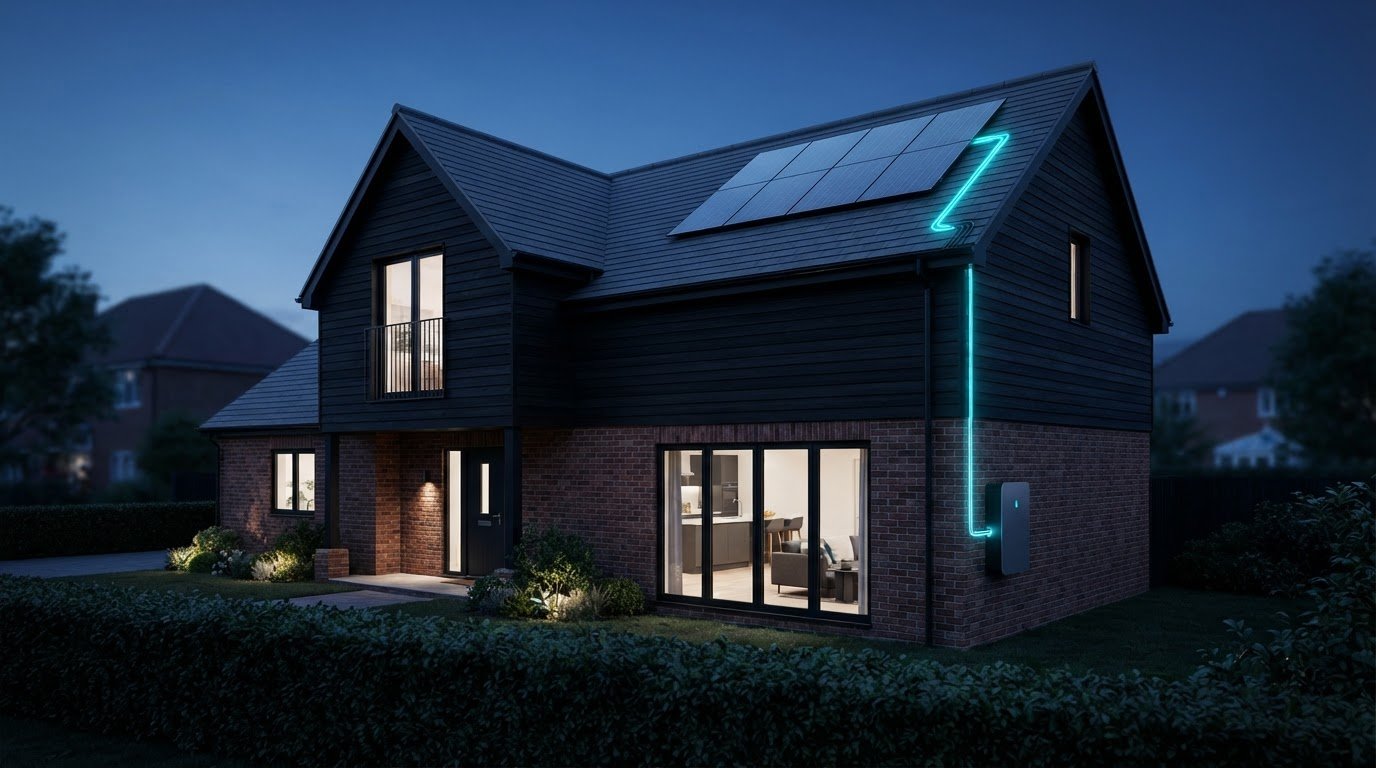
Solar suitability depends on more than roof space. Your property, electricity use and priorities all matter. If you’re considering solar, start by looking at how these factors work together instead of choosing equipment first. A household that uses more power during daylight may use more of its solar generation as it happens, while a home with greater evening demand may want to consider storage.
Solar PV panels convert daylight into electricity; a battery stores some of that electricity for use later. The panels generate power, while storage can keep some generated energy for another time. Output varies with conditions, so consider a system in relation to your home rather than assuming it will deliver a fixed amount. The photovoltaic system components and types overview explains how the main elements work together.
Before discussing equipment, note when your household uses electricity and what you want the system to do. Consider how often the home is occupied during the day, when evening demand rises, and whether your priority is using more of your own generated power. These details give the project a practical starting point, focused on your household rather than panel specifications alone.
How do solar panels and battery storage work together?
Panels generate electricity during daylight, and a battery can store some of it for later use when generation and household demand don’t coincide. Whether storage suits your home depends on your demand patterns and the proposed system. A home solar battery storage guide can help you understand the factors involved before discussing a tailored solar and battery project.
A professional assessment brings these considerations together with the property itself. It helps shape the installation around your home and priorities, with safety and electrical work considered alongside the equipment.
Choosing a solar system: assess your energy use, roof and storage needs
Before comparing equipment, build a picture of how your home uses electricity. Review bills or meter readings and note which appliances run during the day, when demand rises, and whether your priority is using solar power as it’s generated or keeping some for later. These household details are a more useful starting point than choosing panels by specification alone.
The roof matters too. Its condition can affect the work involved, while orientation and shade from trees or nearby structures can influence panel placement and the daylight they receive. An assessment helps establish a suitable project scope. For broader background on system choices, see the U.S. Department of Energy solar resources; your project still needs to reflect your property and electrical setup.
What should you consider before adding battery storage?
Compare when your household uses electricity with when stored power could be useful. Battery capacity describes how much energy a battery can store, while household electricity use describes how much energy the home consumes over time. They’re related, but they aren’t the same measure.
Compatibility and installation scope depend on the property and electrical setup, so consider storage as part of the complete design. When discussing a solar and battery project, describe your household’s usual energy use and what you want storage to achieve. ALElectrical provides solar and battery solutions. You can request a tailored solar and battery quote.
What to expect from a professional solar installation project
A well-managed installation follows a clear sequence, so you understand the project before work begins. The scope is tailored to your property and electrical requirements, but the process generally moves through these stages:
Discuss your requirements. Share how you use electricity and whether you’re considering battery storage.
Assess the project scope. Review the property and the work needed to plan a suitable installation.
Plan the electrical work. Consider how the solar equipment will connect with your home’s electrical system.
Install and complete checks. After the equipment is installed, the electrical work and system are checked as part of completing the project.
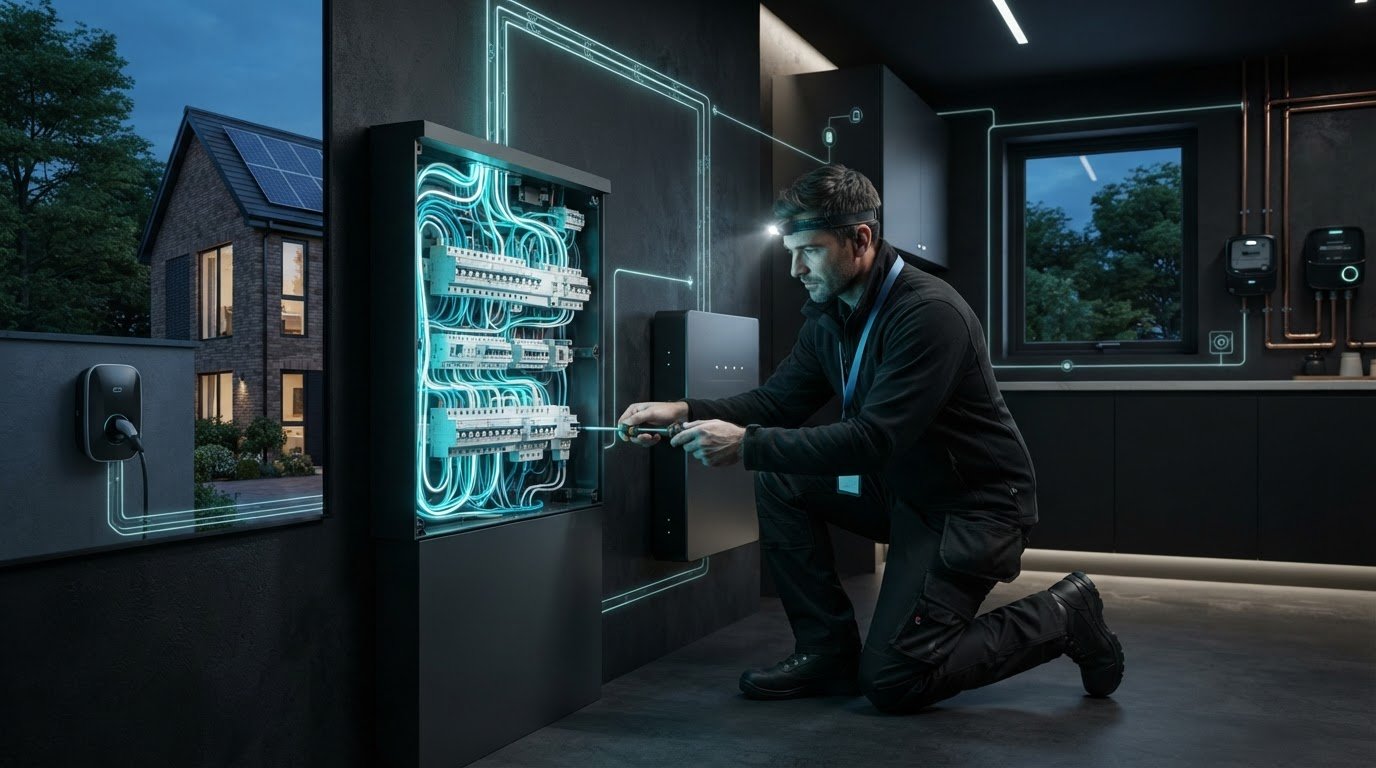
Professional electrical work brings the panels, any battery and your household system together safely. Clear planning also helps identify the work involved and gives you an opportunity to discuss practical considerations before installation starts. For wider industry background on solar and storage, the Solar Energy Industries Association shares information about the sector; your project itself should be designed around your home and its requirements.
How can you prepare for a solar project?
Gather recent electricity-use information, such as bills or meter readings, and note when your household tends to use the most power. Write down your priorities too: for example, whether you’re mainly interested in using solar generation during the day or exploring storage for later use. This gives the project discussion a useful starting point. The proposed scope can then be tailored to the property and its electrical requirements, rather than treated as a standard fit for every home.
When you’re ready to discuss your requirements, you can request a free, no-obligation quote from ALElectrical. This is a practical first step towards understanding the work involved and planning a solar installation with safety and compliance in mind.
Take the next step towards a solar project that fits
Good planning turns the idea of solar into a clear, considered project. Focus your next conversation on what matters most to your household and what you want the system to do. A tailored discussion can help bring those priorities into the project scope.
ALElectrical provides solar and battery solutions, with safety, compliance and customer satisfaction among its priorities. To discuss your requirements and take a practical first step, request a free, no-obligation quote.
You can move forward with greater clarity, knowing the project can be shaped around your home.
Frequently Asked Questions
Do solar panels still generate electricity on cloudy days?
Yes, solar panels can generate electricity in cloudy weather because daylight still reaches them, although generation is generally lower than in strong, direct sunshine. The amount varies with cloud cover and conditions, so it won’t be the same every day. Solar is not limited to clear summer skies, but a home’s electricity supply may still need to draw on the grid.
Do I need battery storage with solar panels?
No, a battery isn’t essential for every solar installation. If you’re home during the day and can use electricity as it’s generated, solar-only may suit your routine. Storage may be worth considering if you regularly use more electricity later in the day. Think about habits such as cooking or running appliances in the evening before deciding whether a battery fits your priorities.
Can battery storage be added to an existing solar panel system?
It may be possible, but it depends on the existing system’s design and electrical setup. The inverter, available space for equipment and the condition of the relevant electrical components can all affect the work involved. For example, an older system may need a different approach from a newer one. An assessment can establish a suitable scope for adding storage safely.
What affects the design of a home solar installation?
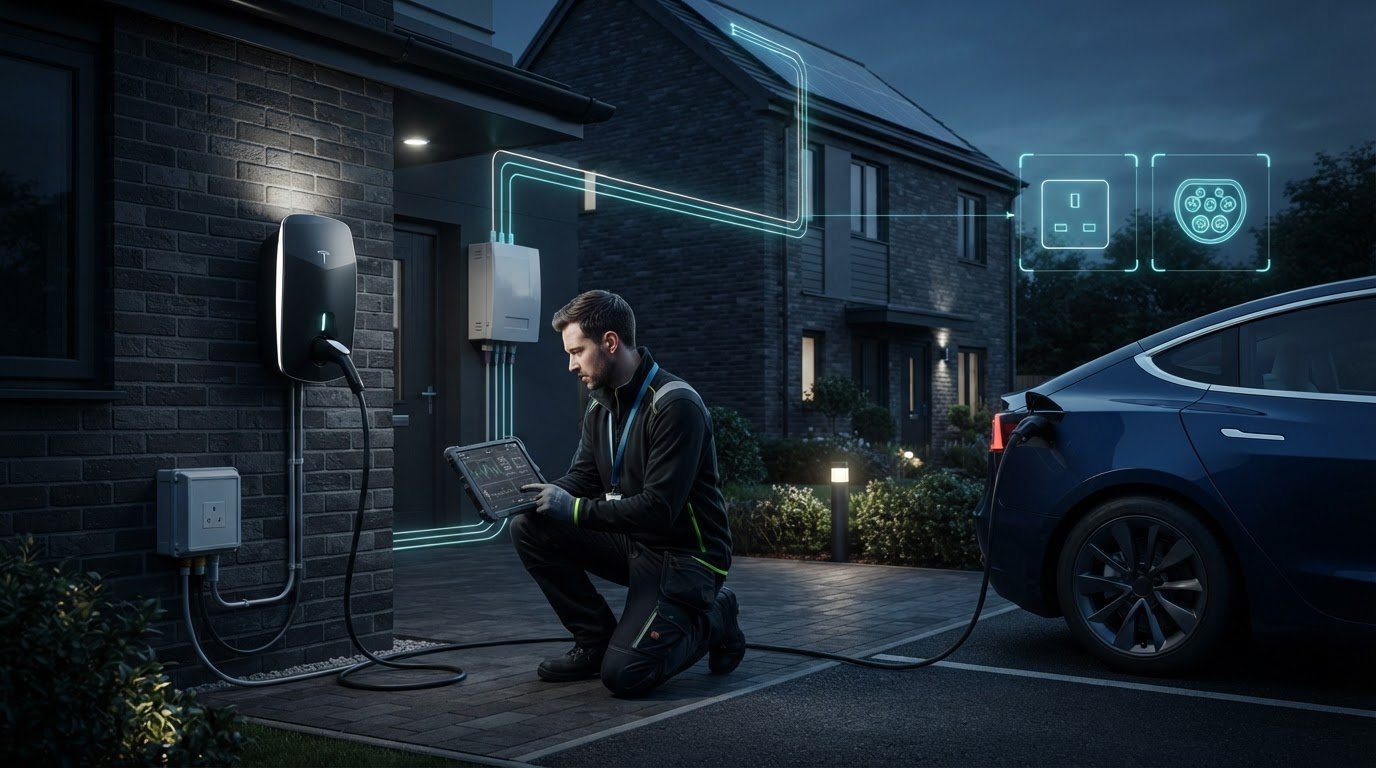
The design reflects the home’s electricity needs, usable roof area and electrical setup. Practical details matter too, including roof condition, access for installation, where equipment can be positioned and how cables can be routed. If you’re planning changes such as an electric vehicle charger, raise them early so the project discussion can take future requirements into account.
Comments