_.jpg)
Electrical Safety for Landlords: 2026 UK Guide
Could a missed report deadline leave a rental property non-compliant, even when it appears safe? The landlord responsibilities for electrical safety depend first on the property’s nation, because requirements and deadlines differ across England, Scotland, Wales and Northern Ireland. Regular checks of fixed electrical installations are required, but rules for sharing reports, completing remedial work and checking supplied appliances are not identical.
It can be difficult to know which inspection applies, when an EICR must be shared or what to do if it identifies a hazard. This guide explains the duties relevant to each UK nation and sets out a practical inspection-and-action process. You’ll learn what an EICR covers, how to organise records and tenant communications, and how to follow up unsafe findings. Keeping reports accessible and tracking deadlines helps you manage your responsibilities.
Table of Contents
Landlord responsibilities for electrical safety: which UK rules apply?
Protecting tenants starts with maintaining the fixed electrical installation and acting on risks identified during an inspection. The landlord responsibilities for electrical safety depend on whether the property is in England, Wales, Scotland or Northern Ireland, as each nation has its own rules. A general overview of Electrical Safety explains the principles, but it does not replace the requirements that apply in your nation.
Does the same landlord electrical safety law apply across the UK?
No. An inspection schedule or reporting deadline for one nation may not apply elsewhere. The relevant legislation and official guidance are published by different governments and departments, and local authorities also have enforcement roles. Check the current guidance for the property’s jurisdiction, especially if legislation has recently changed or a tenancy falls within a transition period.
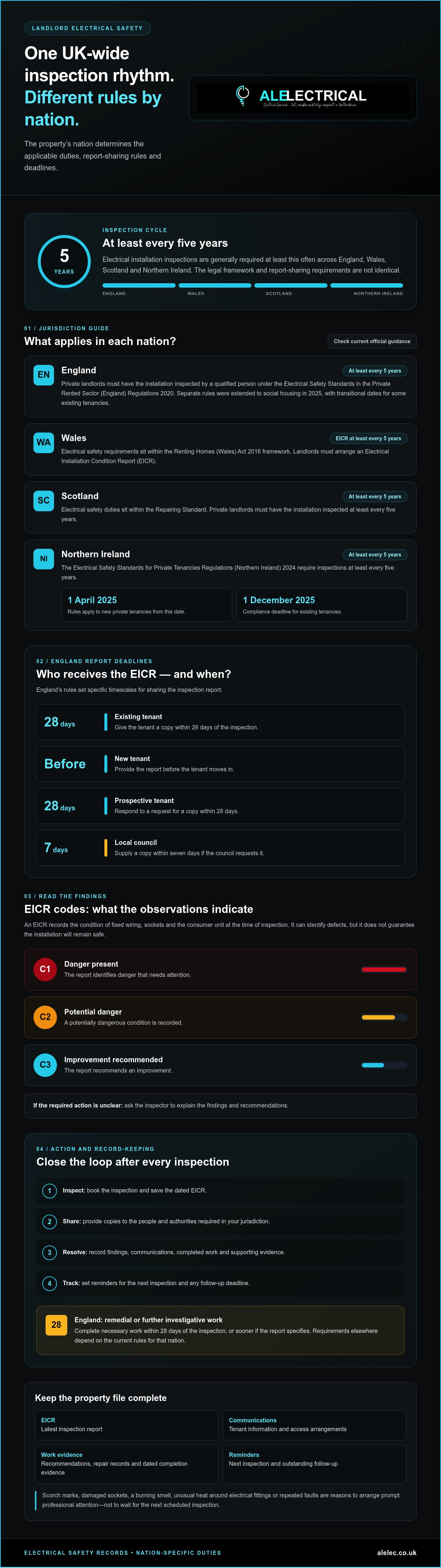
England: The Electrical Safety Standards in the Private Rented Sector (England) Regulations 2020 require private landlords to have the installation inspected at least every five years by a qualified person. Separate rules were extended to social housing in 2025, with transitional dates for some existing tenancies. Consult GOV.UK guidance and the local council for the duties that apply.
Wales: The Renting Homes (Wales) Act 2016 framework includes electrical safety requirements. Landlords must arrange an EICR, with inspections at least every five years. Welsh Government guidance sets out the current requirements.
Scotland: Electrical safety duties sit within the Repairing Standard. Private landlords must have the installation inspected at least every five years. Scottish Government guidance explains the standard.
Northern Ireland: The Electrical Safety Standards for Private Tenancies Regulations (Northern Ireland) 2024 require inspections at least every five years. The rules apply to new private tenancies from 1 April 2025; existing tenancies had a compliance deadline of 1 December 2025. The Department for Communities publishes guidance.
Before relying on a deadline, confirm the latest official guidance for the tenancy type and nation. This matters particularly where commencement dates or transitional provisions affect when action is due.
EICR checks, report deadlines and electrical safety records landlords should manage
An Electrical Installation Condition Report (EICR) records the condition of a property’s fixed wiring, sockets and consumer unit at the time of inspection. It can identify defects, but it is not a guarantee that the installation will remain safe. Inspections are generally required at least every five years across England, Wales, Scotland and Northern Ireland, although the legal frameworks and report-sharing rules differ.
In England, the Electrical Safety Standards in the Private Rented Sector Regulations set specific requirements. Give an existing tenant the report within 28 days of inspection, provide it to a new tenant before they move in, and respond to a prospective tenant’s request within 28 days. If a local council requests a copy, supply it within seven days. See the UK Government Guidance on Electrical Safety Standards. For other nations, follow the applicable rules for sharing reports and completing work.
What should landlords do when an EICR identifies work?
Read the observation codes and recommendations carefully. C1 means danger is present, C2 indicates potential danger, and C3 identifies an improvement that is recommended. If the findings or required action are unclear, ask the inspector to explain them. In England, necessary remedial or further investigative work must be completed within 28 days of the inspection, or sooner if the report specifies. Requirements elsewhere depend on the current rules for that nation.
Book the inspection and save the dated EICR.
Share copies with the people and authorities required in your jurisdiction.
Record the findings, tenant communications, work completed and supporting evidence.
Set reminders for the next inspection and any follow-up deadline.
A well-organised record helps you track outstanding actions and manage the landlord responsibilities for electrical safety. ALElectrical provides professional EICR inspections for landlords.
How landlords can act on electrical risks and arrange a professional inspection
Scorch marks, damaged sockets, a burning smell, unusual heat around electrical fittings or repeated faults should not be ignored. Treat these as reasons to arrange prompt professional attention rather than waiting for the next scheduled inspection. If an EICR identifies a concern, follow its recommendations and the rules that apply to the property.
Keep the process clear: an inspection assesses and reports on the installation, any necessary repair is separate work, and records show what happened afterwards. An EICR does not complete remedial work or resolve a defect by itself. ALElectrical provides EICR inspections to help landlords understand the installation’s condition and plan next steps.
A practical electrical safety action plan for rental properties
Create a property file, either digital or paper, and update it whenever inspection or maintenance work takes place. Include the latest EICR, tenant-facing safety information, communications about access or findings, and dated evidence of completed remedial work. Add reminders for the next inspection and any outstanding follow-up.
Act on warning signs: Record what you have observed and arrange professional attention promptly.
Follow up findings: Keep recommendations, repair records and completion evidence together. If the report raises a consumer-unit concern, read this consumer unit upgrade guide.
Maintain the record: Track routine upkeep as well as formal inspections. The electrical maintenance guide offers further information.
A consistent process makes landlord responsibilities for electrical safety easier to manage and reduces the risk of reported issues being overlooked between inspection and repair.
Make electrical safety part of your ongoing property care
The landlord responsibilities for electrical safety begin with understanding the rules that apply in the property’s UK nation. Keep inspection dates and report-sharing duties organised, then make sure issues identified in an EICR are followed through with appropriate work and clear records. An inspection assesses the fixed installation, but it does not replace repairs or ongoing maintenance.
ALElectrical provides EICR inspections and electrical maintenance to support landlords with property safety. If an inspection is due, request a free, no-obligation quote for a professional EICR inspection.
With a clear process for inspecting, acting and keeping records, you can manage your electrical safety duties more confidently and help protect your tenants.
Frequently Asked Questions
How often does a landlord need an EICR?
In general, landlords must arrange an inspection of the fixed electrical installation at least every five years. This interval applies across England, Wales, Scotland and Northern Ireland, although the relevant rules, tenancy types and reporting duties differ. Follow the current official guidance for the property’s nation, and arrange an inspection sooner if the existing report specifies an earlier date or concerns arise.
What happens if an EICR is unsatisfactory?
An unsatisfactory EICR means you need to review the findings and arrange any required remedial or further investigative work. C1 observations indicate danger is present, while C2 observations identify potential danger. In England, necessary work must be completed within 28 days of inspection, or sooner if the report says so. Keep evidence of completed work and follow the applicable requirements for written confirmation and sharing.
Do landlord electrical safety rules apply throughout the UK?
Yes, landlords across the UK have electrical safety duties, but the same legislation and processes do not apply everywhere. England has private rented sector regulations; Wales, Scotland and Northern Ireland have separate frameworks. The landlord responsibilities for electrical safety therefore depend on the property’s nation and tenancy. Follow the relevant government guidance for inspection, report-sharing and remedial-work requirements.
Does an EICR certificate mean a rental property is completely safe?
No. An EICR records the condition of the fixed electrical installation at the time of inspection. It is not a guarantee that every part of the property will remain safe indefinitely, and it does not cover portable appliances. Address the report’s findings, arrange separate remedial work where needed, and respond promptly to later signs of damage, overheating or repeated electrical faults.



Comments