_.jpg)
Electrical Safety Tips for Older Homes: 2026 Guide
Could your home’s electrics look fine while age or wear hides a problem behind the walls? Older wiring isn’t automatically unsafe, but its age alone can’t tell you whether it’s in good condition. These electrical safety tips for older homes will help you focus on warning signs and useful checks rather than guesswork.
You’ll learn what you can safely look for, which symptoms need a qualified electrician’s attention, and what an Electrical Installation Condition Report (EICR) can assess. We’ll also explain how inspection findings can help you prioritise work, from targeted repairs to a consumer unit upgrade or rewire when the evidence supports it. You don’t need to carry out electrical work to take sensible first steps: observe, note concerns and arrange a professional assessment when appropriate.
Table of Contents
Electrical safety tips for older homes: understand the risks without assuming the worst
Electrical safety in an older home depends on the installation’s present condition, the protection it provides and whether it suits the home’s needs. Age can prompt useful questions, but it can’t reveal what’s happening inside walls or equipment. Sockets or switches may have deteriorated, wiring may have been altered during past work, or the protection may benefit from review. These are possibilities, not inevitable features of older properties.
A home’s electrical system includes wiring, circuits and the equipment that controls or protects them. If the terminology is unfamiliar, this overview of electrical wiring offers a basic introduction. Visible fittings can provide clues, but they can’t reveal the full condition of concealed wiring or confirm how the installation performs. These electrical safety tips for older homes therefore focus on observable evidence and professional assessment, not appearance alone.
Can a home’s age alone show whether its electrics are unsafe?
No. A property’s age may prompt questions about when the wiring was installed or whether it has been updated, but it can’t diagnose its condition. Two homes of a similar age may have very different electrical histories.
Past maintenance, alterations and the quality of earlier work can all affect an installation. Records of previous inspections or electrical work can help build a clearer picture, but they don’t replace an assessment of the current system. There’s no single age at which every home needs a rewire.
An appropriate electrical inspection is needed to assess an installation’s condition; age and appearance alone can’t confirm that it’s safe. The aim is to identify concerns and understand what, if anything, needs attention, rather than assume the worst before reviewing the evidence.
How to check older-home electrics safely and decide what needs attention
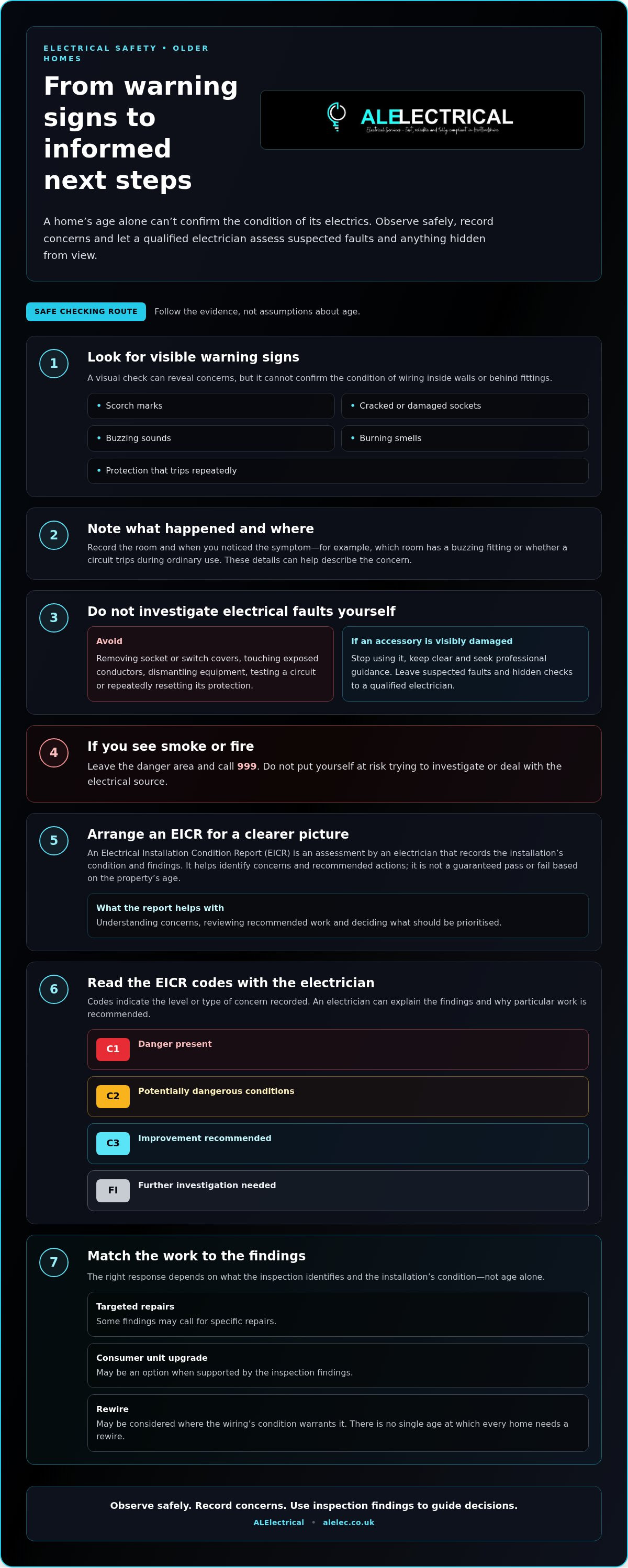
A visual check can help you spot concerns, but it can’t confirm the condition of wiring inside walls or behind fittings. Look for scorch marks, cracked or damaged sockets, buzzing sounds, burning smells, or protection that trips repeatedly. These signs don’t identify the cause, but they are reasons to seek professional advice. The Electrical Safety Foundation International also outlines electrical safety concerns associated with older homes.
You can note what you see, hear or smell; an electrician must assess suspected faults and anything hidden from view. Don’t remove socket or switch covers, touch exposed conductors, or dismantle equipment to investigate. These practical electrical safety tips for older homes are about observing safely, not attempting electrical work.
What can residents safely look for before arranging an inspection?
Note where a symptom occurs and when you noticed it. For example, record which room has a buzzing fitting or whether a circuit trips during ordinary use. Don’t test the circuit or repeatedly reset its protection. If an accessory is visibly damaged, stop using it, keep clear and seek professional guidance.
If you see smoke or fire, leave the danger area and call 999. Don’t put yourself at risk trying to investigate or deal with the electrical source.
Once you’ve recorded any concerns, an inspection can help establish what needs attention. Find out more about booking an electrical inspection.
When an EICR or electrical upgrade may be the right next step
If you’re unsure about an older installation, an Electrical Installation Condition Report (EICR) can provide a clearer picture. An electrician assesses the installation and records its condition and findings. The report helps identify concerns and recommended actions. It should not be treated as a guaranteed pass or fail based on the property’s age.
A practical approach is to arrange an inspection, review the findings, prioritise the recommended work and request a quote for the work that’s appropriate. These electrical safety tips for older homes are about making informed decisions, not assuming every concern calls for a major project.
How do inspection findings guide repairs, upgrades or rewiring?
The right response depends on what the inspection identifies and the condition of the installation. Some findings may call for targeted repairs; others may support considering a consumer unit upgrade or, where the wiring’s condition warrants it, a rewire. EICR findings may use codes to show the level of concern: C1 indicates danger present, C2 indicates potentially dangerous conditions, C3 identifies an improvement recommended, and FI means further investigation is needed. An electrician can explain the findings and why particular work is recommended.
For more detail on possible upgrade options, read the complete consumer unit upgrade guide and the home rewiring guide. The electrical maintenance and safety guide also offers broader context on looking after an installation.
After reviewing the report, ALElectrical can provide a free, no-obligation quote for recommended work, including repairs, a consumer unit upgrade or a house rewire. The findings come first, so you can consider any next step in context.
Take the next step towards safer electrics
The most useful electrical safety tips for older homes start with assessing the installation as it is today, not making assumptions based on its age. Look for visible warning signs, but leave checks behind covers and suspected faults to a qualified electrician. An EICR records the installation’s condition and helps clarify which work, if any, should be prioritised.
Depending on the findings, the next step could be targeted repairs, a consumer unit upgrade or a house rewire. ALElectrical carries out EICR inspections, upgrades and rewires where they’re appropriate. For professional advice and a free, no-obligation quote, request a quote from ALElectrical.
A clear assessment can make the way forward easier to understand and help you make informed decisions about your home’s electrical safety.
Frequently Asked Questions
Is an older home automatically unsafe because of its electrical wiring?
No. A home’s age alone can’t confirm whether its wiring is safe or unsafe. Maintenance, previous alterations and the installation’s inspection history all affect its present condition. These electrical safety tips for older homes focus on checking for evidence and arranging a professional assessment where appropriate, rather than assuming every older property needs a rewire.
What are the warning signs of unsafe electrics in an older home?
Warning signs can include scorch marks, damaged sockets or switches, buzzing sounds, burning smells and protection that trips repeatedly. These symptoms don’t reveal the fault’s cause, but they shouldn’t be ignored. Stop using a visibly damaged accessory and seek professional advice. If there’s smoke or fire, leave the danger area and call 999.
How often should the electrics in an older home be inspected?
There isn’t one inspection interval that applies to every older owner-occupied home. Consider arranging an Electrical Installation Condition Report (EICR) if you don’t know when the installation was last assessed, or if its history or condition raises concerns. In England, rented properties must have an EICR at least every five years. Requirements can vary across the UK.
Can I check old wiring or a consumer unit myself?
You can look for visible damage around sockets, switches and the consumer unit, and note symptoms such as buzzing or repeated tripping. Don’t remove covers, touch exposed wires or try to test or investigate suspected faults. A visual check can’t assess concealed wiring or confirm the installation’s condition. Arrange a professional inspection if you’re concerned.



Comments