
Electrical Survey for Home Buyers: What Gets Checked
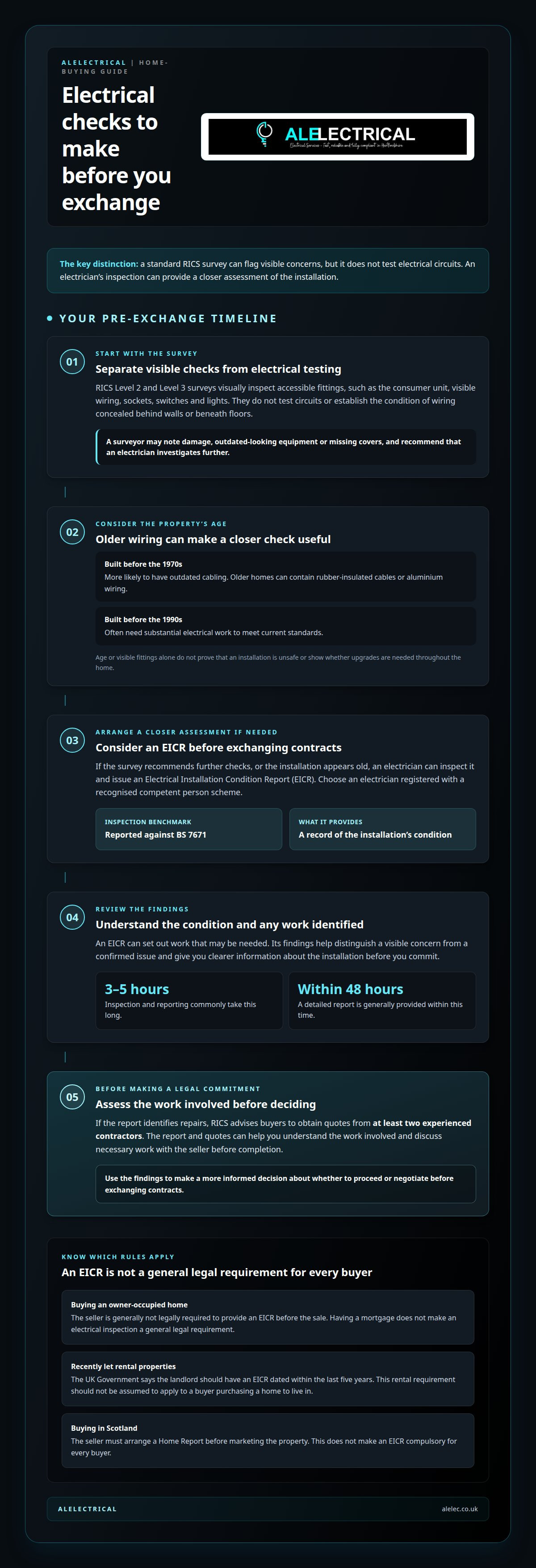
An EICR isn’t generally a legal requirement when buying a home, and the seller of an owner-occupied property usually doesn’t have to provide one before the sale. An electrical survey for home buyers can still help identify safety concerns before you commit to the purchase.
It’s understandable to expect a house survey to test the wiring, but a standard survey is mainly visual. RICS Level 2 and Level 3 surveys don’t test electrical circuits, though they can recommend further checks.
This guide explains what a house survey can and can’t assess, when an Electrical Installation Condition Report (EICR) may be useful, and what an electrician may inspect. You’ll also learn when to arrange an electrical check before exchanging contracts, so you can make a more informed decision about the property.
Table of Contents
Will a house survey check the electrics?
A RICS survey can identify visible concerns, but it doesn’t replace electrical safety testing by an electrician.
Electrical fittings in a standard inspection
A typical visual inspection covers accessible electrical fittings, such as the consumer unit, visible wiring, sockets, switches and lights. The surveyor may note damage, outdated-looking equipment or missing covers. These observations can show whether the installation needs closer attention, but they don’t confirm that circuits are safe. For example, a visible concern at the consumer unit may prompt a recommendation for further inspection.
Visual inspection and safety testing
A visual inspection records what can be seen; electrical safety testing involves examining and testing the installation. RICS Level 2 and Level 3 surveys visually inspect electrical components but don’t test circuits. An electrician can carry out a more detailed inspection and issue an Electrical Installation Condition Report (EICR). This distinction matters because a neat-looking socket or switch doesn’t establish the condition of concealed wiring.
Scope and limitations of visual checks
During a standard RICS Level 2 or Level 3 survey, the surveyor doesn’t remove electrical fixtures or covers. The inspection is therefore limited to accessible, visible areas, rather than wiring hidden behind walls or beneath floors. A survey can recommend that an electrician investigate further, helping a buyer decide whether to arrange testing before contract exchange. Inspection and reporting commonly take three to five hours, with a detailed report generally provided within 48 hours.
Electrical rules and survey costs
Electrical installation inspections are reported against BS 7671, and an EICR records the installation’s condition. Survey costs depend on property size, location and wiring complexity; the price is given after a quote request. Choose a qualified electrician registered with a recognised competent person scheme for an inspection. Ask the seller whether the electrics have been checked and whether a report is available; a lender may also ask about the property’s condition.
Electrical installations checked before buying a home
A home survey can flag visible concerns and recommend further investigation. The key for buyers is understanding what those findings reveal before deciding to commit.
Electrical installations in a home survey
A surveyor assesses accessible parts of the installation and notes visible problems with fittings and equipment. The report can flag concerns and recommend an electrician’s assessment, but it can’t establish the full condition of concealed wiring.
Age can guide the next step. Properties built before the 1970s are more likely to have outdated cabling, while older homes can contain rubber-insulated cables or aluminium wiring. These features don’t prove that the installation is unsafe, but they can make a detailed electrical installation condition report useful. It should set out any work needed, helping you understand the likely scope before buying.
Limits of visual checks
A visual survey can’t assess wiring hidden behind walls or beneath floors. Properties built before the 1990s often need substantial electrical work to meet current standards, so visible fittings alone can’t show whether upgrades are needed throughout the home.
If the house survey recommends an EICR, consider arranging it before exchanging contracts in England and Wales. Its findings can help you assess the installation and discuss necessary work before completion. Where faults need attention, electrical maintenance can address issues identified in the report. Clear findings also give you a better basis for deciding whether to negotiate before you commit to buying.
Survey requirements for home buyers
For an owner-occupied home in the UK, a seller generally isn’t legally required to provide an EICR before the sale. Buyers can still arrange electrical testing before purchase, particularly if a survey raises concerns or the installation appears old. Having a mortgage doesn’t make an electrical inspection a general legal requirement.
That differs from the rules for rented homes. For rental properties that have recently been let, the UK Government says the landlord should have an EICR dated within the last five years. A buyer purchasing a home to live in shouldn’t assume that rental requirement applies to their sale.
A house survey can recommend an electrician’s inspection, but it doesn’t usually test the complete electrical installation. If concerns are raised, commissioning an electrical installation condition report before exchanging contracts can provide a written assessment of the installation’s condition. This gives you clearer information before deciding whether to proceed or negotiate with the seller. It can also help identify work that may need attention after completion.
Choose an electrician registered with a recognised competent person scheme to carry out testing and report on the findings. If the report identifies repairs, RICS advises buyers to obtain quotes from at least two experienced contractors before making a legal commitment to buy. The report and quotes can help you assess the work involved, rather than treating a visual concern as a confirmed fault.
Scotland has a separate sale process: the seller must arrange a Home Report before marketing the property. This requirement doesn’t make an EICR compulsory for every buyer. If electrical concerns need attention, discuss electrical maintenance as a next step.
ALElectrical: Electrical Maintenance
ALElectrical can help address electrical concerns identified during a property inspection. If a report highlights faults or deterioration, electrical maintenance may be appropriate. If the existing wiring needs replacing, a house rewire may be considered; a damaged or unsuitable consumer unit may call for a fuse box upgrade. The right work depends on the findings and condition of the installation, so explain the concerns and areas needing attention when requesting a free, no-obligation quote.
For buyers, addressing these issues after purchase can help plan necessary electrical work. ALElectrical also offers Solar & Battery, though this is a separate consideration from resolving defects identified by an inspection. For support with electrical work in your home, contact ALElectrical.
Plan your next move with confidence
Use the findings from an electrical survey for home buyers to shape a practical plan for the property, rather than treating the report as the final decision. Consider how recommended work fits your renovation plans and when to address it. ALElectrical provides electrical maintenance, house rewires and fuse box upgrades. Solar & Battery may also suit homeowners planning wider improvements.
Keep the inspection findings and follow-up decisions together as you move towards purchase or plan work after moving in. Clear information makes it easier to discuss priorities and understand which electrical improvements matter for your home.
Contact ALElectrical about your home’s electrical needs to discuss a suitable next step. With a clear plan, you can move forward feeling more prepared.
Frequently Asked Questions
Is an EICR legally required when buying a house?
No. For an owner-occupied property in the UK, the seller generally isn’t legally required to provide an EICR before selling. You can still arrange an inspection as part of your purchase decisions. If you’re buying the property to rent out, different landlord requirements apply, so consider its intended use before relying on the seller’s paperwork.
What is an EICR?
An EICR is an Electrical Installation Condition Report, a written record of an electrical installation’s condition following inspection. Its observations use codes to indicate the seriousness of issues and next steps. For example, an FI code means further investigation is required without delay. An EICR containing a C1, C2 or FI observation will generally be assessed as unsatisfactory and require action.
Can I negotiate on price if the survey flags old wiring?
Yes, you can ask the seller for a price reduction or a contribution towards rewiring if an EICR confirms that rewiring is needed. A survey’s visual note alone may not establish what work is required. A detailed electrical report can clarify the issue, while repair quotes give you a clearer basis for discussing costs before making a legal commitment to buy.
Does old wiring affect insurance or mortgage applications?
An observation about old wiring doesn’t, by itself, determine the outcome of a mortgage or insurance application. Lenders and insurers may have their own requirements, so read the application questions carefully and describe the property accurately. If asked for electrical records, provide the available report. If it identifies remedial work, keep the findings and details of completed work with your property documents.
What is an electrical survey for home buyers in the UK?
An electrical survey is an electrician’s inspection of a home’s electrical installation and a report on its condition. Unlike a standard visual house survey, electrical testing can examine the installation more closely. Buyers may arrange one if the house survey recommends further checks, the wiring appears dated or no recent report is available. The findings can inform decisions before purchase or help plan work afterwards.

Comments