_.jpg)
Expert Electrical & Solar Services in Harpenden
If you're searching for expert electrical services for a property, the first question is often whether a fault needs attention or a planned upgrade is the better next step. Knowing what you've noticed and what you want to achieve helps make that decision clearer.
A professional assessment by ALElectrical can help define the right scope of work, whether that means an Electrical Installation Condition Report (EICR), a fuse box upgrade, a house rewire, an EV charger, or solar and battery installation. These services address different needs, so the right option depends on the property and the work required.
This guide explains how to identify the type of electrical work you need, what to consider when planning a project, and how to prepare a useful enquiry. It covers homes, rental properties, renovations and new builds.
Table of Contents
Electrical services explained: matching property needs to the right work
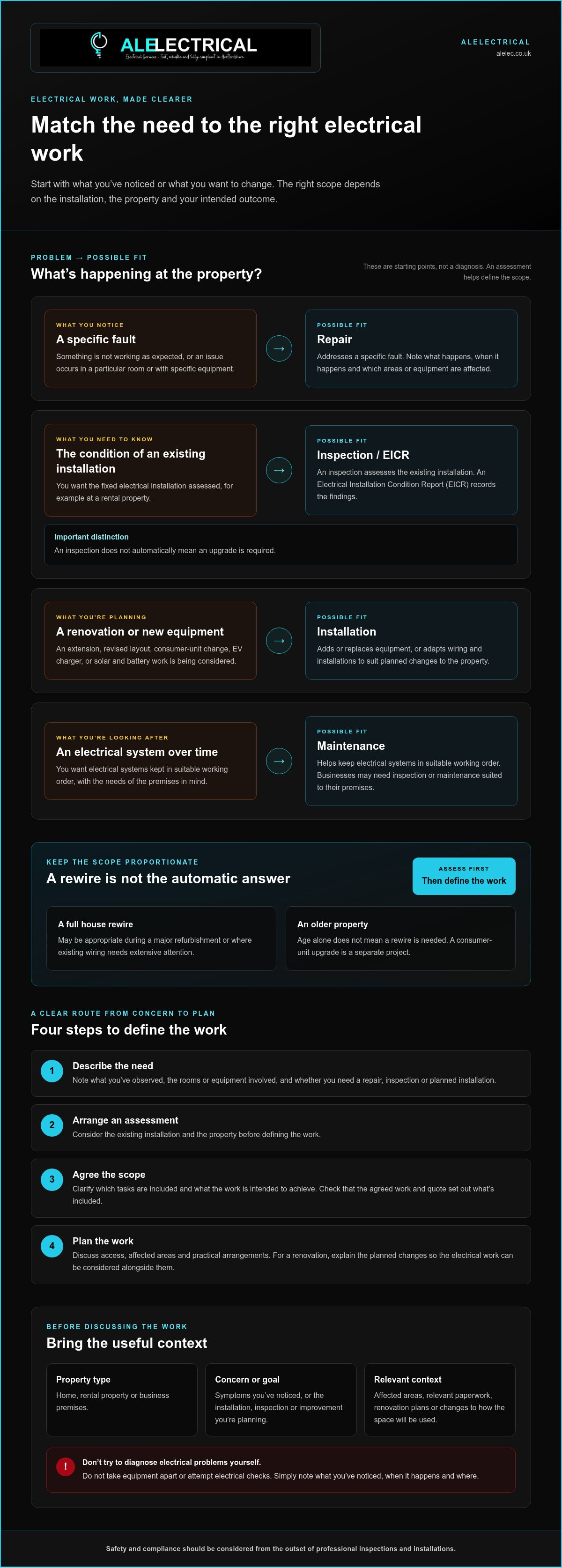
Electrical work covers several different tasks. Installation adds or replaces equipment, such as a consumer unit or wiring for a renovation. Inspection assesses the condition of an existing installation, with an Electrical Installation Condition Report (EICR) recording the findings. Repair addresses a specific fault, while maintenance helps keep electrical systems in suitable working order. The Role of an Electrician varies by specialism, but the work should be matched to the property and your requirements.
The right scope depends on what’s already installed, the issue or planned change, and the outcome you want. A full rewire may be appropriate during a major refurbishment or where the existing wiring needs extensive attention. An older property does not automatically need a rewire. A consumer-unit upgrade is a separate project, while renovation work may involve new or altered installations to suit the revised layout.
Which electrical service fits a home, rental property or business?
For a homeowner, the priority could be investigating a fault or planning electrical work for an extension. Landlords may arrange an EICR to understand the condition of a property’s fixed installation. Businesses may need inspection or maintenance suited to their premises. EV charger installation and solar or battery work can also be considered when they fit the property and its plans. Start with the requirement, rather than assuming every service is needed.
If you’re considering extensive work, the full house rewiring guide explains the process and key considerations. A clear assessment helps define what should be included, so the proposed work reflects the installation and the changes you’re planning.
Planning electrical work safely: scope, checks and clear expectations
A clear plan helps establish what needs doing and how the work will fit around the property. Describe the issue or planned improvement, when it occurs and which areas or equipment are affected. An electrician can assess the installation and discuss a suitable scope in light of the property and your intended outcome.
Describe the need. Note what you’ve observed, the rooms or equipment involved, and whether you need a repair, inspection or planned installation.
Arrange an assessment. The existing installation and the property can be considered before the work is defined.
Agree the scope. Clarify which tasks are included and what the work is intended to achieve.
Plan the work. Discuss access, affected areas and practical arrangements before the project begins.
Safety and compliance should be considered from the outset of professional inspections and installations. The assessment helps identify relevant issues, and an agreed scope gives you a clear understanding of the planned work. Before work starts, discuss access to the consumer unit and any rooms or areas involved. For a renovation, explain the planned changes so the electrical work can be considered alongside them.
What should you expect before electrical work starts?
The proposed tasks should reflect both the outcome you’ve requested and the condition of the property. Make sure the agreed work and quote clearly set out what’s included before the project begins. For a planned charger installation, the EV charging installation guide offers further planning information. You can also request a no-obligation quote and outline the work you have in mind.
Choosing the next step for electrical work, repairs or upgrades
Your next step depends on whether something needs attention or you’re planning a change. Describe a fault or unexpected behaviour so it can be assessed professionally. A new installation, consumer-unit upgrade or renovation project is usually planned around a specific outcome. An inspection, such as an EICR, assesses the condition of an existing installation; it does not automatically mean an upgrade is required.
You don’t need to diagnose an electrical problem yourself. Don’t take equipment apart or attempt electrical checks. Simply note what you’ve noticed, when it happens and where. This gives the electrician a useful starting point for assessing the issue.
How to make an electrical enquiry useful and straightforward
A concise enquiry can help make the discussion more focused. Include:
Property type: for example, a home, rental property or business premises.
Your concern or goal: describe the symptoms you’ve observed or the installation, inspection or improvement you’re planning.
Relevant context: note the affected area and any renovation plans or changes to how the space will be used.
ALElectrical works with homeowners, landlords and businesses on electrical projects, including house rewires, fuse box upgrades, EICRs, EV charger installations, solar and battery solutions, electrical maintenance, and work for renovations and new builds. Whether you’re reporting a repair concern or planning an improvement, explaining the property and your intended outcome helps define a suitable scope.
If you’re ready to discuss a project, request a free, no-obligation quote. Outline the property, what you’ve noticed or what you’re planning, and the result you want.
Take the next step with confidence
A useful first step is to describe what you want to achieve, rather than trying to plan every technical detail yourself. Whether you’re responsible for a home, rental property or business premises, professional support can help turn your requirements into a clear plan.
ALElectrical provides electrical services for homeowners, landlords and businesses, with a focus on safety, compliance and customer satisfaction. Its work includes inspections, repairs, installations and upgrades, with the scope shaped around the property and the job required.
Share your requirements and request a free, no-obligation quote to discuss the work involved.
Frequently Asked Questions
When should I call an electrician about an electrical problem?
Call an electrician if you notice burning smells, scorch marks, buzzing, sparks, a socket that feels unusually hot, or repeated circuit-breaker trips. These signs can indicate a fault that needs professional attention. Don’t remove covers or investigate wiring yourself. If there’s smoke or a fire, move to safety and contact the emergency services.
What does an EICR check?
An Electrical Installation Condition Report (EICR) assesses the safety and condition of a property’s fixed electrical installation. An electrician inspects and tests parts such as the consumer unit, wiring, switches, sockets and earthing arrangements. The report records any issues found and whether further action is recommended. It doesn’t assess portable appliances such as kettles or televisions.
Can I carry out electrical work myself?
Only take on electrical tasks if you’re competent to do them safely. Work involving fixed wiring, a consumer unit or a new circuit can pose serious risks if handled incorrectly, so use a professional electrician for complex work or anything you’re unsure about. Don’t work on live electrics or remove covers to try to find a fault.
How can I prepare for an electrical work quote?
Have relevant paperwork to hand, such as a previous EICR, electrical plans or details of earlier work. Note any access arrangements or renovation plans, and share photographs of the area only from a safe distance. Don’t remove covers or touch equipment to take them. This information can help clarify the work you’re looking to arrange.



Comments