_.jpg)
Expert Guide to Home Electrical Repairs and Maintenance
When you need to repair electrics, finding the cause is safer than replacing a part by guesswork. A flickering light, repeatedly tripping circuit or buzzing socket can be unsettling, especially when a small fault might point to a wider wiring problem. If equipment seems unsafe, stop using it and don’t attempt a repair yourself.
Knowing what to do next can help you feel more in control. This guide explains common electrical faults, when to stop using affected equipment and what to expect from a professional repair. ALElectrical starts by diagnosing the issue, so the recommended work responds to the fault rather than guesswork. You’ll also learn what information to share and how a free, no-obligation quote can help you understand the proposed work before deciding how to proceed.
Table of Contents
Repair Electrics Safely: Recognise Faults and What to Do
Treat unfamiliar electrical faults cautiously rather than trying to work out the cause yourself. Warning signs include a breaker that trips repeatedly, a cracked or scorched socket, lights that flicker without an obvious reason, or a socket, switch or cable that feels unusually hot.
Stop using affected equipment. Don’t open fittings, touch exposed wires or attempt electrical work. If a socket is hot, damaged or sparking, don’t plug anything into it or try to unplug equipment from it. Keep others away and arrange for a professional to assess the problem.
Which electrical fault signs need prompt attention?
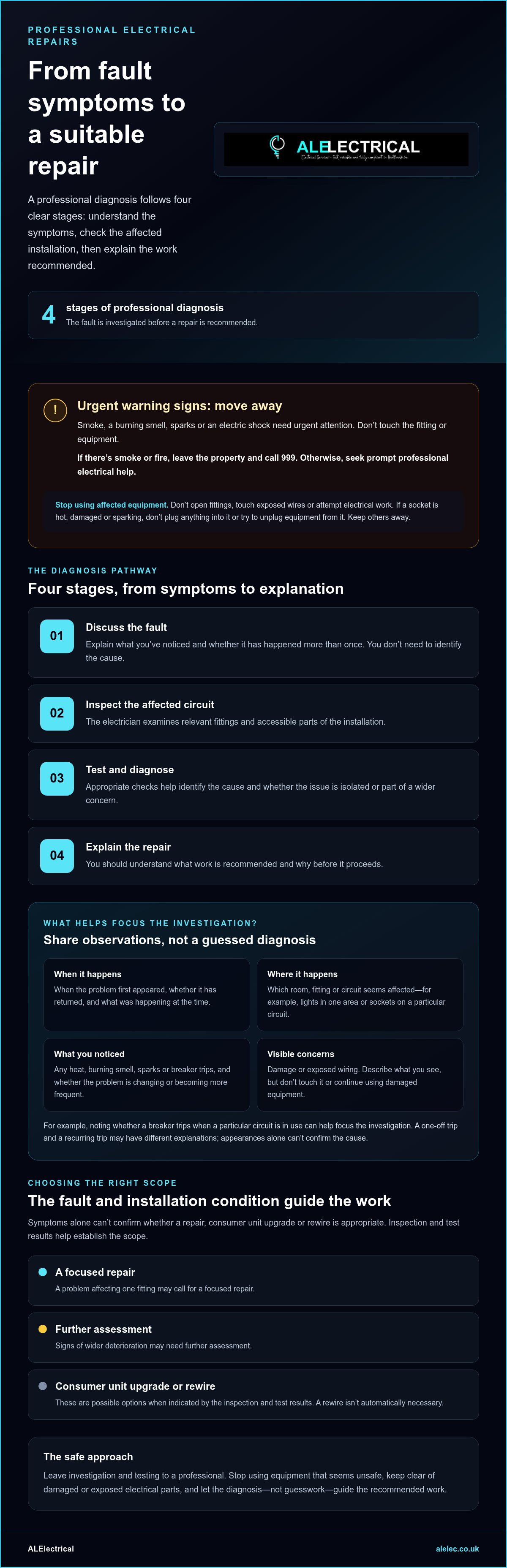
Smoke, a burning smell, sparks or an electric shock are urgent warning signs. Move away from the affected area and don’t touch the fitting or equipment. If there’s smoke or fire, leave the property and call 999. Otherwise, seek prompt professional electrical help.
A one-off trip may have a different explanation from a fault that keeps returning, but appearances alone can’t confirm the cause. Note what was happening, including which lights or sockets were in use, and share those details with the electrician. Recurring trips can indicate an unresolved fault, not simply a faulty breaker.
Electrical systems contain interconnected wiring and components, so a visible symptom may not reveal where the issue starts. This overview of electrical wiring and its components offers background, but it isn’t a substitute for an inspection. The safe approach is to leave investigation and testing to a professional, who can identify the cause before recommending suitable work.
How Professional Electrical Repairs Diagnose the Cause
A reliable repair starts with understanding the symptoms, not swapping parts and hoping for the best. An electrician will ask what happened, when the fault occurs and which lights, sockets or other parts of the installation are affected. For example, noting whether a breaker trips when a particular circuit is in use can help focus the investigation.
The process generally moves through these stages:
Discuss the fault: Explain what you’ve noticed and whether it has happened more than once.
Inspect the affected circuit: The electrician examines relevant fittings and accessible parts of the installation.
Test and diagnose: Appropriate checks help identify the cause and whether the issue is isolated or part of a wider concern.
Explain the repair: You should understand what work is recommended and why before it proceeds.
The right solution depends on both the fault and the condition of the existing installation. A problem affecting one fitting may call for a focused repair, while signs of wider deterioration may need further assessment. A rewire isn’t automatically necessary. For more context on the options, see Electric Repair vs. Electrical Upgrades: A Homeowner’s Comparison Guide.
Repair, consumer unit upgrade or rewire: how is the right scope decided?
Symptoms alone can’t confirm whether a repair, consumer unit upgrade or rewire is appropriate. The electrician’s inspection and test results help establish the scope. If the concern involves the fuse box or consumer unit, the Fuse Box Upgrade: A Complete Guide to Modern Consumer Units in 2026 explains the upgrade option. For general prevention, ESFI also shares practical home electrical safety tips.
ALElectrical provides electrical repairs for homes and workplaces. Request a free, no-obligation quote to discuss the fault and proposed work. Find out about professional electrical repair support.
Arrange Electrical Repairs with Clear Expectations
A clear description of the fault is a useful starting point when arranging a repair. ALElectrical provides electrical repair services for homes, businesses and landlords’ properties. A free, no-obligation quote gives you an opportunity to explain the issue and understand the proposed work before deciding how to proceed.
What information helps scope an electrical repair?
Before requesting a quote, make a note of what you’ve observed. You don’t need to identify the cause. Useful details include:
When the problem first appeared and whether it has happened more than once.
Which room, fitting or circuit seems affected, such as lights in one area or sockets on a particular circuit.
What was happening at the time, and whether you noticed heat, a burning smell, sparks or a breaker tripping.
Any visible damage or safety concern, including exposed wiring.
Share these details clearly, but don’t touch exposed wires or continue using damaged equipment. If the fault changes or becomes more frequent, note that too. This information helps describe the issue, while the cause and suitable scope of work still need professional assessment. For further safety guidance, consult Professional Electrical Repair: A Homeowner’s Guide to Safety and Compliance.
Professional diagnosis helps match the repair to the fault and the condition of the installation, rather than assuming every problem calls for a larger upgrade. Share what you know with ALElectrical and discuss the next steps. You can request a free, no-obligation quote for the proposed repair before deciding whether to proceed.
Take the Next Step Towards a Safer Property
An electrical fault doesn’t have to leave you guessing about what to do next. Start with a clear conversation about the issue and the outcome you need, whether you’re responsible for a home, rental property or workplace. A considered professional approach helps ensure the recommended work responds to the fault rather than assumptions.
ALElectrical provides electrical repair services for residential and commercial properties. A free, no-obligation quote helps you understand the proposed work before making a decision. You don’t need to know the cause before getting in touch. Simply describe what you’ve noticed and discuss a suitable way forward.
Request a free, no-obligation quote for your electrical repair and take the next step with greater confidence.
Frequently Asked Questions
Can I reset a circuit breaker if it keeps tripping?
If it trips repeatedly, don’t keep resetting it. A single reset may be reasonable only if there are no signs of heat, smoke, sparks or damage, and you can operate the switch safely. If it trips again, leave it off and arrange professional advice. Note which circuits or activities were affected, but don’t remove the consumer unit cover or attempt a repair.
Does a tripping breaker always mean I need a new consumer unit?
No. A tripping breaker alone doesn’t show that the consumer unit needs replacing. The issue could involve a circuit, connected equipment or another part of the installation, so testing is needed to establish the cause. Base the repair on the diagnosis, not an assumption that a new consumer unit or full rewire is required.
How long does an electrical repair take?
There isn’t one set duration. It depends on what testing reveals, how accessible the affected wiring or fitting is, and the work needed. A straightforward repair may be less involved than tracing an intermittent fault across a circuit. Before work begins, ask for an explanation of the proposed scope and any factors that could affect how long it takes.
Can I use electrical equipment with a damaged cable or plug?
No. Don’t use equipment with a split cable, loose plug, exposed inner wires or scorch marks, as damaged parts can create a risk of electric shock or fire. If it’s safe to do so, switch it off at the socket and unplug it without touching the damaged area. Otherwise, keep clear and arrange professional help. Don’t tape over the damage or try to repair it yourself.



Comments