_.jpg)
Part P Building Regulations for Homeowners: A Clear UK Guide
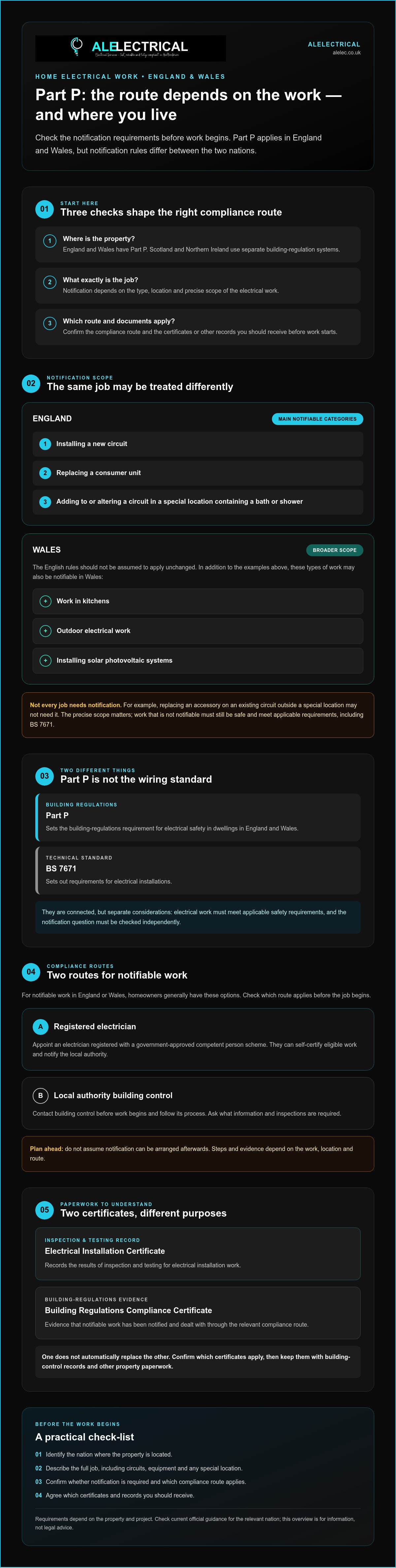
Could the same electrical job need a different notification route depending on where you live? Part P building regulations for homeowners apply in England and Wales, but the rules differ between the two nations. Scotland and Northern Ireland have separate building-regulation systems, so it’s important to check which rules apply to your property.
This guide explains when Part P applies and which types of work may need to be notified. It also clarifies the difference between building regulations and BS 7671, the technical standard for electrical installations. You’ll learn about the main compliance routes, what certificates and other evidence to keep, and what to ask an electrician before work begins. Whether you’re adding a circuit, updating a consumer unit or planning work in a bathroom, checking the requirements first can help you avoid uncertainty about safety and property paperwork.
Table of Contents
What Part P building regulations mean for homeowners in England and Wales
Part P is the section of the Building Regulations covering electrical safety in dwellings in England and Wales. It requires domestic electrical work to be designed and carried out safely. Notification requirements differ between England and Wales, so the details depend on where your home is and what work is planned. For wider context, see the Building Regulations in the United Kingdom.
Part P is not the technical wiring standard itself. BS 7671 sets out requirements for electrical installations, while Part P is a building-regulations requirement. Meeting the relevant safety standard and deciding whether work must be notified are connected, but they are separate considerations.
Does Part P apply to every home electrical job?
No. Whether building-control notification is required depends on the type and location of the work. Installing a new circuit or replacing a consumer unit may be notifiable, while other work may not be. Bathroom work also depends on its scope, including whether it involves an existing circuit in a special location.
Work that does not need building-control notification must still be carried out safely and meet applicable requirements, including BS 7671. Before work starts, describe the full scope to an electrical contractor and ask whether notification is required and which documents you should receive.
Part P applies in England and Wales, while Scotland and Northern Ireland have separate building-regulation systems. Check current official guidance for the relevant nation rather than relying on a general summary. This overview is for information, not legal advice. Check the part p building regulations for homeowners that apply to your property and project.
Which electrical work may need Part P notification?
Notification depends on the work and the nation where the property is located. In England, the main notifiable categories include installing a new circuit, replacing a consumer unit, and adding to or altering a circuit in a special location containing a bath or shower. The official Approved Document P explains the requirements for England.
Wales has a broader scope. Work in kitchens, outdoor electrical work and installing solar photovoltaic systems may also be notifiable. Don’t assume the English rules apply unchanged in Wales; check current guidance for the relevant nation. Smaller jobs, such as replacing an accessory on an existing circuit outside a special location, may not need notification. They must still be carried out safely and meet the applicable technical requirements.
How can a homeowner check whether planned work is notifiable?
Start by noting whether the job adds a circuit, replaces equipment such as a consumer unit, or affects wiring in a special location. Then confirm the precise scope with building control or an electrician registered with a competent person scheme before work begins. This is especially useful if a project combines several types of electrical work.
If you’re planning a consumer-unit replacement, our consumer-unit upgrade guide offers related information. You can also review electrical contracting services when considering who to ask about the planned work and paperwork. Checking the part p building regulations for homeowners against your location and project helps you establish the right notification route before work starts.
How homeowners can arrange Part P compliance and keep the paperwork
For notifiable work in England or Wales, homeowners generally have two routes. You can appoint an electrician registered with a government-approved competent person scheme, who can self-certify eligible work and notify the local authority. Alternatively, contact your local authority building control before work begins and follow its process. Don’t assume notification can be arranged afterwards; check the requirements for your project in advance.
Ask the electrician to confirm which route applies, what work is included and what documents you’ll receive. If you contact building control yourself, ask what information and inspections are required. The steps and evidence depend on the work, location and route, so check current official guidance rather than relying on a general checklist. This helps keep notification requirements distinct from electrical inspection and testing.
What documents should you request after electrical work?
An Electrical Installation Certificate records the results of inspection and testing for electrical installation work. A Building Regulations Compliance Certificate is evidence that notifiable work has been notified and dealt with through the relevant compliance route. They serve different purposes, so don’t assume one replaces the other.
Confirm which certificates apply before the job starts, then keep them with any building-control records and your other property paperwork. For a larger project, such as a full rewire, see our home electrical rewire guide. Keeping records accessible can help with future maintenance or a property sale, but certificates don’t necessarily replace other approvals that may apply to the wider project.
Plan your electrical work with confidence
The key points are straightforward: Part P requirements depend on the work and whether your home is in England or Wales; notifiable work needs the correct compliance route; and certificates should be kept with your property records. Check the work’s scope and paperwork before it begins to reduce uncertainty later.
ALElectrical provides professional electrical installation and inspection services, including house rewires, consumer-unit upgrades and EICR inspections. The team also offers free, no-obligation quotes. If you’re planning electrical work, contact ALElectrical to discuss your project and request a quote.
Frequently Asked Questions
Does Part P apply to all electrical work in a home?
Part P requires electrical work in homes in England and Wales to be safe, but not every job needs building-control notification. Whether notification is required depends on the type and location of the work. Work that isn’t notifiable must still meet relevant safety requirements, including BS 7671. Scotland and Northern Ireland have separate regulatory systems, so check the rules for your nation.
Which electrical jobs are notifiable under Part P?
In England, examples include installing a new circuit, replacing a consumer unit, or altering an existing circuit in a special location containing a bath or shower. Wales also includes some work in kitchens and outdoors, as well as solar photovoltaic installation. The precise scope matters, so check current official guidance for your nation before work begins.
Can I carry out electrical work myself as a homeowner?
Homeowners can carry out electrical work, but notifiable work still needs the correct compliance route, and all work must be safe. You can use an electrician registered with a competent person scheme for eligible work, or contact building control before starting and follow its process. Confirm the requirements for your specific project first. If you’re unsure, discuss the scope with an electrician.
What certificate should I receive after electrical work?
The documents depend on the work and how it was notified. An Electrical Installation Certificate records inspection and testing for installation work; a Minor Electrical Installation Works Certificate may apply to smaller alterations. A Building Regulations Compliance Certificate is separate evidence for notifiable work completed through the relevant route. Ask beforehand which documents apply, then keep them with your property records.



Comments