_.jpg)
Renting a Property with Old Wiring: What Tenants Need to Know
Old wiring doesn’t automatically make a rental unsafe, and newer-looking fittings don’t prove it’s safe. If you’re renting a property with old wiring, age alone isn’t enough to judge the risk. The condition of the installation and the results of a proper electrical inspection matter more than appearance. Knowing how to record and report a concern can make it easier to take the right next step.
This guide explains what old wiring can mean, which warning signs to look for without touching or opening fittings, and how to report concerns to your landlord. You’ll also learn what an Electrical Installation Condition Report (EICR) can tell you, how responsibilities and paperwork vary across the UK, and why remedial work should follow inspection findings rather than assumptions. Clear records help tenants explain what they have noticed and help landlords decide what needs attention.
Table of Contents
Renting a property with old wiring: does it automatically mean danger?
No. When renting a property with old wiring, age and appearance alone can’t confirm whether the electrical installation is unsafe. Older wiring may still be in serviceable condition, while damage, poor connections or later alterations can create concerns in an installation of any age.
An older electrical installation isn’t automatically unsafe. Its condition needs to be assessed, especially if defects could put people or property at risk. A professional inspection provides better evidence than guessing from visible cables or fittings. For example, Knob-and-tube wiring is an older method with no safety grounding conductor, but seeing an old wiring type doesn’t reveal the condition of the whole installation. Wear, damage, changes made over time and inspection findings all matter.
What signs should make a tenant take electrical concerns seriously?
Report visible damage to cables, sockets or switches, scorch marks, a burning smell, buzzing from fittings, or circuits that trip repeatedly. These signs don’t identify the fault, but they warrant prompt reporting to your landlord and professional assessment. Don’t open fittings, touch exposed wiring or try to test the installation yourself.
A modern-looking consumer unit, sometimes called a fuse box, doesn’t prove that the whole electrical system is safe. An older-looking unit doesn’t prove that it’s faulty either. An EICR assesses the fixed installation and records defects or recommended action, helping distinguish a visual concern from an issue that needs remedial work.
How to check electrical safety when renting a property with old wiring
If you’re renting a property with old wiring, use a simple record-and-report approach. Note what you’ve noticed, where it is and when it happens, then tell your landlord or letting agent in writing. Be specific: say which room has the concern, what you observed and whether it has happened more than once. Don’t remove covers or touch wiring to investigate.
What to record and how an EICR helps
Keep dated notes and, if you can do so safely, take clear photographs of visible concerns without touching electrical equipment. Save copies of messages and replies. Include practical details, such as the fitting or room involved and when the problem occurs. This gives your landlord useful information to arrange an appropriate assessment and helps you keep track of what happens next.
An Electrical Installation Condition Report (EICR) documents the findings of an inspection of the fixed electrical installation, including defects and any recommended action. It can help establish whether a concern needs attention, rather than assuming that old wiring means the whole property needs replacing. An EICR concerns the fixed installation, so it isn’t a general assessment of every plug-in appliance. If an inspection identifies wider work, such as a need for rewiring, this guide to full house rewiring explains the process.
Rental-property rules aren’t identical across England, Wales, Scotland and Northern Ireland. Don’t assume a requirement or deadline in one nation applies across the UK. For England, see the government’s guidance on legal obligations for landlords. If you rent elsewhere in the UK, refer to the current guidance for that nation.
A professional EICR can provide a clearer picture of an installation’s condition. ALElectrical carries out professional EICR inspections to identify findings and help determine appropriate next steps.
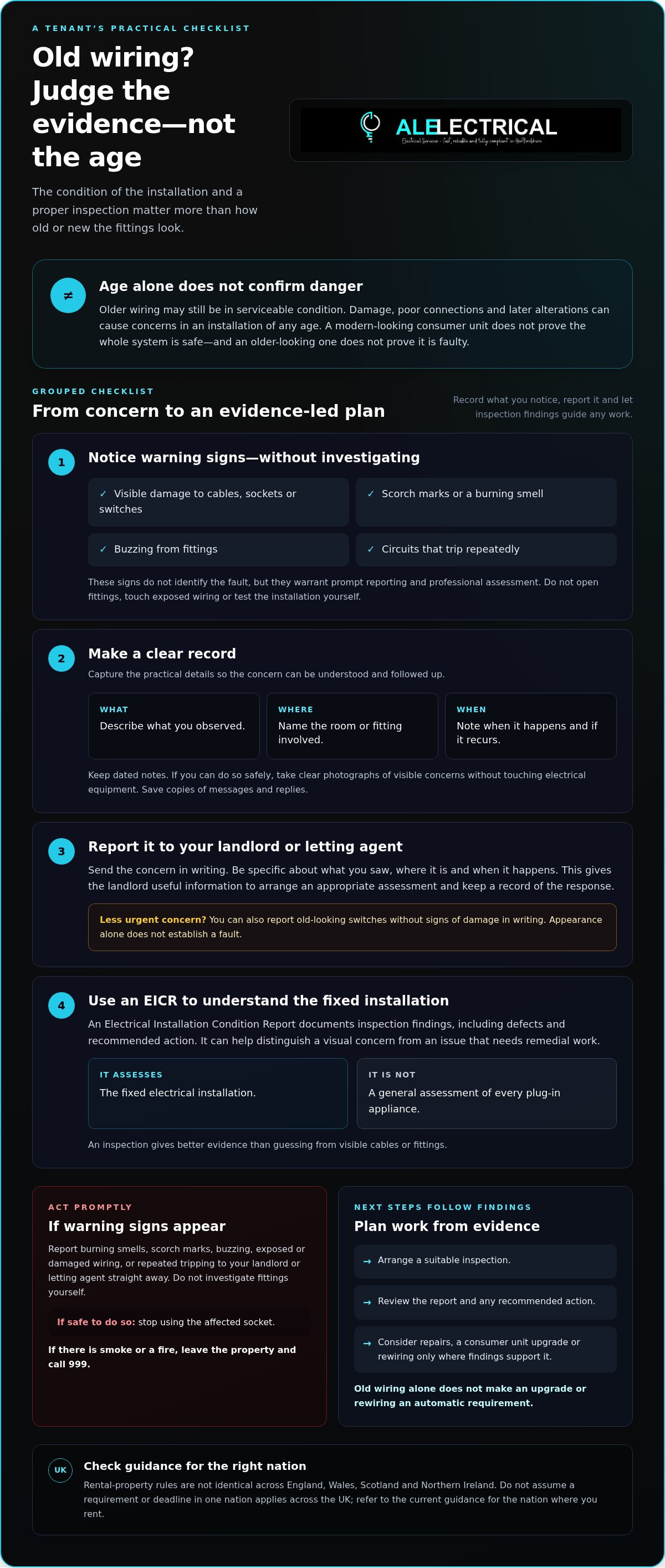
What tenants and landlords should do about old wiring
Act promptly if you notice a burning smell, scorch marks, buzzing, exposed or damaged wiring, or circuits that keep tripping. Don’t investigate fittings yourself. Stop using the affected socket if you can do so safely, and report the problem to your landlord or letting agent straight away. If there’s smoke or a fire, leave the property and call 999.
Raise less urgent concerns, such as old-looking switches without signs of damage, in writing too. Describe what you observed, where it is and when it happens. Landlords can use those details to arrange an appropriate inspection and keep a record of the concern and response.
Rental electrical requirements vary across the UK. The GOV.UK guide on UK government electrical safety standards explains rules for England. Tenants elsewhere should refer to the guidance for their nation.
From reported concern to an evidence-led electrical plan
A practical sequence is to record the issue, arrange a suitable inspection, review the findings and plan any recommended work. An EICR can help establish whether repairs are needed. A consumer unit upgrade or rewiring may be appropriate if the findings support it, but old wiring alone doesn’t make either an automatic requirement. If an inspection points to the consumer unit, read this consumer unit upgrade guide for more context.
ALElectrical provides EICR inspections, electrical maintenance, consumer unit upgrades and rewiring. You can request a free, no-obligation quote for an EICR or relevant electrical work to discuss the inspection findings and potential next steps.
Take the next step with confidence
When renting a property with old wiring, age alone doesn’t confirm danger. Look out for warning signs, report concerns in writing and use an EICR to understand the installation’s condition. Any repairs, consumer unit upgrades or rewiring should be guided by inspection findings, not assumptions.
ALElectrical carries out professional EICR inspections and provides rewiring and consumer unit upgrades where needed. Request a free, no-obligation quote for an EICR or electrical work to get a clearer assessment and practical next steps.
Frequently Asked Questions
Is it safe to rent a property with old wiring?
It can be safe, but age or appearance alone can’t confirm the condition of the electrical installation. Wear, damage, poor alterations and inspection findings are more useful evidence. If you’re renting a property with old wiring, look for warning signs such as scorch marks, buzzing or repeated tripping, and report them to your landlord. An EICR can provide a professional assessment.
Can a landlord rent out a property with old wiring?
Old wiring doesn’t automatically prevent a property from being rented. The installation must meet the applicable safety requirements, which vary across England, Wales, Scotland and Northern Ireland. Whether work is needed depends on the wiring’s condition and relevant inspection findings, not its age alone. Landlords should address identified electrical hazards and follow the rules that apply where the property is located.
How can I find out whether a rented property’s wiring is safe?
Ask your landlord or letting agent whether there’s a recent Electrical Installation Condition Report (EICR) and request a copy if available. An EICR records the findings of an inspection of the fixed electrical installation and any recommended action. You can also note and report visible concerns, but don’t remove covers or test wiring yourself. Appearance alone can’t establish whether an installation is safe.
What should I do if I notice a burning smell or damaged wiring in my rental?
Report it to your landlord or letting agent immediately, preferably in writing, and describe where and when you noticed it. Don’t touch exposed wiring or use an affected socket. If there’s smoke or fire, leave the property and call 999. Keep a record of your report and any response so the concern can be assessed and appropriate action arranged.



Comments