_.jpg)
Smart Home Wiring Installation: A Practical UK Buying Guide
What if the best smart home wiring installation is the one you barely notice? It’s easy to focus on choosing devices, but important decisions often come before the walls are finished: which rooms need data points, where power is required and how your chosen equipment will work together. Plan these details early and you’re less likely to pay for wiring you don’t need or discover an expensive omission later.
This guide compares wired, wireless and hybrid setups so you can weigh them against your home, routines and future plans. It also covers the decisions to make before work begins, how to check compatibility between devices, and when to involve a qualified electrical contractor. A clear plan makes it easier to compare proposals and understand what’s included before you appoint anyone.
Table of Contents
Smart home wiring installation: what it includes and when it makes sense
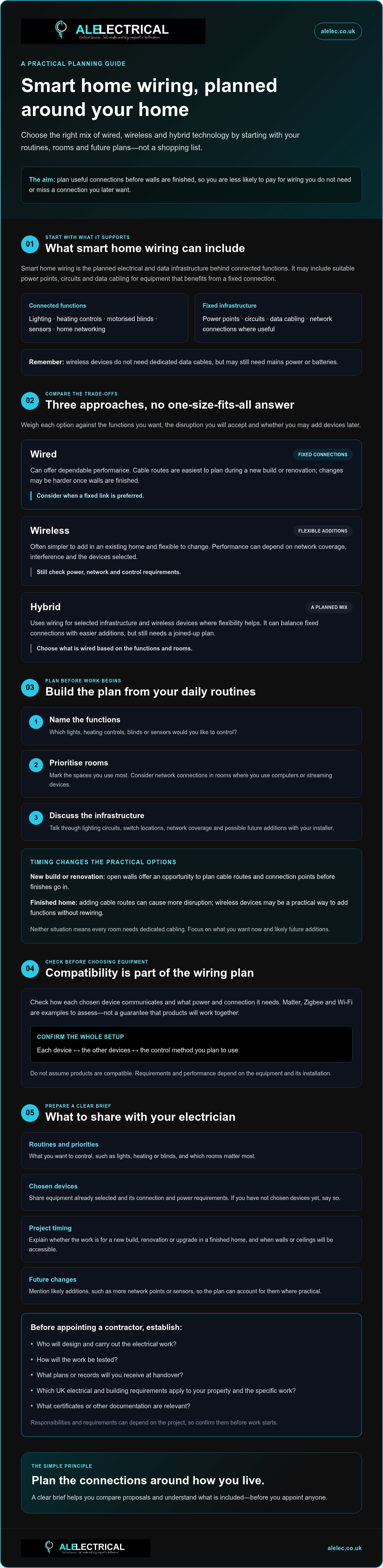
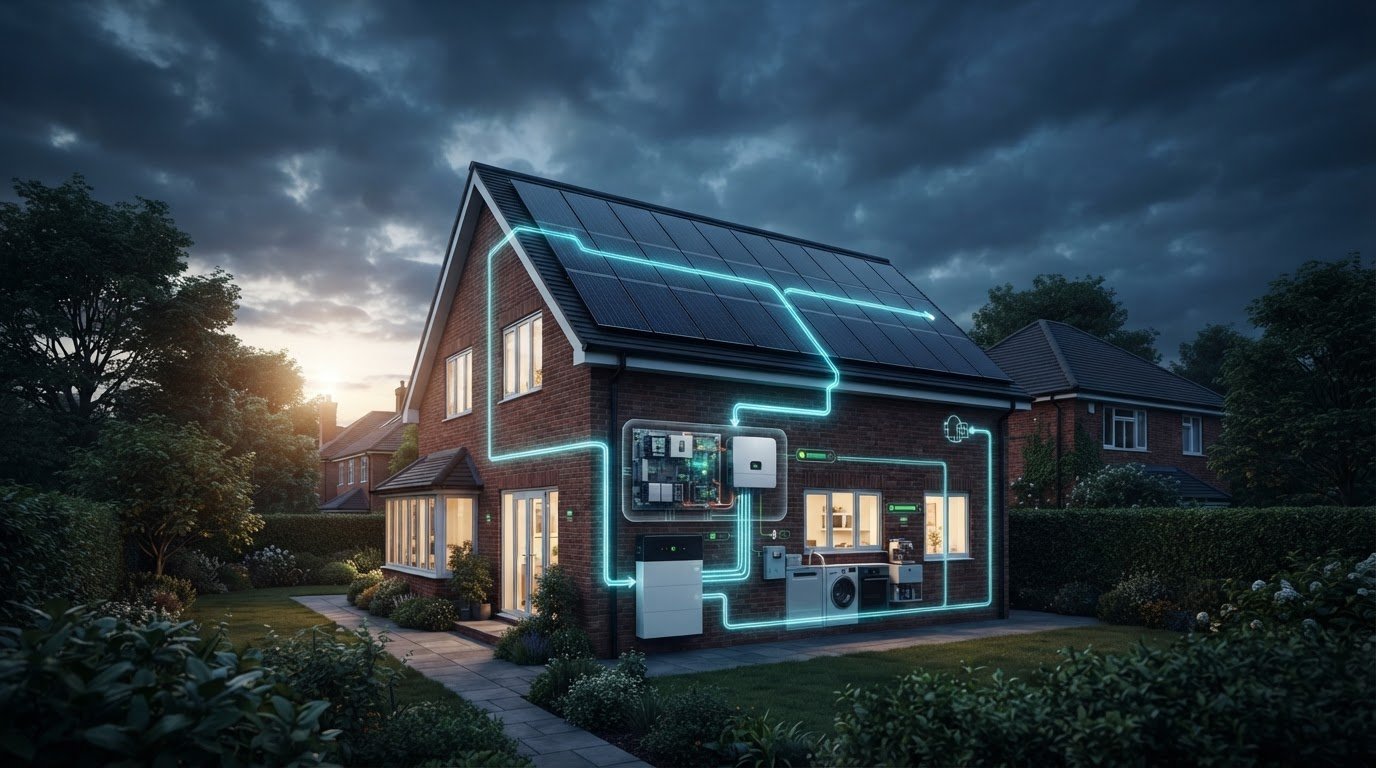
Smart home wiring installation is the planned electrical and data infrastructure that supports connected functions around your home. It may include suitable power points, circuits and data cabling for equipment that benefits from a fixed connection. Wireless smart devices communicate without dedicated data cables, although they may still need mains power or batteries.
This infrastructure can support smart lighting, heating controls, motorised blinds, sensors and home networking. For example, you might plan network connections in rooms where you use computers or streaming devices, then consider how lighting controls will work in the spaces you use every day. If you’re new to the wider idea, Wikipedia’s overview of home automation introduces common functions and technologies.
Is smart home wiring worthwhile in an existing home or renovation?
A new build or renovation with walls open is a good opportunity to plan cable routes and connection points before finishes go in. An electrician can coordinate relevant electrical decisions with the wider project and help you assess where infrastructure would be practical. That doesn’t mean every room needs dedicated cabling.
In a finished home, adding cable routes can cause more disruption, so the right approach depends on the property, the devices you choose and your priorities. Wireless devices may be a practical way to add functions such as smart bulbs or sensors without rewiring. A wired connection may suit equipment where you prefer a fixed link. Smart home wiring isn’t essential for everyone. Focus on the functions you want now and any likely future additions before deciding what infrastructure is worth planning.
How to compare wired, wireless and hybrid smart home installations
There’s no single setup that suits every home. Compare the options against the functions you want, the disruption you’ll accept and whether you may add devices later.
Wireless doesn’t remove every planning need: devices still need power, a suitable network or a compatible control method. Performance and compatibility depend on the equipment and its installation, so check the requirements for each device rather than assuming products will work together.
What should a smart home wiring plan include?
Start with routines and priority rooms, not a shopping list. Note where you want lighting controls, heating adjustments, blinds or sensors. Then discuss lighting circuits, switch locations, network coverage and possible future additions with your installer. For smart home wiring installation, check how your chosen devices communicate. Matter, Zigbee and Wi-Fi are examples to assess, not a guarantee of compatibility. Confirm that each device works with the others and with the control method you plan to use.
For a new build or renovation, an electrical contractor can help coordinate these choices with the project. You can review ALElectrical’s electrical installation services when considering the work you need.
Plan smart home wiring installation with an electrician
A clear brief helps an electrician understand what you need and identify decisions to settle before work begins. Prepare these details before discussing your smart home wiring installation:
List your routines and priorities. Note what you’d like to control, such as lights, heating or blinds, and which rooms matter most.
Record chosen devices. Share any equipment you’ve selected, along with its connection and power requirements. If you haven’t chosen devices yet, say so.
Set out the project timing. Explain whether this is a new build, renovation or upgrade in a finished home, and when walls or ceilings will be accessible.
Consider future changes. Mention likely additions, such as more network points or sensors, so the plan can account for them where practical.
Ask who will design and carry out the electrical work, how it will be tested, and what plans or records you’ll receive at handover. Confirm which UK electrical and building requirements apply to your property and the specific work, and what certificates or other documentation are relevant. Responsibilities and requirements can depend on the project, so establish them before work starts.
Questions to ask before choosing an installation contractor
Ask how the proposed wiring supports your chosen devices, what could be added later and what is excluded from the work. Clarify who coordinates with other trades, what testing and handover involve, and how the cost is calculated. If the project may include a broader electrical upgrade, ask whether house rewiring or a fuse box upgrade is relevant.
If you’re planning a renovation or new build, ALElectrical can discuss your electrical installation requirements and provide a free, no-obligation quote. This gives you a chance to explain the project and clarify the work needed without assuming a particular smart home system.
Make your smart home plans with confidence
A successful smart home wiring installation starts with the functions that matter to your household, not a collection of gadgets. Decide which rooms and routines to prioritise, then weigh up wired, wireless or hybrid options based on your property, preferred devices and plans for future changes. In a renovation or new build, discussing cabling and connection points early can help you avoid missed opportunities once walls are finished.
Before work begins, clarify the scope, who is responsible for each stage, and how testing and handover will be handled. ALElectrical provides professional electrical installation services for homes and businesses, with free, no-obligation quotes available. Discuss your electrical installation plans with ALElectrical and request a free, no-obligation quote. A clear conversation is a practical first step towards a setup that suits your home and gives you confidence in the work ahead.
Frequently Asked Questions
Do I need special wiring for a smart home?
Not always. Many smart home devices connect wirelessly and need no dedicated data cabling. However, equipment such as smart switches may involve mains electrical work, and some devices benefit from a fixed network connection. Check each device’s power and connection requirements before buying, then ask an electrician whether your existing wiring and network are suitable for your plans.
Is wired smart home technology better than wireless?
Neither option is automatically better. It depends on your home and priorities. Wired connections can suit equipment where a fixed link is preferred, while wireless devices are often easier to add or move. Wireless performance can depend on network coverage and interference. A hybrid approach is also possible, but check that the selected devices and control methods are compatible.
Can I add smart home wiring during a renovation?
Yes, a renovation can be a practical time to plan cabling, particularly if walls or ceilings will be open. Discuss the rooms and functions you want, such as lighting controls or network points, before finishes are installed. An electrician can coordinate the electrical work with the project and help assess what’s suitable for the property and your chosen equipment.
What should I ask an electrician about smart home wiring installation?
Ask how the proposed smart home wiring installation supports your selected devices and whether it allows for reasonable future additions. Clarify what work is included, who will design and install it, how it will be tested, and what documentation you’ll receive. Also ask which UK electrical and building requirements apply to your specific project, rather than assuming the same rules cover every job.

Comments