_.jpg)
What Fails an EICR Report? Common Faults and Next Steps
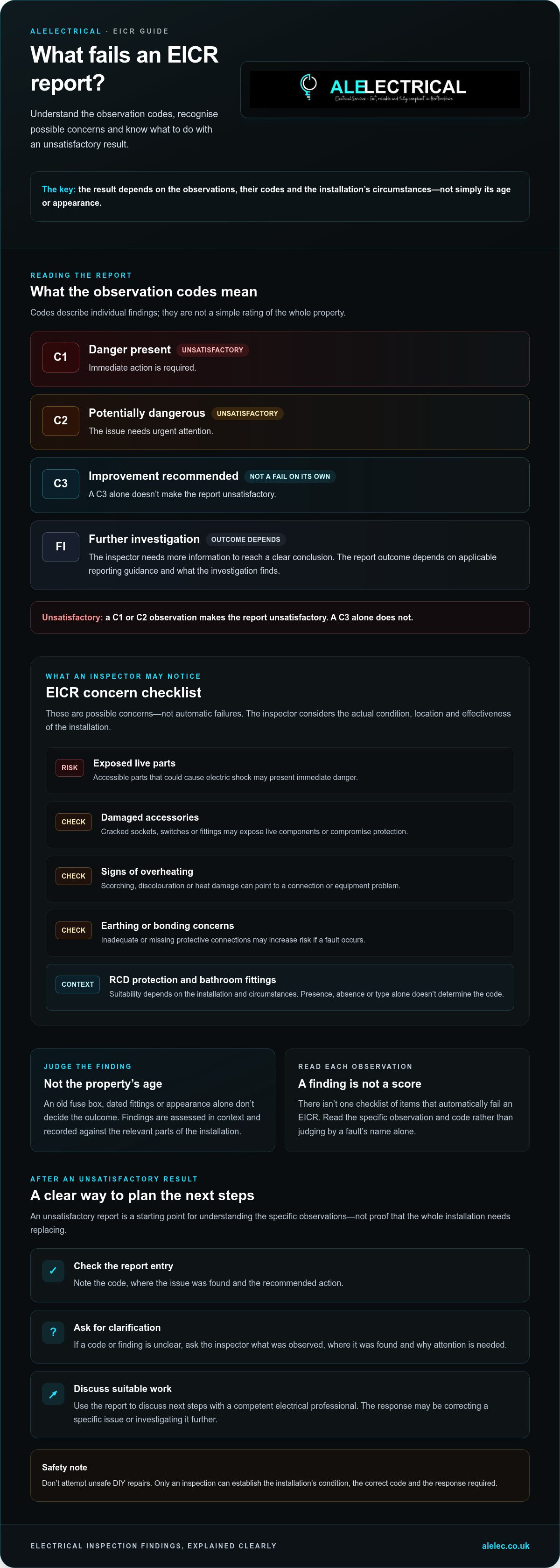
If you’re wondering what fails an eicr report, the observation codes are a useful place to start. A C1 means danger is present, while a C2 identifies a potentially dangerous fault; either makes the report unsatisfactory. A C3 recommends an improvement but doesn’t fail the report on its own. An FI means further investigation is needed, and the report’s outcome depends on the applicable reporting guidance and what that investigation finds.
An unsatisfactory result doesn’t automatically mean extensive work is required. The report should explain what needs attention, where the issue was found and why. Common observations include missing RCD protection where required, inadequate earthing or bonding, damaged wiring, signs of overheating and poor-quality previous work. This guide explains how inspectors classify faults, what the codes mean and how to plan the next steps, including remedial work where needed.
Table of Contents
What fails an EICR report? Understand the inspection outcome
What fails an EICR report isn’t simply an old fuse box, dated fittings or the property’s appearance. The result depends on the observations recorded during inspection and testing, and how each issue affects safety in that installation. The inspector considers the condition of the wiring, protective devices and the surroundings, then records findings against the relevant parts of the installation. A list of observations is not a score for the property as a whole.
UK installations are assessed against applicable electrical safety guidance. For background on the systems and terminology involved, see this overview of UK electrical wiring standards. Coding should be checked against the current edition of BS 7671 and the guidance that applies to the inspection.
What do C1, C2, C3 and FI mean on an EICR?
The codes describe individual observations, rather than giving the entire property a simple rating:
C1: Danger is present, and immediate action is required.
C2: The issue is potentially dangerous and needs urgent attention.
C3: An improvement is recommended, but this code alone doesn’t make the report unsatisfactory.
FI: Further investigation is required because the inspector can’t reach a clear conclusion without it.
A C1 or C2 observation makes the report unsatisfactory. A C3 alone doesn’t. An FI means the issue needs further investigation, and the report’s outcome should be understood in line with the applicable reporting guidance and the investigation’s findings. If a code or its impact is unclear, ask the inspector to explain what was observed, where it was found and what action is recommended.
EICR failure checklist: faults an inspector may code
There isn’t a single checklist of items that automatically fail an EICR. The same feature may be acceptable in one installation but need attention in another, depending on its condition, location and effectiveness. To understand what fails an EICR report, read the specific observation and its code rather than judging by the fault’s name alone.
Exposed live parts: accessible parts that could cause electric shock may present immediate danger.
Damaged accessories: cracked sockets, switches or fittings may expose live components or compromise protection.
Overheating: scorching, discolouration or heat damage can point to a connection or equipment problem that needs assessment.
Earthing or bonding concerns: inadequate or missing protective connections may increase risk if a fault occurs.
RCD protection and bathroom fittings: their suitability depends on the installation and circumstances. Their presence, absence or type alone doesn’t determine the code.
Which faults can indicate an immediate or potential safety risk?
Exposed live parts or severe damage may warrant urgent action, but the inspector considers the actual risk and records an appropriate observation. Protective measures, including earthing, bonding and RCD protection, are assessed in relation to the circuits and equipment they serve. The government guidance on electrical safety explains the report codes for landlords in England. For background on consumer unit protection, read this consumer unit and fuse box upgrade guide.
Only an inspection can establish the installation’s condition, the correct code and the response required. Don’t attempt unsafe DIY repairs. If you need an EICR or want to understand its findings, you can ask ALElectrical about EICR inspections.
What to do when an EICR report is unsatisfactory
An unsatisfactory result gives you a clear starting point: the observations in the report. Read each entry and note its code, location and recommended action. If an observation is unclear, ask the inspecting professional what was found and why it needs attention. This helps you understand the specific work required instead of assuming the whole installation needs replacing.
How should you arrange remedial work and confirm completion?
Use the report to discuss suitable next steps with a competent electrical professional. The response depends on the finding: it may involve correcting a specific issue or investigating it further. Ask how the proposed work addresses each observation, particularly if the report calls for further investigation. Don’t attempt electrical repairs yourself if they could put you or others at risk. For landlords, responsibilities can depend on the relevant UK nation and tenancy; Electrical Safety First’s landlord guidance is a useful reference.
Confirm the proposed remedy for each observation and whether any further investigation is needed.
Keep written records of the work completed and any confirmation provided by the electrical professional.
Check whether the findings call for further testing, verification or an updated report. Don’t assume the original document changes automatically.
Broader wiring concerns don’t automatically mean a full rewire is needed. If the report indicates widespread issues, this guide to house rewiring explains what the process involves. For help understanding an EICR or discussing work identified in its findings, you can contact ALElectrical about EICR inspections.
Use your EICR findings to plan the next step
Understanding what fails an eicr report starts with the observation codes and the inspector’s assessment, not assumptions based on the property’s age. C1 and C2 findings make a report unsatisfactory, while C3 alone doesn’t. An FI observation means further investigation is needed before you can be certain what action to take.
Read the report carefully, clarify anything you’re unsure about and arrange appropriate work with a competent electrical professional. The findings don’t automatically mean a full rewire is necessary; the recommended action depends on the specific issue and its scope.
ALElectrical provides EICR inspections and electrical services for work identified in inspection findings, with free, no-obligation quotes available. If you need an inspection or want to discuss remedial work, contact ALElectrical to arrange an EICR inspection or request a no-obligation quote. A clear explanation of the findings can help you decide what to do next.
Frequently Asked Questions
What faults commonly fail an EICR?
Faults that present danger or potential danger can make an EICR unsatisfactory. Examples include exposed live parts, damaged accessories, inadequate earthing or bonding, and problems with protective devices. Bathroom fittings may also be noted if their position or protection is unsuitable. These aren’t automatic failures: the inspector assesses the installation, records each observation and assigns a code based on the risk.
Does a C3 code make an EICR unsatisfactory?
No. A C3 code means an improvement is recommended and, on its own, doesn’t make the report unsatisfactory. C1 and C2 observations indicate danger or potential danger and make the report unsatisfactory. An FI code means further investigation is needed; check the report’s outcome and ask the inspector what action is required. If you’re unsure, ask them to explain each code in relation to your installation.
What should I do if my EICR report is unsatisfactory?
Start by reviewing each observation, its code, location and recommended action. Ask the inspector to clarify anything you don’t understand, then arrange appropriate remedial work with a competent electrical professional. Don’t attempt unsafe DIY repairs. Check whether the report calls for further investigation or inspection after the work, and keep records of what has been completed. Any legal duties depend on your circumstances and UK nation.
Can an EICR fail because a property has old wiring?
No, the age of the wiring alone doesn’t determine whether an EICR is satisfactory. The inspector considers its condition, test results and any risks identified. Older wiring may have defects or lack features expected under current guidance, but the assessment must reflect the actual installation. If you’re concerned about what fails an EICR report, ask the inspector to explain the specific observations and their significance.



Comments