_.jpg)
What Is Better Than a Pod Point Charger? How to Compare Your Options
The charger with the most features isn’t always the right one for your home. If you’re asking “what is better than a pod point charger”, the answer depends on your car, charging routine, electricity tariff and property. Pod Point may suit a straightforward setup, while solar integration, app controls or tariff compatibility could make another charger a better fit.
It can be difficult to know which differences matter, especially when both the charger and its installation affect how the setup works. This guide explains what to compare, including solar integration, smart charging and tethered or untethered cables. It also covers how your home’s electrical setup and installation requirements fit into the decision, so you can narrow down your options with confidence.
Table of Contents
What Is Better Than a Pod Point Charger? Start With What You Need
No home charger is better for every car, property and charging routine. The answer to “what is better than a pod point charger” depends on whether another option offers practical advantages for your setup, such as compatibility with your vehicle, controls you’ll use or energy management that suits your household.
The charger is only part of the decision. Installation needs to suit both the property and the unit. An electrician can consider your existing electrical setup alongside the charger’s requirements, making installation quality part of your choice rather than an afterthought. If charging terminology is unfamiliar, this Electric Vehicle Supply Equipment (EVSE) overview explains the basics, including the distinction between AC and DC charging.
Which home-charging needs could make an alternative a better fit?
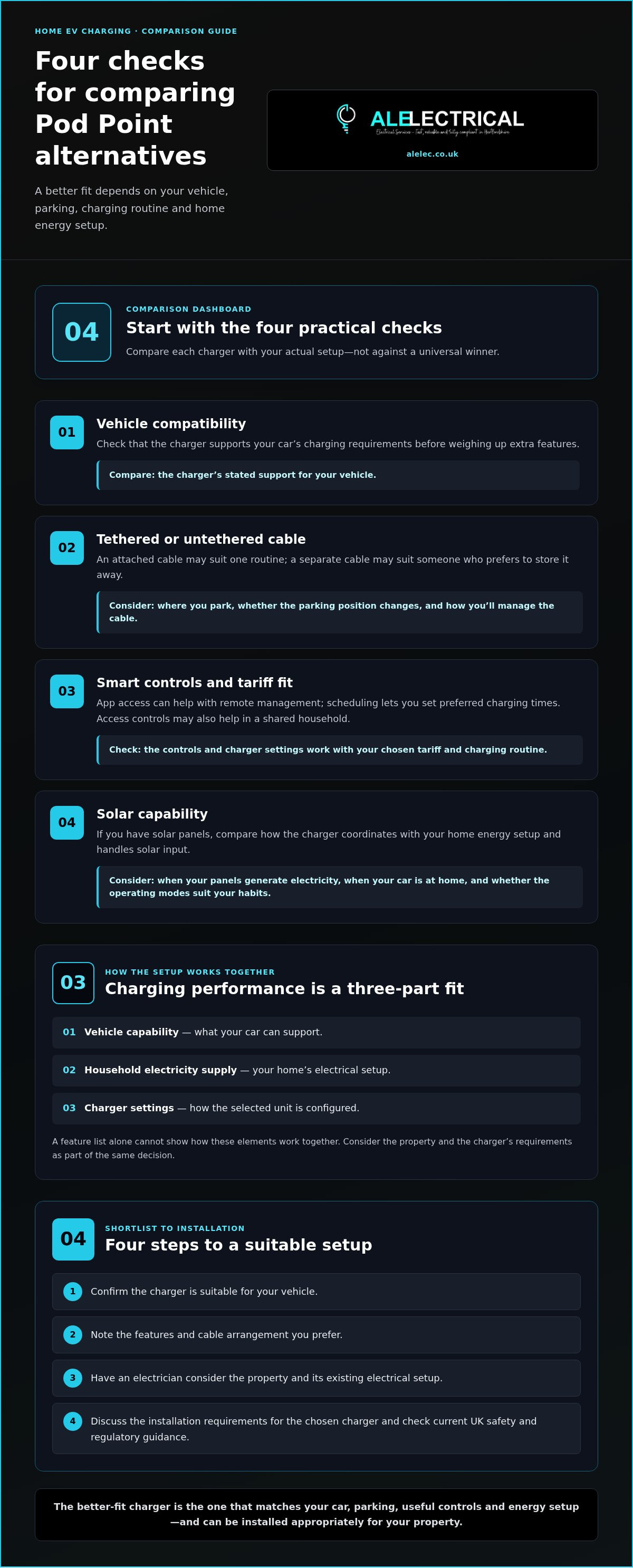
Start with your vehicle’s charging requirements and where it’s usually parked. A dedicated driveway, shared parking area or changing parking position can affect where a charge point can go and whether an attached cable or separate cable is more convenient. Check the charger’s compatibility with your car before comparing extra features.
Next, consider which controls would make a difference in daily use. If you want to charge at selected times, compare scheduling options and check that the charger works with the energy tariff you plan to use. If you have solar panels, look at solar integration and how it works with your home energy setup. For a shared household, access controls may help manage who can start a charge. These features are worth paying for only if they match your needs.
A better-fit charger works with your vehicle, suits how and where you park, and provides useful controls as part of a safe, appropriate installation.
How to Compare Pod Point Alternatives for Your Car and Home
Compare each option against your actual setup rather than searching for a universal winner. Check the product specifications and focus on requirements that could affect everyday use.
Which charger features matter most in everyday use?
App control can make it easier to manage charging remotely, while scheduling lets you set preferred charging times. If you use an EV tariff, check that its requirements are compatible with the charger and its settings. The UK government’s smart charging action plan provides context, but don’t assume every feature will suit every tariff.
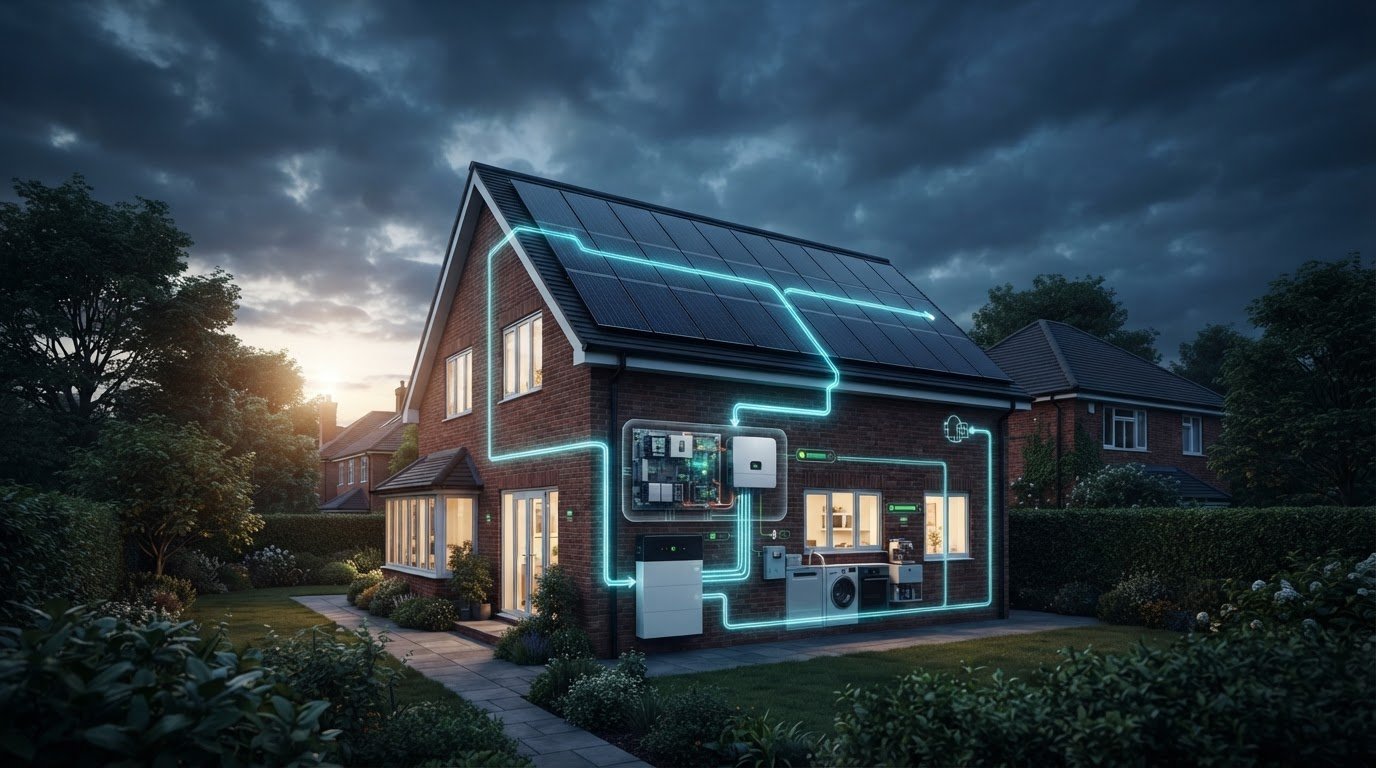
Solar integration may be useful if you want to direct some of your home’s solar generation towards your car. Its practicality depends on your energy setup and charging habits, including when your panels generate electricity and when your car is parked at home. Check how the charger handles solar input and whether its operating modes match the way you expect to charge.
Charging performance also depends on the vehicle’s capability, the household electrical supply and the charger’s settings. A feature list alone won’t show how these work together. If you’re narrowing down your options, you can discuss your EV charger installation as part of planning a suitable setup.
From Pod Point Shortlist to Safe EV Charger Installation
Once you’ve decided what is better than a pod point charger for your needs, bring your choice together with a practical installation plan. The charger must work with your vehicle and suit your property’s electrical setup. Professional installation is part of the decision, not simply the final task.
What should happen before a home charger is installed?
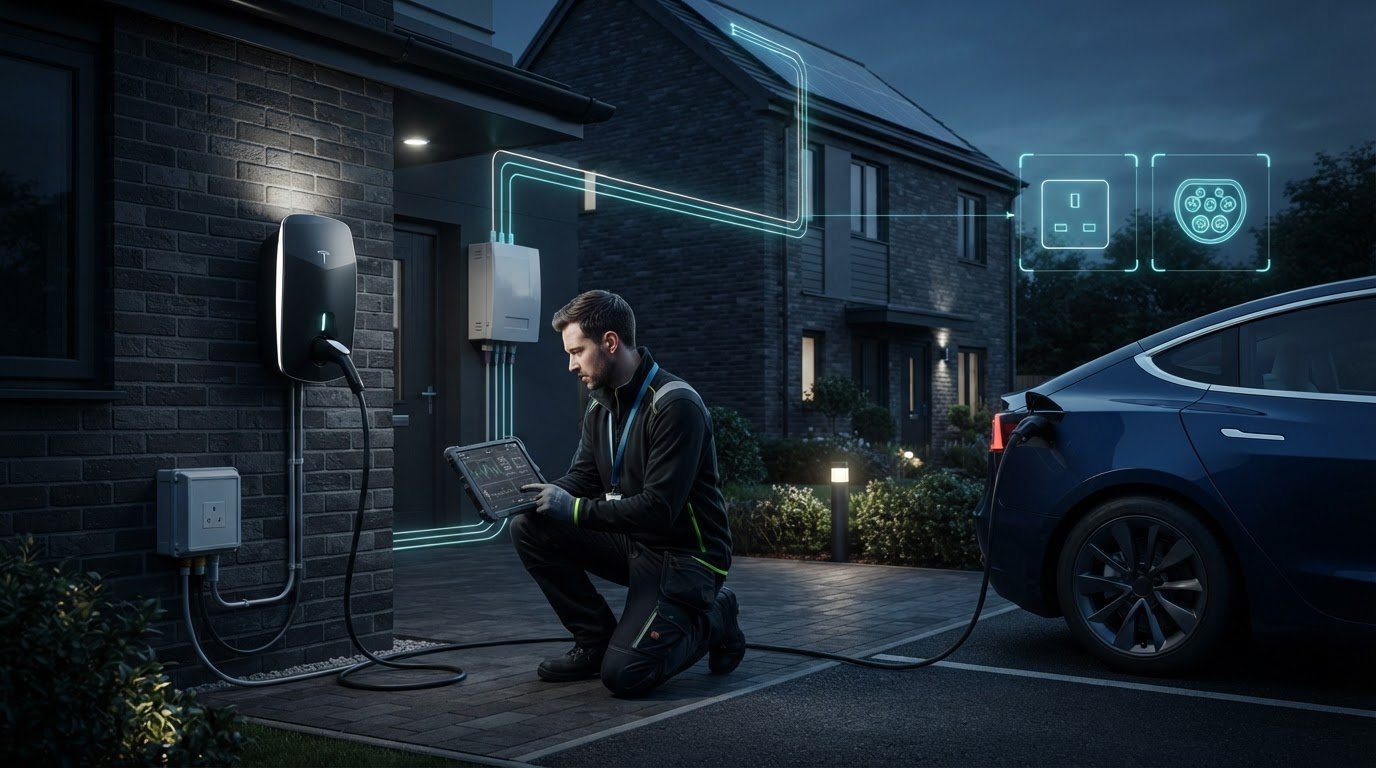
First, confirm your vehicle’s charging requirements and note the features you’ve prioritised. An electrician can consider the property’s existing electrical installation, the charger’s requirements and where you intend to place the unit. This helps clarify what the proposed setup involves before fitting begins.
Before installation, make sure the selected charger and planned work are considered against current UK safety and regulatory guidance. Requirements can change, so use authoritative sources for up-to-date information rather than relying on an old product comparison. ALElectrical’s professional EV charging installation guide offers further context on planning the process.
Move from shortlist to installation in a few clear steps:
Confirm the charger is suitable for your vehicle.
Note the features and cable arrangement you prefer.
Arrange for an electrician to consider the property and electrical setup.
Discuss the installation requirements for the chosen charger.
A clear plan connects your preferred features with a safe, suitable setup. If you’ve chosen a charger, you can request a free, no-obligation EV charger installation quote.
Choose a Charger That Fits Your Home
The answer to “what is better than a pod point charger” comes down to what works for your car, charging habits, tariff and property. Compare compatibility, cable style and useful smart or solar features, then consider how the charger’s requirements fit your home’s electrical setup. A good shortlist accounts for both the unit and its installation.
ALElectrical installs EV chargers with a focus on safety and compliance. The installation process takes your property’s electrical setup and the selected charger’s requirements into account. You can request a free, no-obligation quote from ALElectrical.
With the right information and installation support, you can move ahead with a charging setup suited to your everyday routine.
Frequently Asked Questions
Is a Pod Point charger better than other home EV chargers?
No, Pod Point isn’t automatically better than other home EV chargers. The answer to what is better than a pod point charger depends on your car, parking arrangements and the features you’ll use. Compare compatibility, cable type, tariff scheduling, app controls and solar support, then factor in installation. A simpler charger may suit you better if extra controls add little value.
What should I compare when choosing an alternative to a Pod Point charger?
Compare compatibility with your vehicle, tethered or untethered cable, smart controls and solar capability. If you plan to schedule charging around a particular electricity tariff, check that the charger’s controls work with it. Consider where the charge point could go and how your household electrical setup fits the selected charger. Focus on features that suit your routine, not simply the longest feature list.
Can I use a different brand of charger with my electric car?
Yes, you can use a charger from a different brand, provided it’s compatible with your vehicle and installation. Check your car’s charging requirements and the charger’s connection and operating details before choosing. Charging performance depends on more than the charger brand: your vehicle’s capability, household electricity supply and charger settings can all affect how the setup works.
Do I need a professional electrician to install a home EV charger?
Professional installation is the sensible choice for a home EV charger. An electrician can consider your property’s electrical installation, the selected charger’s requirements and a suitable position for the unit. This helps address safety and compliance as well as placement and day-to-day use. Include installation in your decision from the outset, rather than treating it as an optional extra after choosing a charger.

Comments